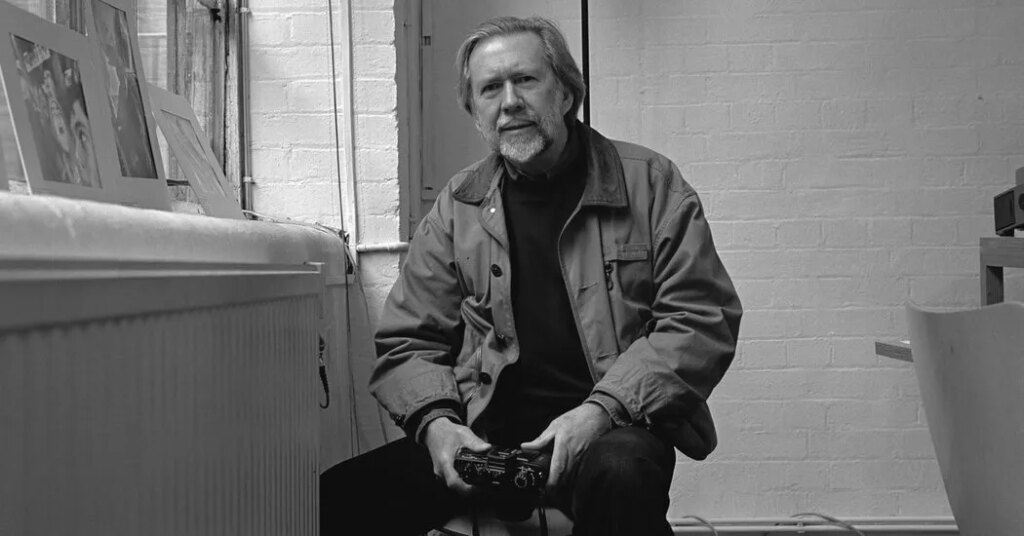
Ian Berry, the only photographer who documented the 1960 Sharpeville massacre, a critical turning point in the struggle against apartheid in South Africa, and who went on to cover conflicts in Vietnam, Israel and Eastern Europe, died on Sept. 13 at his home in Salisbury, England. He was 92.
His death was announced by Magnum, the global photo agency with which Mr. Berry was associated for over 60 years.
As many as 90 people — peaceful demonstrators protesting apartheid’s passbook laws, which severely restricted the movements of Black South Africans — were killed during the Sharpeville massacre. Most of them were shot in the back by the police as they tried to flee, outside the police station in the township 40 miles south of Johannesburg. Hundreds more were critically injured. The event is still commemorated every March 21 in South Africa.
Mr. Berry’s arresting images of frightened townspeople — men, women and children — running as the police calmly reloaded their weapons in the distance reinforced the world’s perception of the brutality of apartheid and helped turn public opinion against South Africa’s cruel status quo.
After the massacre, the authorities further cracked down on dissent, outlawing the African National Congress and the Pan-African Congress, the leading opposition groups. They were forced into “a clandestine existence, prompting the switch from peaceful resistance to the embrace of violent strategies to overturn white minority rule,” The New York Times wrote on the 25th anniversary of the killings.
On the day of the massacre, the celebrated South African photographer Peter Magubane — Mr. Berry’s colleague at Drum, a magazine that reported on apartheid’s abuses — was on another assignment. Their editor sent Mr. Berry to Sharpeville, where a man had already been shot and a protest was scheduled.
He followed a convoy of armored police cars along with dozens of other journalists. The police ordered them to turn back, and all but three cars complied.
Further up the road, the remaining journalists were warned again. Only Mr. Berry and his colleague from Drum, in the same car, ignored the order.
The convoy reached a police station, where a peaceful crowd of about 5,000 demonstrators was assembled outside.
All seemed calm. Mr. Berry, who had left his car to talk with the police, began to walk back, prepared to call it a day.
“As soon as I got there, the police opened fire,” Mr. Berry recalled in a 2013 interview with Vice magazine. “Bodies started to fall around all over the place.” Instinctively, he whipped out the small, lightweight Leica camera favored by news photographers of the day.
“A woman racing in front of me was hit, and as I saw more people fall, I dropped to the ground myself,” Mr. Berry told The British Journal of Photography in 1975. “There seemed little point in trying to get away, because you were just as likely to get hit running.”
When the firing finally stopped, he hurriedly photographed some of the bodies and jumped into his car, acutely aware of the South African police’s hatred of the press.
“The pictures were crap, just pictures of people running towards me,” Mr. Berry told Vice. “But it was an event that sort of went around the world. And got me in Magnum.”
He was too modest. Calm, precision, courage and luck helped the photojournalist that day.
His editor at Drum, fearful of repercussions, declined to publish the photographs. So Mr. Berry sent them to a photo agency in London. They were picked up by Life magazine and Paris Match, among others.
Remarkably, surviving demonstrators were later charged in South African courts with the offense of affray, a common law term for a public fight that disturbs the peace or frightens people. Mr. Berry, called as a witness, testified that he had seen the police reloading, signaling that their shooting was intentional, which proved to be crucial evidence in the demonstrators’ acquittal. He was barred from South Africa the next year.
In 1962, Mr. Berry was invited to join Magnum by Henri Cartier-Bresson, one of the agency’s founders. Mr. Berry became the first contract photographer for The Observer, in London, in 1964. He went on to photograph conflict, social conditions and nature all over the world for publications such as Life, National Geographic and Geo.
In August 1968, Mr. Berry was the “only known foreign photographer” to cover the Soviet invasion of Czechoslovakia, according to Magnum, sneaking his way across the border by pretending to be headed to an architects’ conference. He later smuggled his film out in the hubcaps of his rental car. His tender images of stricken Czech citizens, silently confronting Soviet tank turrets, captured the devastation of the moment.
One of a select group of photographers who traveled the globe covering conflict, from the Six-Day War in Israel to Vietnam to Congo, Mr. Berry said he had been driven by the simple desire to expose audiences to the unseen and unknown.
“We wanted to show people on one side of the world what was happening to people on the other side of the world,” he told WePresent in a 2020 interview.
Ian Berry was born in Preston, England, on April 4, 1934, the son of Walter Berry, a garage owner, and Ethel (McKimmings) Berry. He attended Rossall School in Lancashire. At 17, already interested in photography, he moved to South Africa to work for a family friend who had apprenticed with the American landscape photographer Ansel Adams.
In the late 1950s, Mr. Berry worked for The Rand Daily Mail, a South African English-language newspaper, covering the treason trial in which Nelson Mandela was a defendant. By the end of the decade, Mr. Berry had moved on to Drum, edited by Tom Hopkinson, a well-known British journalist. It was Mr. Hopkinson who sent him to Sharpeville.
In later years, Mr. Berry published several books of photographs of South Africans, works notable for their penetrating vision of the effects of apartheid and its aftermath: “Black and Whites: L’Afrique du Sud” (1988), for which the French president François Mitterrand wrote the foreword, and “Living Apart” (1996), with text by Archbishop Desmond Tutu. Mr. Berry’s book of photographs of England in the 1970s, “The English” (1978), captures the social nuances of that muted decade before Thatcherism transformed the country.
He is survived by his third wife, Kathie Webber, a writer.
Unassuming and understated, Mr. Berry always insisted that the pictures he took that day in Sharpeville were more important for their subsequent impact than for their intrinsic value.
“From my point of view, the only good thing that came out of this was that, as the only nonpolice white guy to witness the people running away who were shot in the back, I was able to testify when they were charged with affray and it came to court,” he told Magnum in 2018.
The post The Only Photographer Who Covered the Sharpeville Massacre Has Died appeared first on New York Times.