On both Friday and Saturday night, I received duplicate emails from the head of the Social Security Administration praising President Donald Trump. The emails matched what was reported in the Oct. 31 online news article “In unusual email, Social Security Administration touts Trump days before elections”: “Under President Donald J. Trump, the Social Security Administration (SSA) is transforming into a model of excellence, one that meets and exceeds customer expectations for fast, accurate, and secure service.”
I retired from the National Science Foundation in December 2024. As a government employee, I received annual mandatory training about the Hatch Act, a law meant to prevent federal employees from using their positions to influence elections. I also advised review panels of the law’s restrictions and the consequences of violating it. The email I received read like a blatant political advertisement, rather than a message from a nonpartisan government agency. The 120th Congress should address it.
Kelsey Cook, Arlington
Election Day hopes
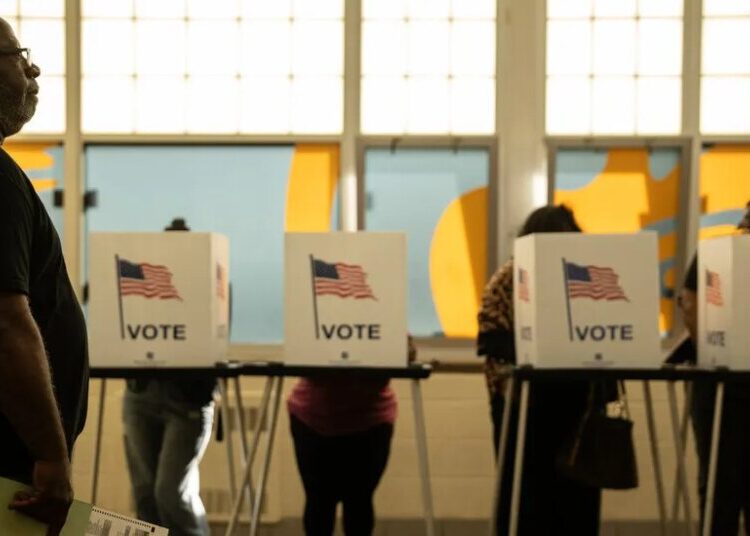
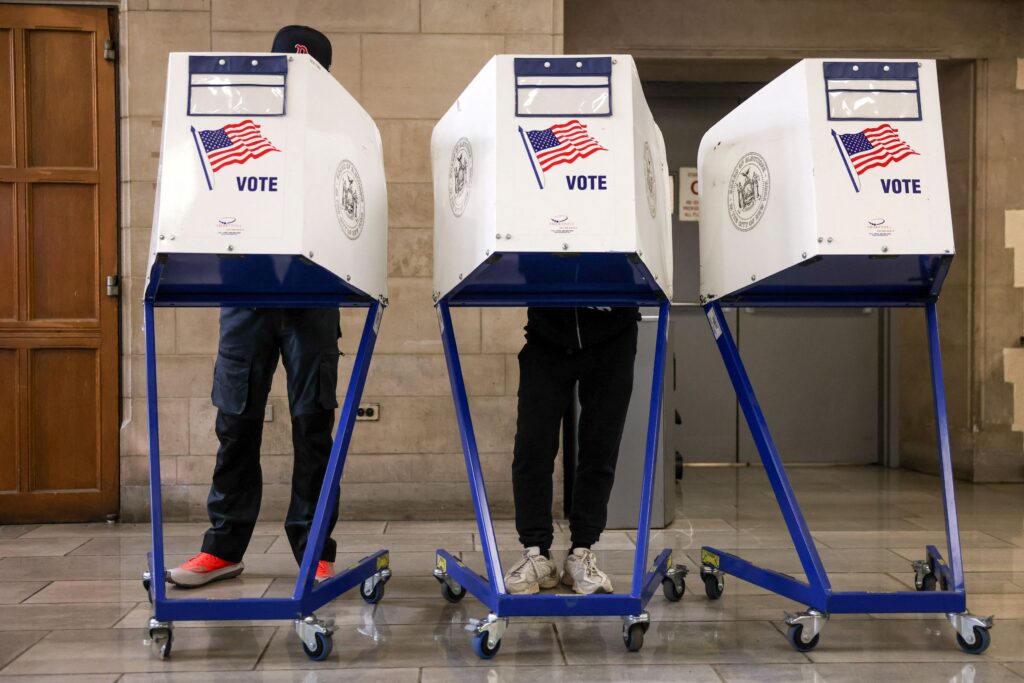
Americans’ right to vote is a precious freedom that people in many other countries do not have.
I hope voters did not waste it on emotions, misinformation, groupthink, bandwagon rhetoric or confirmation bias. They should take as much care with their ballots as they do with financial and life planning.
Elections determine critical everyday realities, including taxation, health care and education. A casual or unexamined vote can result in policies that actively run counter to one’s own long-term interests or values.
When a large portion of the electorate votes without careful deliberation, leaders can win power based on rhetoric and fear rather than sound practical policy. I hope voters treated this Election Day with the respect, dignity and seriousness that it deserves.
Phil Rasmussen, Hendersonville, North Carolina
Healthy farm financing
Regarding Abby ShalekBriski and Ryan Loy’s Oct. 29 op-ed, “An Oklahoma rancher sold shares of his herd. Then came the subpoena”:
I was senior adviser for fair and competitive markets at the Biden administration’s Agriculture Department and was counsel to Securities and Exchange Commissioner Kara Stein, so I have seen both sides of the coin highlighted in ShalekBriski and Loy’s op-ed. Their commentary called for federal securities law exemptions for cattle “herdsharing” because of the market’s high barriers to entry.
At USDA in October 2024, we put forward ideas to reform cattle price discovery practices and enhance competition using insights gained from reforms to the securities markets. I was also at USDA when the Packers and Stockyards Division partnered with the SEC to shut down the Agridime $191 million Ponzi scheme. Many ranchers and rural savers were left with hundreds of thousands of dollars of losses from cattle-related securities fraud.
Even if there are practical benefits to herdsharing, the federal securities laws already exempt offerings entirely within a state. One has to ask why a new interstate exemption is being called for when raising cattle is supposed to be about keeping families on the land locally. Balancing local business needs and fraud risks is what state securities regulators do best.
Healthy family farm financing requires a partnership between USDA, community banks and farmers — not complex investment arrangements. Let’s not add any more schemes to turn hardworking ranchers’ savings into ghost cattle.
Andy Green, Washington
The writer is a principal at Center Market Strategies.
Unpeeling the onion futures saga
Dominic Pino’s Nov. 2 online column, “Americans lost these onion rights in 1958. It still stings,” about the Onion Futures Act unpeels an episode of economic paternalism, but the absurdity of that 1956 crash was even sharper than Pino suggested. At the low point, a 50-pound sack of onions traded for 10 cents, while an empty sack cost 20 cents. Discerning buyers purchased full bags and discarded the worthless contents. It is a moment of pure Peer Gynt existentialism: Henrik Ibsen’s protagonist peels an onion only to find that it has no core, thereby discovering that the outer layers are the object. In 1956, buyers were struck by the same truth.
This brings us to the circular irony of University of Chicago students protesting the ban. Their excursion was funded by Kalshi, as reported by their student newspaper, the Chicago Maroon. The paper said Kalshi paid for a bus to bring students from campus and provided branded merchandise and breakfast for the group. The prediction market platform allows users to wager on whether Congress will repeal the act before 2030.
This is a summit of current American financial logic: a citizen is forbidden by federal law from trading a futures contract on a physical onion, yet is legally entitled to speculate on the future of the law that forbids it.
David Woodard, Tampere, Finland
My family’s daylight saving hack
Regarding Leana S. Wen’s Oct. 31 online column, “Why daylight saving time should be eliminated entirely”:
Our current system involves the use of both daylight saving time and standard time. Wen argued that daylight saving time should be eliminated due to its adverse effects on Americans’ health. One solution to the problems that can arise once DST has taken effect is to move your clocks forward in the late afternoon or early evening on the Saturday of the switch and go to bed an hour early, preventing the actual loss of an hour of sleep. Doing so has helped my family with the transition for years.
Donald McNeill Jr., Manassas
Letter submissions
Send letters to [email protected].
Submissions must be exclusive to The Post and should include the writer’s address and day and evening telephone numbers. Letters are subject to editing and abridgment. Please do not send letters as attachments. Because of the volume of material we receive, we are unable to acknowledge submissions; writers whose letters are under consideration for publication will be contacted.
The post I remember my Hatch Act training. Does SSA? appeared first on Washington Post.