By now, the contours of the 2026 midterm elections are pretty clear: President Trump’s approval rating has tanked, and winds are blowing in a Democratic direction. Democrats have higher voter enthusiasm, and we have the normal anti-incumbent vibes coupled with overall economic discontent. The question is: How strong are those winds? Here’s what I’ll be looking at on election night.
A Texas undervote? Over half a billion dollars has been spent in the Texas Senate race between Ken Paxton and James Talarico. (In a sign of just how wild things have gotten, a couple of weeks ago I was served anti-Talarico TV ads while watching my Florida Gators defeat the Texas Longhorns in college football … while sitting on my couch in Washington.)
It’s one of the marquee contests this year, yet I wonder about the potential undervote: That’s when voters cast ballots but don’t make a selection in a particular race. Sometimes that happens when they don’t think they know enough about the candidates to make an informed decision, though that’s almost certainly not the case here — Texas voters probably know more about Mr. Paxton and Mr. Talarico than they ever wanted to.
But I keep thinking about our Times Opinion focus group of Texas Trump voters who said they didn’t plan to vote for the scandal-plagued Mr. Paxton. Some of them found something to like in Mr. Talarico, while others found him to be out of step with their values and said they wouldn’t vote for him either. In general, Mr. Talarico’s voters like him and want to vote for him. On the other hand, many of Mr. Paxton’s voters are not exactly excited for their guy. One thing Republicans are banking on is the idea that in the end, some of them will decide Mr. Paxton is the lesser of two evils and vote for him in spite of their reservations. If our focus group participants are any indication, I wouldn’t be surprised to see a noticeable number of Texans simply leaving the Senate race blank.
The pull of partisanship. Democrats’ path to Senate control requires picking up a couple of seats in places that voted for Mr. Trump in 2024 by double digits. To do that, they’ll have to overcome a trend that has grown stronger and stronger in recent Senate elections: partisanship.
In the not-too-distant past, it wasn’t abnormal for a state to vote one way at the presidential level and another for the Senate. Montana and West Virginia would back Republicans in presidential contests but then send Jon Tester and Joe Manchin to Washington. Rhode Island, Illinois and Massachusetts gave us Republican senators in Lincoln Chafee, Mark Kirk and Scott Brown. However, the phenomenon of states voting for a party’s presidential candidate by a double-digit margin while electing a senator of the other party has largely evaporated in the Trump era, Mr. Tester and Mr. Manchin notwithstanding.
In 2024, Kansas voted for Mr. Trump by a 16-point margin. Iowa went for Mr. Trump by 13. They’re both on this year’s Democratic wish list, a list that goes into deeply red terrain, including Texas, South Carolina and (checks notes) Mississippi. For Democrats to break through in some of these deep red states, they’ll have to overcome the magnetic pull of partisanship that has characterized Senate elections in recent years.
Ohio’s upscale suburbs. In 2004, Tim Russert’s famous whiteboard said it best: Ohio, Ohio, Ohio. The state’s pivotal role in that year’s presidential election confirmed its status as the ultimate bellwether state.
In the Trump era, Ohio has turned redder at the presidential level; in 2024, Mr. Trump won it by double digits — his largest margin there ever. But the wealthy suburban Delaware County, north of Columbus, has moved in the opposite direction. In 2004, George W. Bush beat John Kerry there by a ratio of two to one. However, this highly educated and fast-growing county gave the Republican Bernie Moreno only a slim 1.5-point margin in his 2024 Senate win.
Republicans have gained among rural and blue-collar voters, even while shedding support from upscale suburbanites. If Delaware County goes blue after decades as reliable G.O.P. turf, it will illustrate the limits of that strategy.
Florida’s Ninth Congressional District. Osceola County is a perennial favorite of mine to watch on election night, and not just because I basically grew up there. It’s a heavily Latino county that went from deep blue 10 years ago to narrowly preferring Mr. Trump in 2024.
Representative Darren Soto, a Democrat, has represented the area for nearly a decade, but this year’s mid-decade redistricting in Florida has put him in a much tougher district that now includes slices of rural Central Florida and some Republican-leaning chunks of the coast brimming with conservative retirees. Whether he can hang on will probably depend on whether a blue wave, powered in part by Latino voters swinging back to Democrats, materializes.
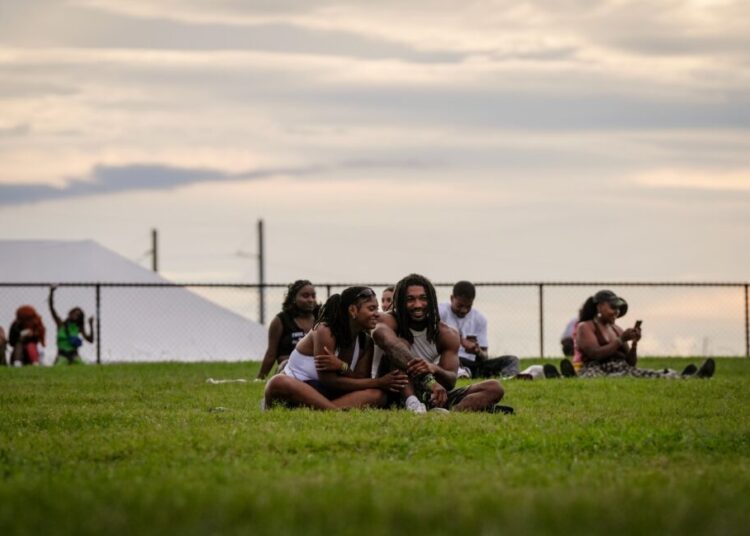
Revenge of the youngs. For years, I’ve been sounding the alarm about Republicans’ struggles with the millennial generation. Then Gen Z came along and, by and large, appeared even further left than millennials. In 2024, my prophecies of G.O.P. generational doom were put on hold, as Mr. Trump held his losses among voters 18 to 29 to a mere 11 points and among those 30 to 44 to just four.
I suspect, though, that 2026 will reveal 2024 as more of a blip than a durable rightward trend among young adults. Though early voting data isn’t a crystal ball, analysts at VoteHub are showing a missing young Republican effect emerging. Disillusionment with the status quo has transferred from a Democratic octogenarian president to a Republican octogenarian president.
Meanwhile, Democrats have elevated a number of rising millennial stars like Mr. Talarico, Senator Jon Ossoff in Georgia and Abdul El-Sayed in Michigan this midterm cycle (called the Mr. Brightside caucus by one reporter). To Republicans’ dismay, this might be the year when the selfie vote strikes back.
Kristen Soltis Anderson is the author of “The Selfie Vote: Where Millennials Are Leading America (and How Republicans Can Keep Up).”
Source photograph by Philip Thurston/Getty Images.
The Times is committed to publishing a diversity of letters to the editor. We’d like to hear what you think about this or any of our articles. Here are some tips. And here’s our email: [email protected].
Follow the New York Times Opinion section on Facebook, Instagram, TikTok, Bluesky, WhatsApp and Threads.
The post Five Things I’m Watching for in Tuesday’s Midterms appeared first on New York Times.