M. Nolan Gray is the chief urban planner at the Metropolitan Abundance Project.
Voter frustrations with property taxes are boiling over. On Election Day, seven states will consider whether to cap them, shrink them or start phasing them out. But before voters go all-in on the latest property tax revolt, they should seriously consider the consequences of the last one.
The most extreme proposal is in Florida, where an amendment would expand the homestead exemption for current residents — roughly $50,000 in 2026 — for current residents up to $150,000 in 2027 and $250,000 in 2028 and create a path for abolishing nonschool property taxes altogether.
Florida isn’t alone. In Wyoming, voters will be asked to slash assessed values of residences by 50 percent. In Oklahoma, a simple majority could soon cap annual assessments at a rate well below inflation. Across the country, similar proposals to abolish property taxes in states such as Georgia and Indiana have become a mainstay of conservative campaign promises. Collectively, this marks the largest property tax revolt since the 1970s. But the damage from the last one is still haunting California.
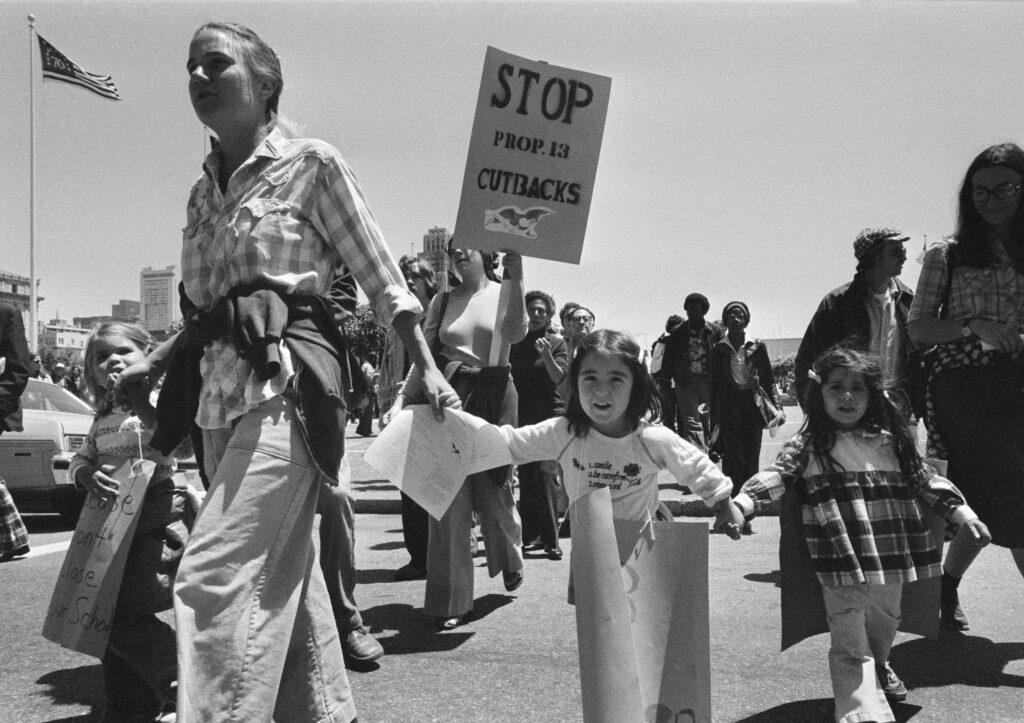
In 1978, Golden State voters passed Proposition 13. It capped property tax rates at 1 percent, rolled back assessments three years and limited annual assessment increases to 2 percent. It made some sense at the time. California was in the early stages of a housing crisis, and homeowners were feeling the squeeze of rising property tax bills.
But fast-forward 48 years, and the results have been a disaster. In the immediate aftermath, local property tax revenue fell by more than half. Libraries closed, school bus service was suspended, and local governments suddenly became dependent on the largesse of state legislators.
In response, California replaced property taxes with a bundle of even more onerous new taxes that fell hardest on working families.
At the local level, governments cranked up impact fees. In theory, these charges cover the cost of infrastructure required by development, such as an extended sewer main. But in practice, these fees — which are nearly triple the national average in California and often exceed six figures per unit — frequently serve to fund general infrastructure and service obligations that would otherwise have been funded by property taxes.
Perhaps the most pernicious result of Proposition 13 is that it allowed California voters who already owned their homes to stop caring about the housing shortage. Since 1970, the ratio of median home prices to median household incomes in places such as Los Angeles County has quadrupled, a direct consequence of the anti-growth policies spurred by the property tax revolt.
The result of California’s grand experiment was that aging homeowners benefited at everyone else’s expense. Unsurprisingly, the Golden State has had one of the highest rates of out-migration in the country in recent decades, especially among Gen Z.
Where are those emigrants headed? To states such as Texas, which pairs steeper property assessments with lower taxes on everything else. Even so, Texas Gov. Greg Abbott (R) has lately started campaigning on a platform that would replicate California’s biggest mistake.
Nobody likes paying taxes, and property taxes are particularly annoying: Unlike sales or gas taxes, they come in the form of a big bill once or twice a year. And unlike income or capital gains taxes, they tax unrealized wealth. As housing prices have skyrocketed, so too have property tax bills, despite homeowners feeling no richer.
Targeted relief to defer property tax increases for low-income homeowners makes sense. But the extreme overhauls being floated go far beyond that.
Complaints about rising local government budgets are legitimate: In Florida, city and county property tax revenue doubled between 2017 and 2025 thanks to rising home values. But did services double in quality? In California, where school enrollment is plummeting, many school districts continue hiring with abandon. Nationally, compensation for state and local government workers has started to significantly outpace the private sector.
Taxpayers are right to ask whether they are getting their money’s worth. But the blunt proposals on the ballot miss the mark.
There are good reasons property taxes unite economists across the ideological spectrum: They are hard to dodge or fudge, they don’t punish productive behavior such as working or investing, and they act as a sort of fee for local public services — for the most part, the more you pay in, the more you get out.
Famously, conservative economist Milton Friedman defended property taxes, and land value taxes in particular, as “the least bad tax.” He has been joined in recent years by tax-skeptical scholars at the Manhattan Institute and Tax Foundation.
Conversely, the progressive economist Joseph Stiglitz has defended such taxes as offering an efficient way to tackle income inequality. Think tanks on the left have repeatedly called attention to ham-handed service cuts forced by past property tax revolts.
As frustrating as rising property taxes are, the hard truth is that they cannot be lowered without addressing the underlying issue: a mounting housing shortage and spiking housing costs. As with rent control, abolishing or capping property taxes addresses one symptom of the problem while exacerbating the underlying disease.
Voters in Florida and other states should take it directly from a Californian: Property taxes suck, but the alternative is much worse.
The post This California revolt was a mistake. Voters should take note. appeared first on Washington Post.