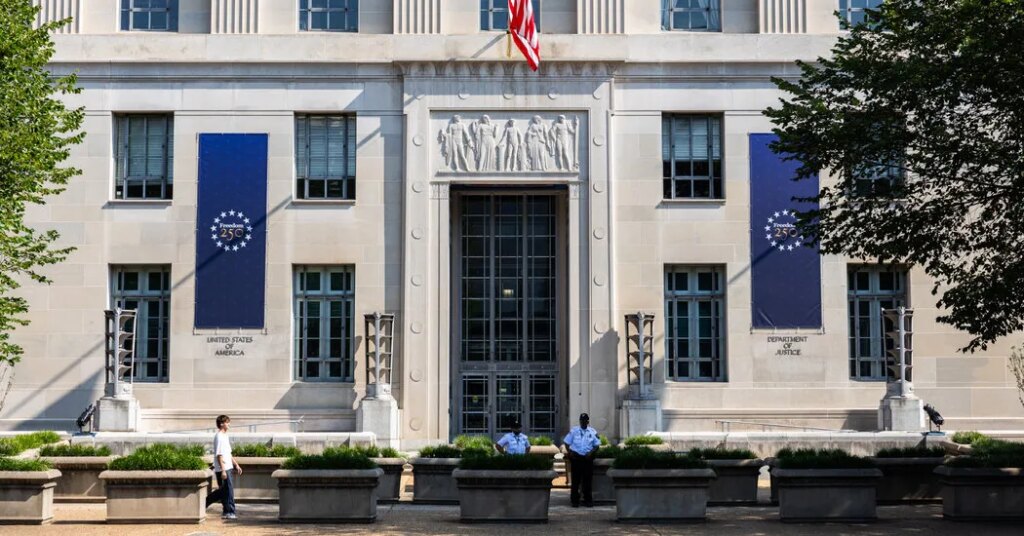
A federal grand jury in Washington on Friday rejected an effort by the Justice Department to indict an individual for voter fraud who prosecutors claimed voted in two jurisdictions during the 2024 election, according to four people briefed on the matter.
The rejection, along with a string of losses the Justice Department has been handed in courts across the country in recent weeks, demonstrates the department’s harried push to prove President Trump’s unsubstantiated claims of rampant voter fraud.
It also shows the increasing difficulty federal prosecutors in Washington have faced in bringing indictments on a range of matters, including against Mr. Trump’s perceived political enemies. Last week, a grand jury declined to indict Cassidy Hutchinson, a former Trump aide who had been in the president’s cross hairs after she gave damning testimony about him involving the Capitol riot on Jan. 6, 2021.
Grand jury proceedings are held in secret, leaving it uncertain why jurors rejected the case. And there were differing accounts about why prosecutors brought this case, particularly so close to the midterm election. Previous Justice Departments shied away from bringing politically fraught cases in the weeks before Election Day to avoid the appearance of trying to tip the scales.
According to one person familiar with the matter, the case was brought in response to pressure from political appointees, including the U.S. attorney in Washington, Jeanine Pirro, who wanted to follow through on Mr. Trump’s demands to bring cases involving potential voter fraud as the midterms neared.
Another person familiar with the case said that the investigation had been opened after the District of Columbia Board of Elections sent the U.S. attorney’s office a list of several people whom they found had voted twice.
A spokesman for the U.S. attorney’s office in Washington did not return a request for comment.
Bringing voter fraud indictments would have armed Mr. Trump with a fresh example he could point to as he seeks to undermine the public’s faith in the election results.
Mr. Trump has repeatedly made false claims of widespread voter fraud and the Justice Department, acting on his orders, has filed a flurry of criminal cases across the country in recent weeks. In Mr. Trump’s second term, the Justice Department has brought about 200 cases against individuals for voter fraud, far more than the roughly dozen cases that were brought under the Biden Justice Department.
At the same time, the Justice Department has lost dozens of lawsuits it brought against state and local officials over how they have administered elections, including last week in California. In that case, the department requested that California be required to set aside 20,000 mail-in ballots that the department claimed were from noncitizens.
The rejection by a grand jury — what is known as a no true bill — was once exceedingly rare. But they have become much more common, especially in Federal District Court in Washington, where Mr. Trump’s political appointees have tried to push through several of his vengeance prosecutions.
Such failures have become common enough that the chief judge in the District of Columbia, James E. Boasberg, has instructed grand jury foremen and forewomen to alert the court if they reject an indictment.
In the past week alone, prosecutors in Washington have faced a series of resounding setbacks.
Last Tuesday, grand jurors rejected an effort by the Justice Department’s civil rights division to charge Ms. Hutchinson with lying during her testimony to the House select committee investigating Mr. Trump’s role in the Jan. 6 riot.
On Monday, a judge dismissed charges against two former F.B.I. officials accused of lying to Congress, delivering an embarrassing defeat to Ms. Pirro’s office.
Magistrate Judge Zia M. Faruqui threw out a criminal complaint used to charge the two former officials — Nikki Floris and Bradley Benavides — because prosecutors were unable to persuade him that there was probable cause that the two defendants had actually committed crimes.
In an address from the bench, Judge Faruqui said that he believed prosecutors had charged the former officials by complaint, not by an indictment, because they had a poor record of presenting cases to grand juries.
Judge Faruqui was alerted on Friday to the failure in the voting fraud case — one of several grand jury rejections that he has personally been informed of.
In February, a grand jury declined to indict six Democratic lawmakers who released a video last year reminding military and intelligence personnel of their obligations to disobey illegal orders.
Ms. Pirro’s office has failed to obtain indictments in other cases as well, including several stemming from the president’s use of the military to crack down on local crime.
Aishvarya Kavi contributed reporting.
The post Grand Jury Rejects Bid by Justice Dept. to Bring Charges Over Voter Fraud appeared first on New York Times.