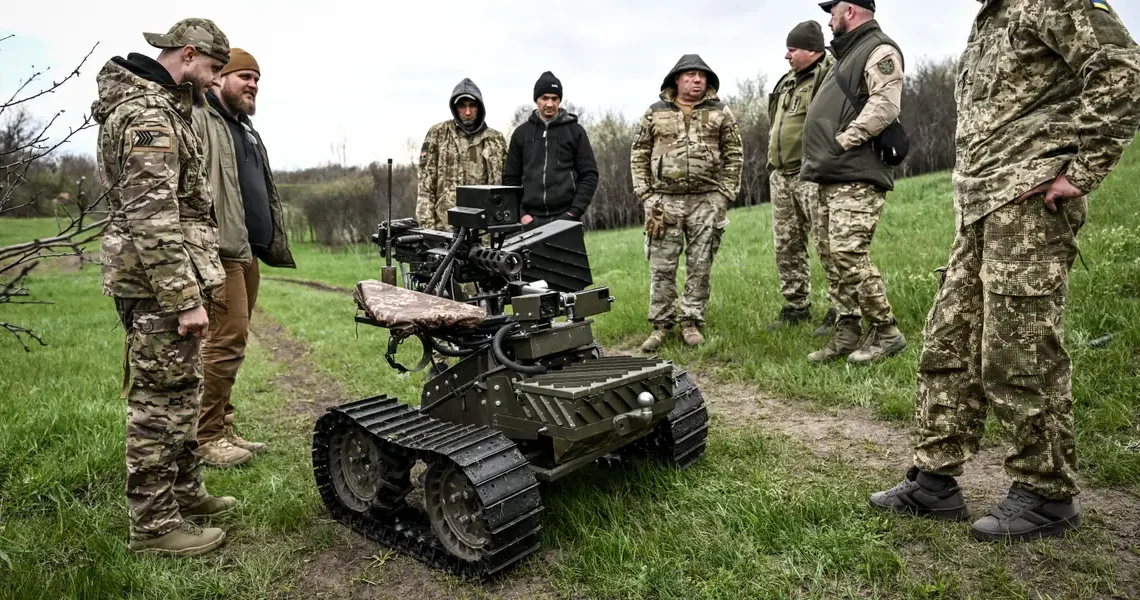
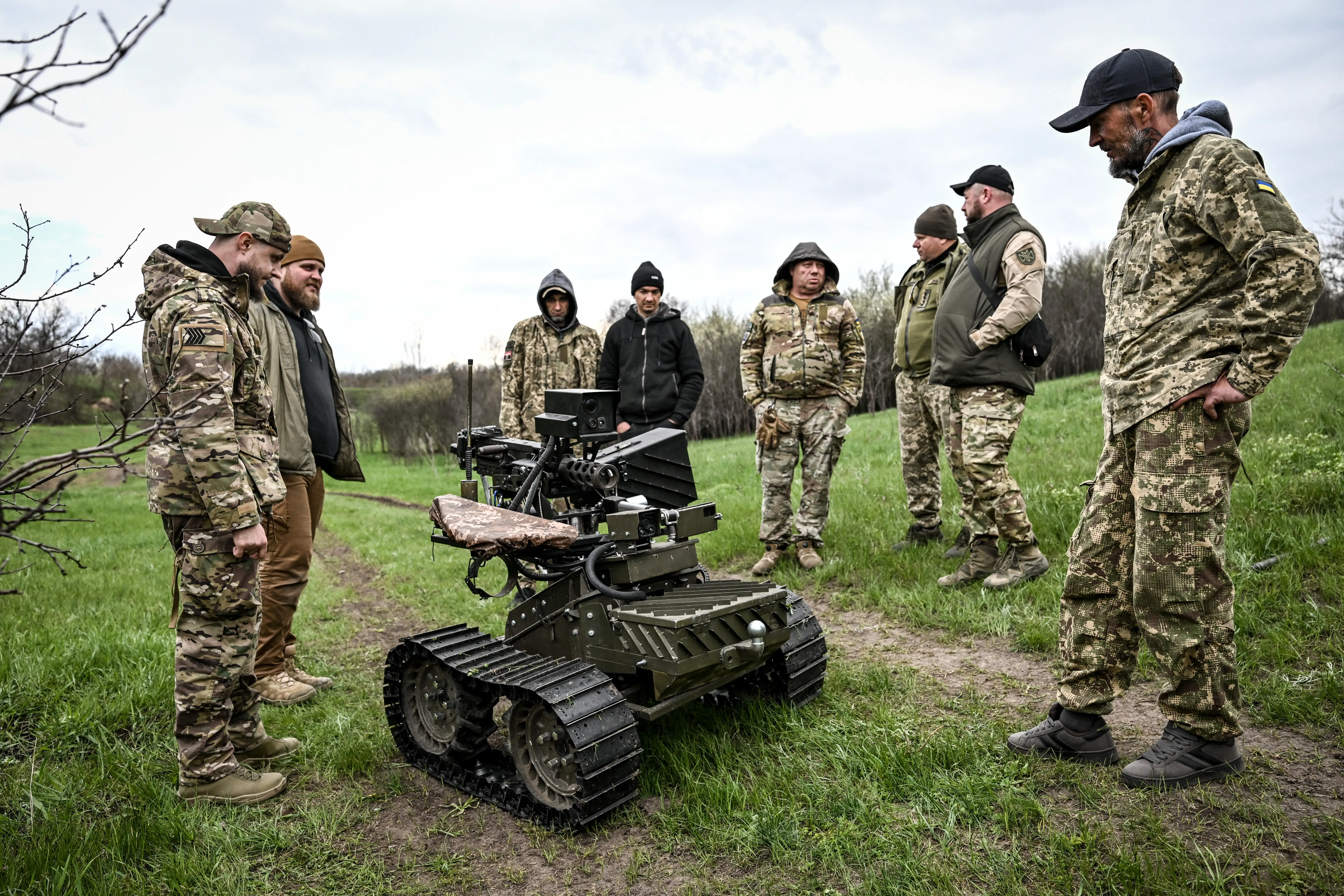
Ukraine is using a growing fleet of war robots to take dangerous roles away from humans, but soldiers sometimes still need to risk their lives to keep the machines running.
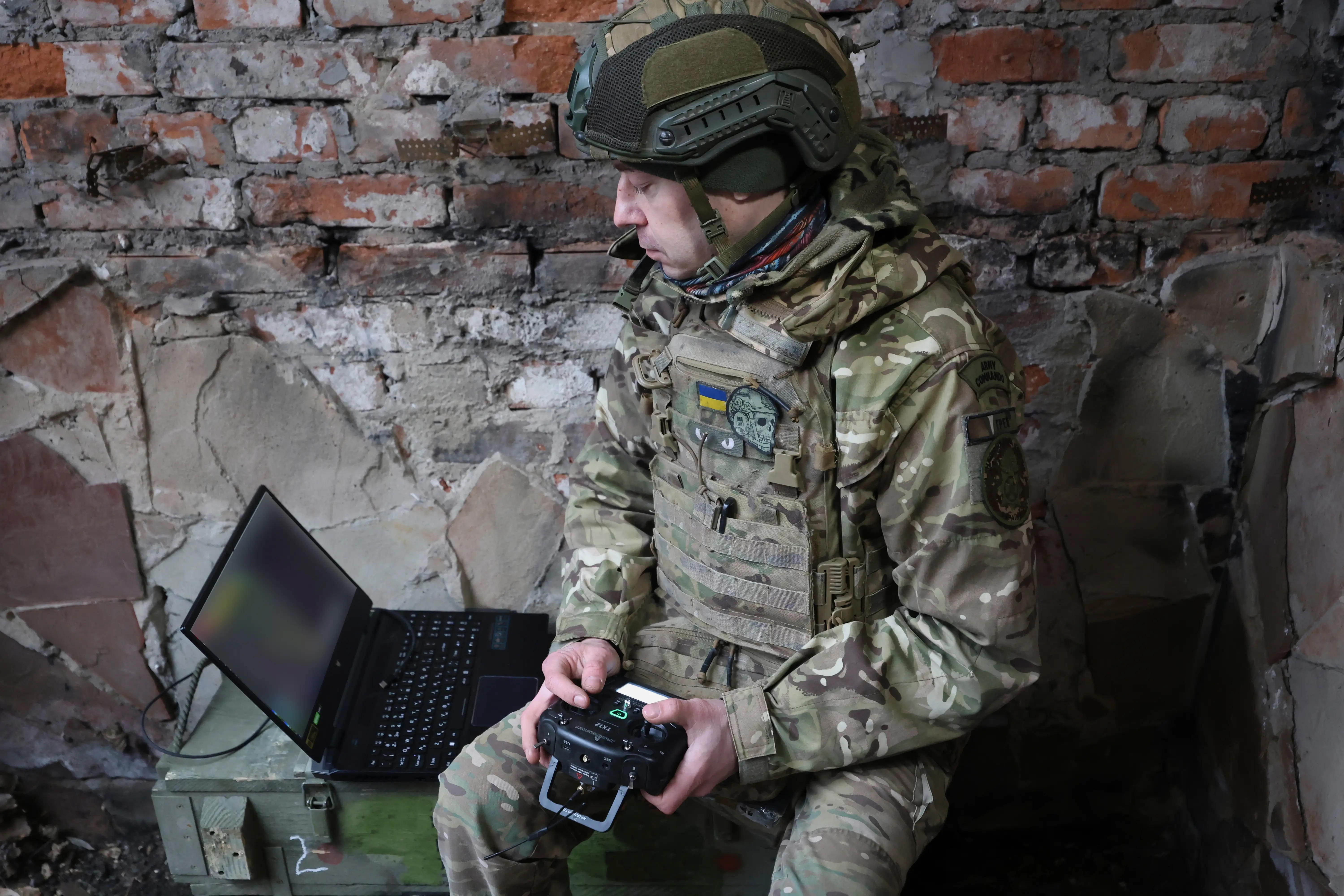
Ukraine wants to replace as many human soldiers in dangerous missions and roles as possible with robots and drones, and the technology has advanced enough that operators can now control some war robots from tens of kilometers away, according to Ukrainian brigades.
That can keep operators away from Russian fire, but while the robots, known as uncrewed ground vehicles, or UGVs, can replace soldiers on dangerous missions, other troops may still need to venture closer to the fighting to prepare, launch, maintain, and recover them.
For Ukraine’s robotic missions, “at present, human involvement is both mandatory and indispensable,” Oleksandr Yabchanka, head of the robotic systems for Ukraine’s Da Vinci Wolves Battalion, told Business Insider.
“Someone must swap out batteries, perform maintenance, and troubleshoot technical issues,” he said. Keeping a robot functional can mean replacing damaged parts, fixing punctured tires, and reloading ammunition.
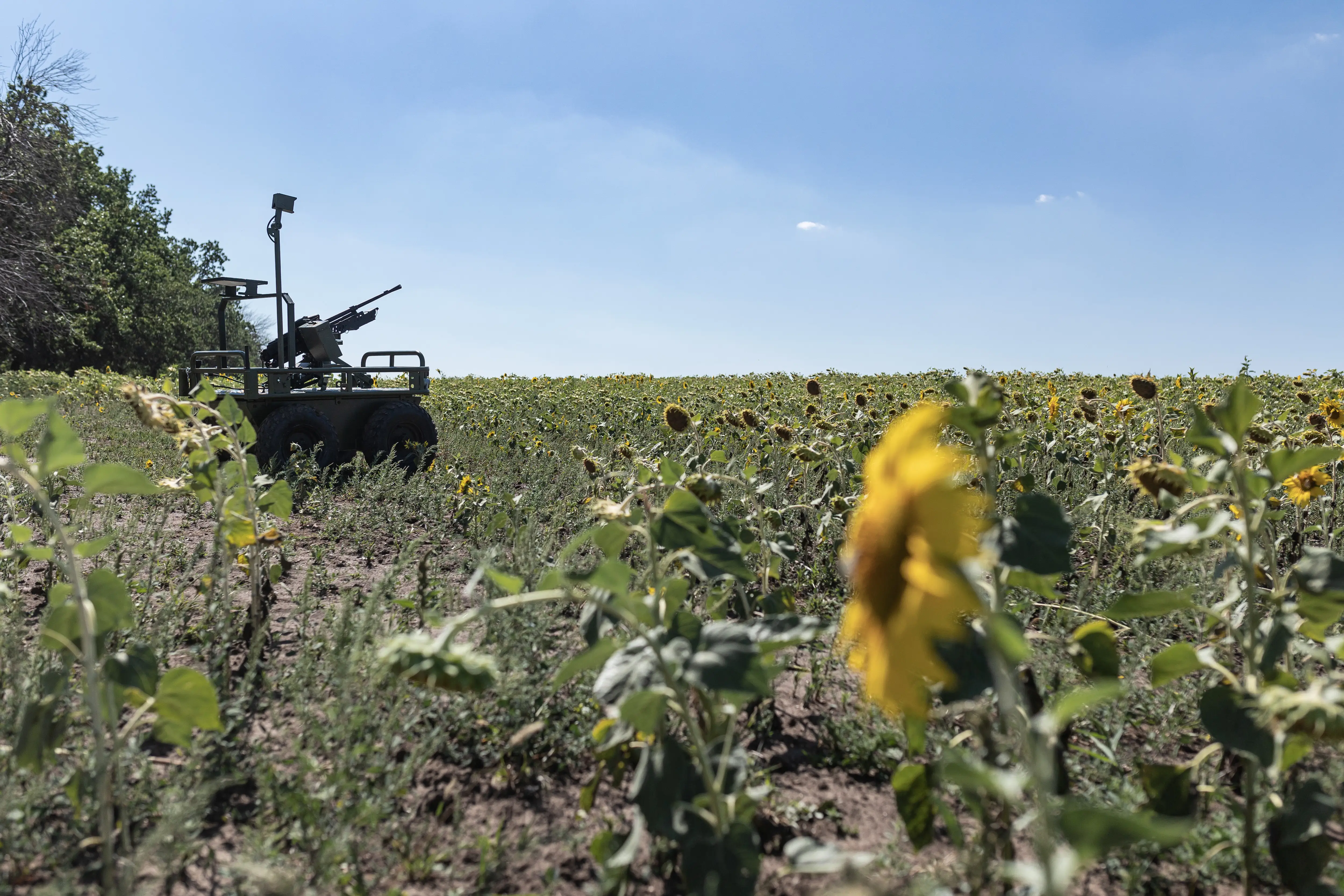
The robots are typically designed to be relatively cheap and expendable, limiting the cost of losing one. Because their purpose is primarily to protect soldiers, units may decide that a damaged robot isn’t worth risking a life to recover, but human support remains essential to keeping the fleet operational.
Many robots are designed to be reconfigured for different missions, allowing soldiers to swap equipment rather than use a separate machine for every task.
David Roberts, the CEO of ARX Robotics UK, the British arm of the German defense technology company of the same name, told Business Insider that the company’s robots, some of which are in Ukraine, are designed so that it takes “literally seconds” to swap between a logistics setup, a communications payload, or whatever troops want to use it for.
That flexibility makes it easier to switch missions, but soldiers still need to be close enough to the front lines to reconfigure the machines.
Supporting soldiers will try to stay as far back from the fighting as they can, but factors like robots’ range limit what’s possible. Yabchanka said that “our philosophy is, above all, to preserve our personnel. Therefore, we strive to position our fighters as far as possible from the line of contact and the zones of highest risk—the so-called ‘kill zones.'”
This applies in particular to operators and specialists in electronic warfare. “The exact distance to which they can be moved back depends on specific conditions and technical capabilities, but the general direction is precisely this.”
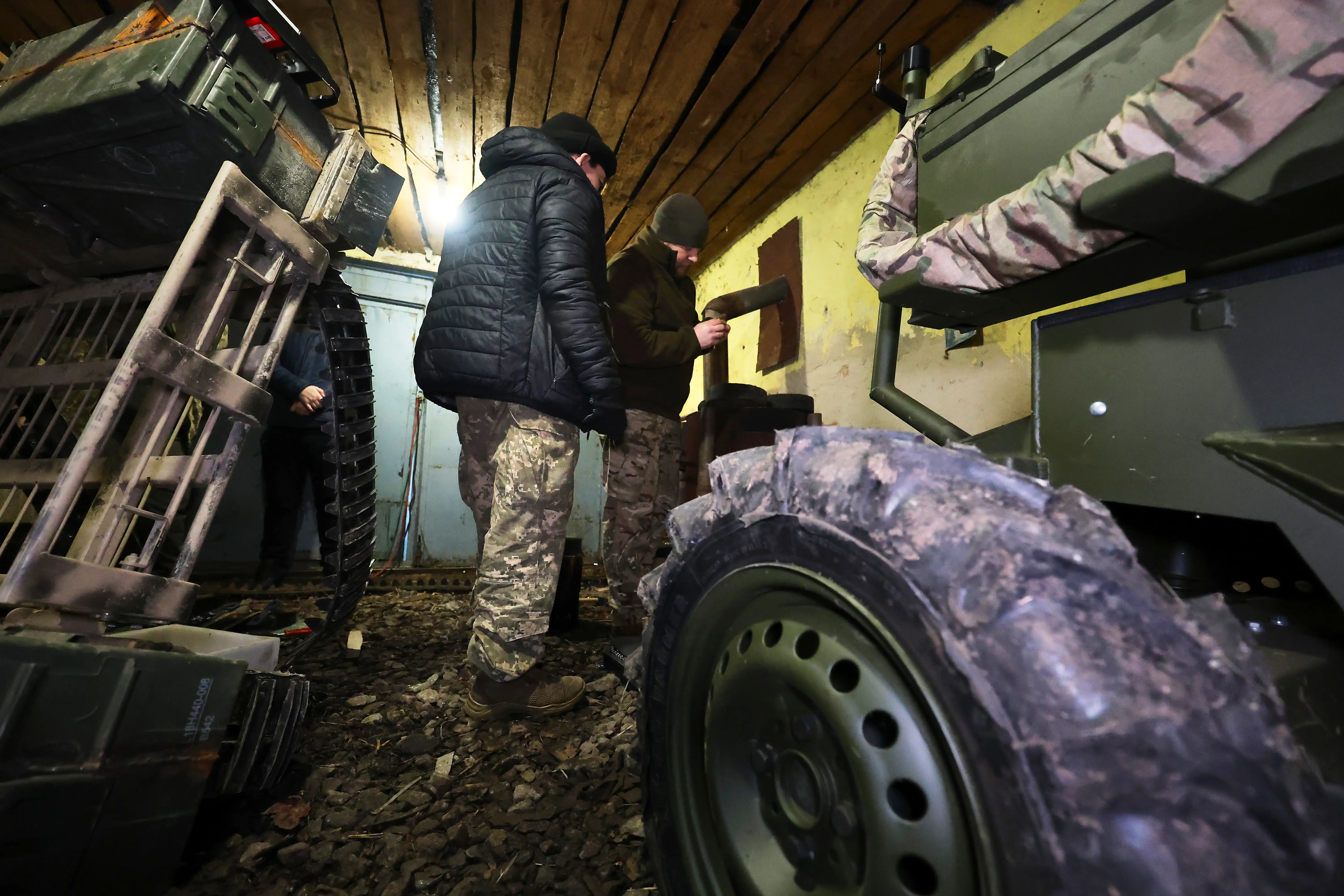
Some companies in Ukraine also send their staff to areas near the fighting to keep robots running. Ukrainian UGV maker DevDroid says robots “operate in extreme conditions — dirt, overheating, impacts, and electronic warfare. After several missions, they require diagnostics, updates, or repairs.” It sends mobile teams out to units, including to front-line regions, to keep robots working.
Another challenge is that “the autonomy of UGVs is still in the early stages of development,” Yabchanka said.
Though there have been technological breakthroughs, most of the ground robots still rely heavily on remote control rather than navigating and completing missions independently. That can leave them stranded if something goes wrong.
Their dependence on continuous communications can also limit how safely operators can position themselves on the battlefield.
There is a similar dynamic in play with aerial drones. Ukraine is developing technology that allows pilots to stay much farther from danger, but support crews still need to work closer to the fighting. Some drone operators can control their drones from relatively safe locations hundreds or even thousands of miles away, but someone still has to prepare, arm, and launch the aircraft in the area where it’s needed.
Satellite communications technology means units are “able to put our pilots in any place when there is a stable internet connection for them,” Dmytro “Liber” Zhluktenko, a former drone operator who now serves as a lessons-learned analyst with Ukraine’s 413th Unmanned Systems Regiment “RAID,” told Business Insider.
“But this doesn’t remove the need for the ground groups, people who actually attach the explosive, put the drone outside of the bunker, et cetera,” he said.
Ukraine is working to reduce those risks by improving the range, reliability, and off-road mobility of its robots, as well as connectivity solutions, allowing support crews to operate farther from the front.
Ukraine is also increasingly using ground robots to recover other ground robots rather than sending human crews, and companies are designing parts and batteries that can be replaced more quickly to shorten the time soldiers spend servicing them in the field.
Greater autonomy is another priority, potentially allowing robots to operate with less human control. An uncrewed systems unit announced this week that a robot had successfully completed a 12-mile supply run almost entirely on its own. The unit said the mission was the “first of its kind under combat conditions.”
Mykyta Rozhkov, the chief business development officer for Ukrainian defense tech company Frontline Robotics, told Business Insider that “right now more and more systems are getting autonomous features.”
Yabchanka said the future of drones and robots “lies in the development of autonomy. Therefore, we need software solutions that will enable these systems to perform more functions independently, thereby reducing their reliance on a continuous connection with an operator.”
Despite their limitations, robots are helping keep Ukraine’s soldiers from having to do some of the battlefield’s most dangerous jobs themselves.
Yabchanka said that “ground-based robotic systems are becoming an integral part of combat operations for most units deployed along the line of contact.”
Read the original article on Business Insider
The post Ukraine’s war robots keep soldiers out of danger, but humans still risk their lives to keep them running appeared first on Business Insider.