I spend a lot of time preaching about staying out of debt and saving to ensure you have enough money to contribute to a retirement account.
But can you save too much for your life after you stop working full-time?
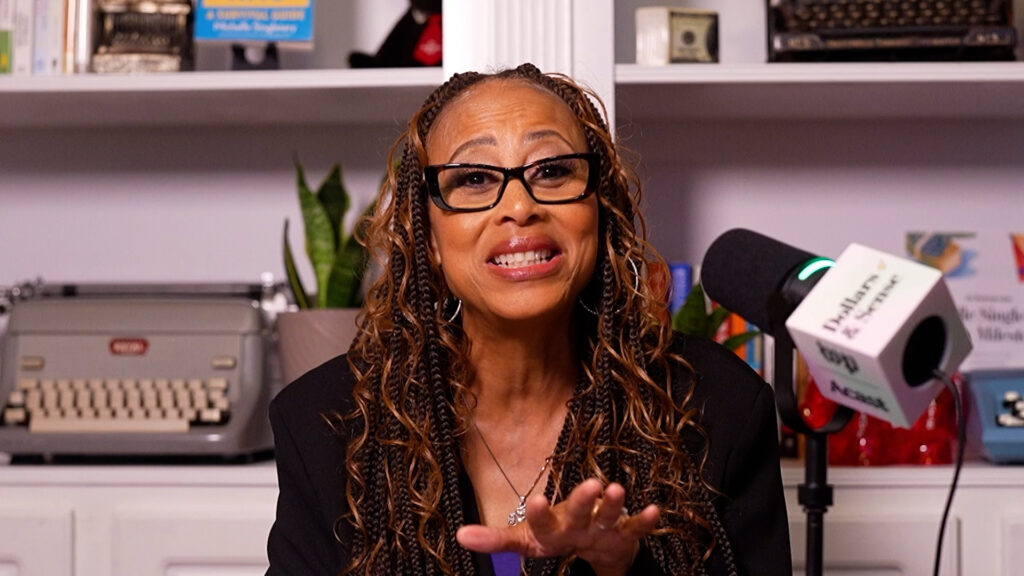
That is the question Brian had for me on my video podcast, “Dollars & Sense With Michelle Singletary.”
“I have $1.4 million in a traditional 401(k). I also have $495,000 in a traditional IRA. I’m 54. I’m wondering if I need to keep putting money in both accounts,” he asked. “With that amount of money, should I stop?”
Let’s put that amount in perspective, compared with the rest of America.
The average retirement savings for American families is $451,100, and the median is $106,000, according to the most recent data from the Federal Reserve Survey of Consumer Finances. For individuals ages 45 to 54, the average was a little more than $415,000, and the median was $133,000.
So being a 401(k) millionaire puts Brian in a pretty elite club.
But that money still may not be enough, factoring in taxes and the risk that his health might fail and he might need long-term care.
If you’re looking for a benchmark for retirement savings, Fidelity Investments recommends aiming to save at least the equivalent of your salary by 30, three times your salary by 40, six times by 50, eight times by 60, and 10 times by 67.
To achieve this strategy, the goal would be to set aside 15 percent of your gross income. That rate can be a combination of a person’s individual contributions and any employer match. This may be tough for a lot of folks, but save as much as you can.
If you aren’t sure if your retirement savings are on track, consider hiring a fee-only fiduciary financial planner to check your progress.
Overall, Brian is doing better than great. Still, I wouldn’t suggest he stop contributing to his retirement accounts. And he should make sure other financial goals are also being met.
“With three teen and preteen children, I hope you’re putting money in a college fund,” I said.
Brian’s commitment to his retirement is admirable. But any aggressive retirement investor needs to ensure they also have enough cash flow to cover their present-day needs, so ask yourself this question: Is your emergency fund getting as much love as your 401(k) and IRA?
If investing too much in tomorrow leaves you scraping by today, make some adjustments. Don’t leave yourself short on cash for home repairs or for life’s unexpected expenses, such as a medical emergency not covered by your health insurance.
Here’s one more thing. If you’re fortunate enough to comfortably fund your major financial goals and still have extra money left over, use it to have some fun, too.
Follow Michelle’s financial advice show, Dollars & Sense With Michelle Singletary, on Apple Podcasts, Spotify, YouTube or wherever you get your podcasts. Want Michelle to answer your money question on the show? Email [email protected].
The post Can you invest too much in your retirement? appeared first on Washington Post.