Presidential elections in Haiti were postponed until July, officials said, meaning the violence-wracked nation will go more than a decade without holding a vote to elect its top leader.
The postponement of elections, announced on Wednesday, was a major — but not surprising — blow that acknowledged the reality that despite two international military and police missions, Haiti had yet to get a handle on rampant violence.
The move came as the Salvadoran government sent more than 2,000 troops to Haiti in a quest to wrest control from the gangs and help locate four Salvadoran soldiers who went missing on Oct. 18. The four Salvadorans were part of a United Nation-backed mission called the Gang Suppression Force, which arrived in April but has struggled to reach expected troop numbers.
Some of the new Salvadoran troops have joined that U.N.-backed force.
The influx of Salvadorans would roughly double the number of international troops on the ground.
Haiti’s Provisional Electoral Council announced late Wednesday that it had published a new electoral calendar which pushed the elections until July 18, 2027. The announcement did not cite a reason.
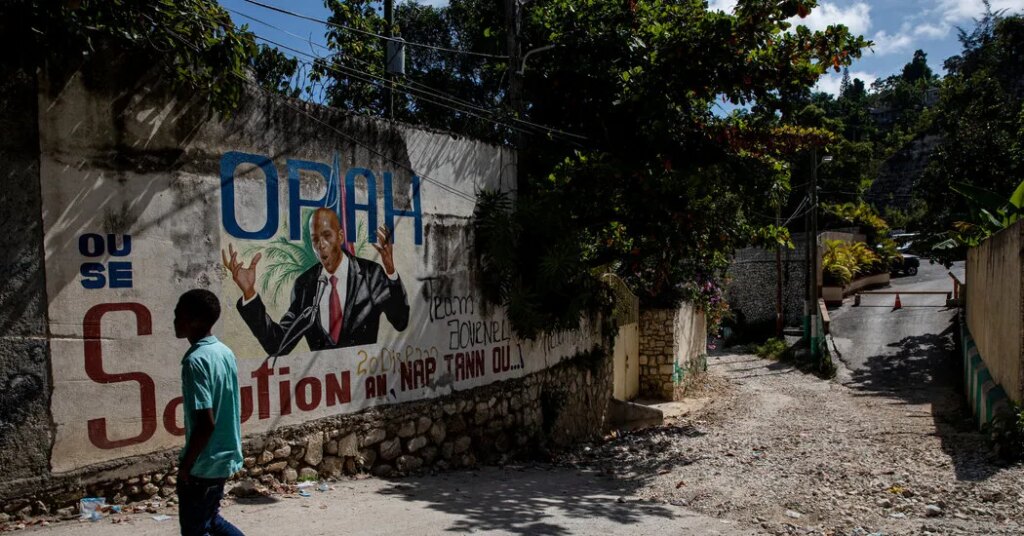
Haiti’s last elected president, Jovenel Moïse, was elected in 2016. Mr. Moïse was assassinated in his home in 2021, but the nation has been so overtaken by gang violence since that it has proved impossible to organize an election.
A previous date had been scheduled for December, a date that many experts viewed as essentially a pipe dream.
In the absence of an elected leader, provisional governments have ruled. Haiti has had three prime ministers since the president’s killing.
Dozens of gangs with thousands of members control large swaths of the capital, Port-au-Prince. More than 1.5 million people have been forced to flee their homes and many communities are deserted, making voting there virtually impossible.
Gangs occupy major roads, which would make the transport of ballots a challenge. Only candidates who can afford helicopters would be able to fly over gang checkpoints on major highways to canvas regions outside the capital.
Millions of people lack voter ID cards needed to register to vote. Only 900,000 people have registered so far, but 6.2 million were registered in the last election.
Experts debated whether it was better for Haiti to organize an election — any election — even if it risked disenfranchising millions of people, because doing so would be an important step toward democracy and stability. But others worried that elections held in this environment would mean that only the voters who live in safe neighborhoods would be able to cast ballots.
The Trump administration had urged government officials to organize an election. The United States has been a major provider of financial aid to Haiti.
“It won’t be a Cadillac election,” Michael Kozak, a former senior U.S. State Department official, told a House committee earlier this year while he was still in his post. “But if it’s a good, you know, F-150 election, that’s going to be solid. They need an elected government. It doesn’t need to be perfect.”
But candidates said they were afraid to campaign and said they could only safely conduct election rallies by video conference.
Bill O’Neill, the United Nations’ human rights expert on Haiti, said the conditions necessary to hold elections, such as freedom of expression and movement, do not exist — particularly since about 60 percent of the voting population lives in gang-controlled territory.
“It is impossible to campaign, hold rallies or even open polling places in these areas without approval by the gangs,” he said. “In these circumstances the gangs could manipulate the elections to insure that candidates they control win. That would be a catastrophe.”
André Paultre contributed reporting from Port-au-Prince, Haiti, and David C. Adams from Miami.
The post Amid Unrelenting Violence, Haiti Puts Off Its Long-Awaited Elections appeared first on New York Times.