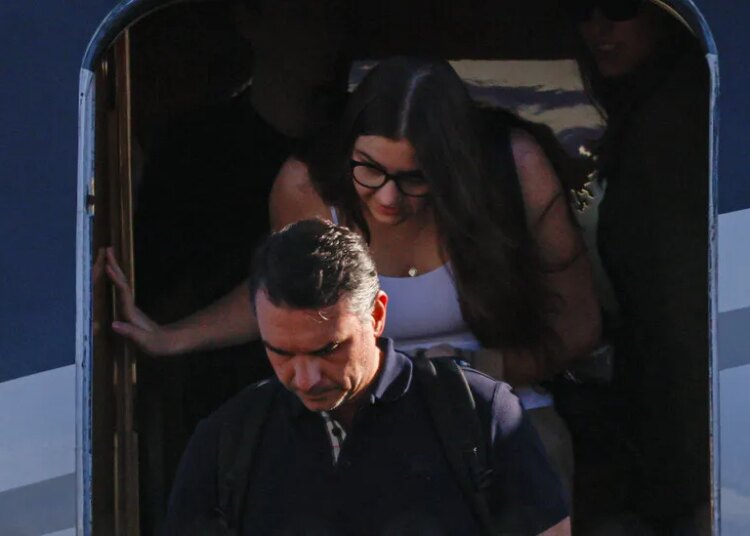
Losing an election shouldn’t drive candidates to flee their countries. But it happened with Flávio Bolsonaro, who arrived in Miami on Wednesday, three days after his defeat in Brazil’s presidential runoff, because he feared imminent arrest. Allies say he doesn’t think he can get a fair shake from his country’s justice system. That’s an indictment of the Western Hemisphere’s second-largest democracy, even if a criminal investigation against him turns out to be justified.
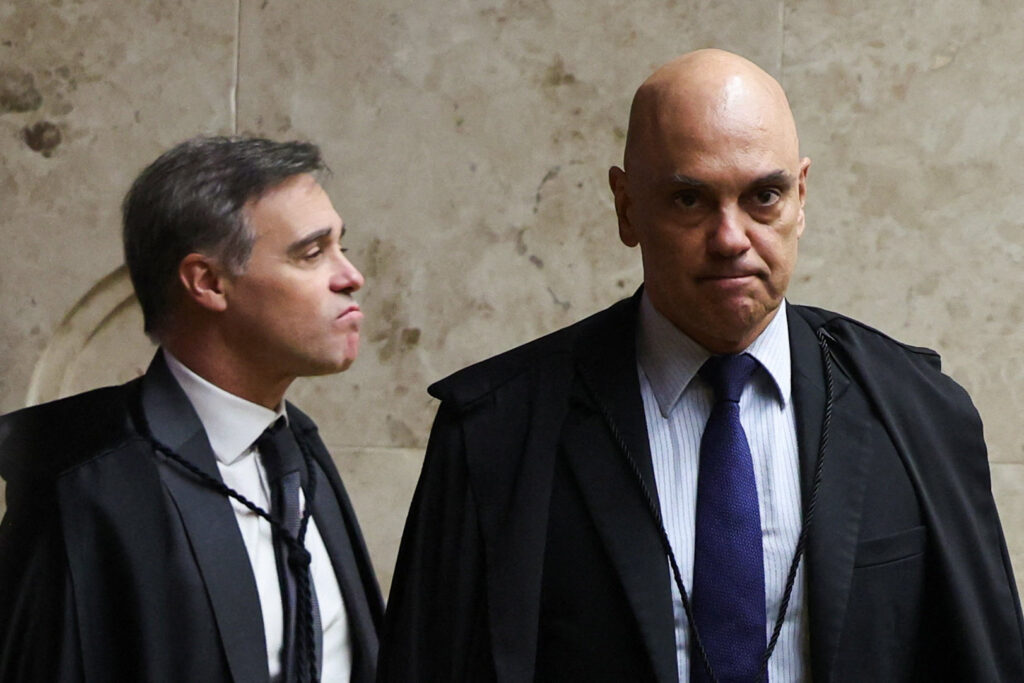
Bolsonaro escaped to the United States after Brazilian Supreme Court Justice Alexandre de Moraes ordered him to surrender his passports. Last year, the same judge sentenced his father, former president Jair Bolsonaro, to 27 years in prison for plotting a coup after losing the 2022 election. The younger Bolsonaro faces investigations into alleged money laundering and tax evasion. He denies wrongdoing.
Bolsonaro’s claims of political persecution hit differently because of the extraordinary powers Brazil’s judiciary has amassed in recent years. Judges often act as investigators, prosecutors and adjudicators. Moraes has used investigations into “disinformation” and supposed attacks on democracy to assert significant control. The Brazil Supreme Court opened its own investigation into “fake news” in 2019, and Moraes has used that probe over the ensuing seven years to order searches and arrests, freeze accounts and remove individuals from social media.
In 2024, Moraes demonstrated how far he was willing to go. He ordered the shutdown of X, the social media platform, across Brazil and directed Apple and Google to make it harder for X users to obtain software that could circumvent the ban. Though he backed off that portion of the order, he left in place a fine of 50,000 reais (about $9,000) per day for anyone using a virtual private network to access X. Service was restored after X agreed to comply with court orders, pay fines and appoint a local legal representative. The flagrant attack on free speech put Brazil in a rogues’ gallery that includes China, Iran and Turkmenistan.
Defenders of Moraes say he is shoring up Brazil’s institutions after they were attacked on Jan. 8, 2023. Supporters of the elder Bolsonaro stormed Congress, the presidential palace and the Supreme Court. But an attack on the rule of law does not give judges license to become untethered from it.
No one is above the law, including those charged with interpreting it. A court does not defend the rule of law merely because it calls its orders lawful. The rule of law requires authority grounded in statutes and constitutions, predictable procedures, meaningful appeals, proportional punishments and protections for the accused. The alternative is rule by law: government officials using legal instruments to exercise power unconstrained by durable legal principles.
The consequences extend beyond politics. Free markets depend on the rule of law because investors must believe that contracts will be enforced, property will be protected and government power will be exercised according to rules rather than discretion. A businessman deciding whether to build a factory in Brazil cannot separate the treatment of politicians from the treatment his company might receive from courts. The greater the discretion wielded by government officials, the greater the political risk, and the higher the return investors will demand to risk their capital.
Brazilian President Luiz Inácio Lula da Silva, of all people, should understand these dangers. He was convicted of corruption, imprisoned for more than a year and barred from running for president in 2018. Brazil’s Supreme Court eventually annulled his convictions after concluding that the court that heard his cases lacked jurisdiction. The U.N. Human Rights Committee separately concluded that investigators had violated his due-process rights and presumption of innocence. Those decisions cleared the way for Lula’s extraordinary comeback to the presidency.
The due-process principles that protected Lula do not become less important when the accused bears the name Bolsonaro. Maybe he is guilty of crimes. Maybe he isn’t. His decision to flee in this case does not establish innocence any more than the investigation establishes guilt.
Meanwhile, the funny business continues in Brasília. On Tuesday, another Supreme Court justice ordered the police to open an investigation into any communications between the Rockbridge Network, a donor consortium co-founded by Vice President JD Vance, and Bolsonaro’s campaign. Rockbridge denies wrongdoing. Lula’s Workers’ Party filed a complaint with the Supreme Court. The spectacle of the high court launching another politically explosive investigation at the request of the president’s party doesn’t engender confidence in the judicial system’s assertions of independence.
Brazil held a competitive election on Sunday, and Lula won it, but Bolsonaro’s Liberal Party holds the most seats in both chambers of Congress. He should be preparing to lead the opposition, not settling into South Florida. A healthy democracy needs losers who accept defeat and a justice system in which they can safely do so.
The post When judges become prosecutors appeared first on Washington Post.