One revolves around emotions, metaphor and access to a character’s inner thoughts, requiring you to visualize dreadful things in your mind. The other uses camerawork to put you on the edge of your seat, a score to build tension and special effects to bring monsters to life.
While their methods differ, horror books and horror movies are both capable of stirring fear so strong you can feel it coming. Your eyes narrow in anticipation of something terrifying popping up on the screen; your knuckles turn white as you grip the book, ready to sling it across the room at the next shocking twist.
I can’t say which have scared me more, books or movies, but plenty have gotten under my skin. And sometimes, I’ll come across a story in one medium that chimes with a tale I’ve encountered in the other. (I was even reminded of one of my own novels, “Sisters of the Lost Nation,” when I gasped at the freakish disembodied head that haunts a boy in the movie “Daddy’s Head.”) Here are eight books that echo great horror flicks — not carbon copies but uncanny doubles, sharing the same particular atmosphere of fear.
If “The Shining” makes you shiver
The Haunting of Hill House
by Shirley Jackson
Cold spots, disturbing sisters, suspicious deaths — Jackson’s psychological thriller has a lot in common with Stanley Kubrick’s film (itself an adaptation of a classic horror novel, by Stephen King). There’s a lot to be unnerved by in these literary and cinematic masterpieces, including petrifying visions, mysterious messages and a rotting woman in a bathtub. And all of it is intensified by the remote, madness-inducing, settings: the sprawling Hill House and the labyrinthine Overlook Hotel.
If “Psycho” gives you the creeps
American Rapture
by CJ Leede
Leede’s dystopian novel about a Catholic girl named Sophie who tries to find her family amid an outbreak of a brutal virus that turns infected individuals into hypersexual killers shares a (maternal) bond with Alfred Hitchcock’s horror classic. The film, based on a 1959 novel by Robert Bloch, shines a neon light on the motel owner Norman Bates, a man with more devious things than hospitality on his mind. Scarred by their strict and isolated upbringings — in which their mothers played starring roles — neither Sophie nor Norman can separate shame from natural human desire, which leads to uncomfortable questions about faith, doubt, possessiveness and more.
If you scream for “The Texas Chainsaw Massacre”
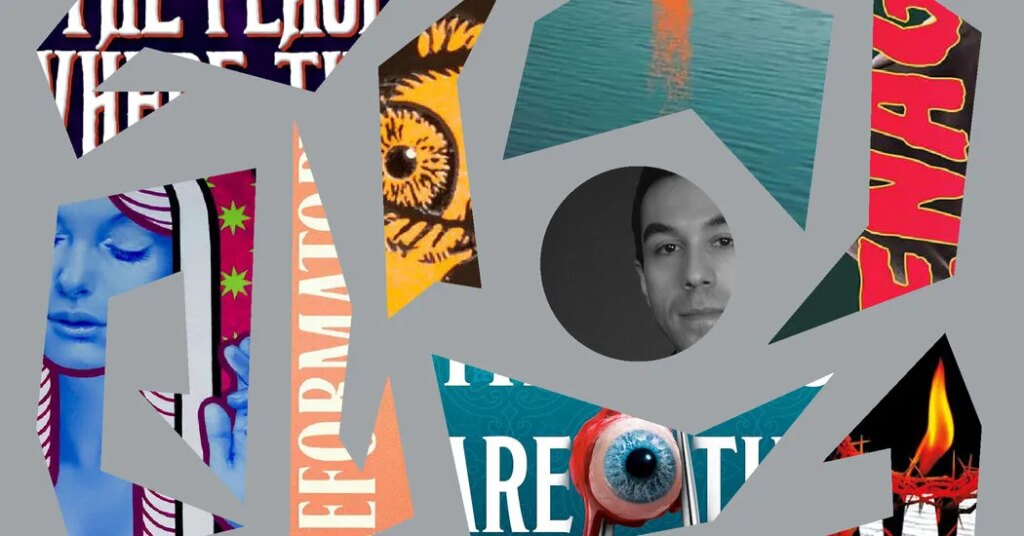
The Eyes Are the Best Part
by Monika Kim
When she was a child, Ji-won’s mother taught her that the eyes were the tastiest morsels of the fish they ate for dinner. As a college freshman, Ji-won finds her life falling apart thanks to a series of overbearing and destructive men — and she discovers a sudden craving for eyes of the human variety instead. The book shares more than cannibalism with “The Texas Chain Saw Massacre,” which follows a group of teenagers fighting for their lives while being pursued by a cannibalistic family. The novel and the movie address themes of rage, objectification, entitlement and dehumanization from both perspectives — the ones doing the dining, and the ones being dined upon. Read our review.
If “Candyman” is your jam
The Reformatory
by Tananarive Due
Racial trauma, systemic injustice and the dark side of United States history form sturdy bridges between Due’s fictionalized account of a Jim Crow-era Florida reform school and the movie about a hook-handed, beekeeping villain, which was adapted from Clive Barker’s short story “The Forbidden.” Revolving around Black male characters (a boy in the book, a man in the movie) who are brutalized for events that take place between them and white females, these narratives are strong examples of storytelling at its finest, inspired by history at its worst. Read our review.
If “Halloween” gets your pulse racing
All Hallows
by Christopher Golden
Set in the suburbs in the fall of 1984, “All Hallows” evokes John Carpenter’s classic film, in which an iconic embodiment of evil is born. You can almost hear Michael Myers’s dread-inducing theme as, in Golden’s novel, four mysterious and terrified children show up amid the trick-or-treaters in Coventry, Mass., on Halloween night and beg the local kids to help them evade the sinister Cunning Man. The neighborhood will never be the same again. Read our review.
If “The Thing” is your thing
The Troop
by Nick Cutter
I vividly remember the first time I watched “The Thing” (based on John W. Campbell’s creature feature novella “Who Goes There?”). I was sitting on a floral couch in a pink wallpapered basement filled with framed Disney prints, in the home of the only friend who liked scary movies as much as I did (he wasn’t responsible for the décor). And I can still feel how my insides squirmed when the dog’s face split open and all those wriggling things came out of its body. I experienced that same sensation while reading Cutter’s novel about a group of Boy Scouts stuck on an island with a bioengineered parasite. Neither the book nor the movie is for the squeamish: You may never look at the world around you the same way again.
If you’re haunted by “Hereditary”
The Place Where They Buried Your Heart
by Christina Henry
Have you ever found yourself unsettled and sad, steeping in a cocktail of grief and regret? In this pairing, that ill-at-ease feeling is brought on by the compounding traumas that families endure after the loss of a child. Henry’s novel is a killer haunted house story — in more ways than one. Ari Aster’s debut feature is a supernatural psychological horror drama (and, I would argue, already a modern classic). Each takes a frightening and heart-rending look at grief, motherhood and trauma. Watch out for creeping vines.
If “Scream” still keeps you up at night
I Was a Teenage Slasher
by Stephen Graham Jones
“There are certain rules that one must abide by in order to successfully survive a horror movie,” Randy Meeks tells his partying friends in “Scream,” right before informing them that drinking equals death. His rules are based on classic horror movie tropes; knowledge of those tropes is also what Amber Big Plume Dennison relies on in her attempts to help her best friend, Tolly Driver, the main character of Jones’s novel, after he has a brush with death that transforms him into a reluctant yet insatiable killer. From the old rules, new ones arise. Read our review.
The post The Perfect Books for Classic Horror Movie Fans appeared first on New York Times.