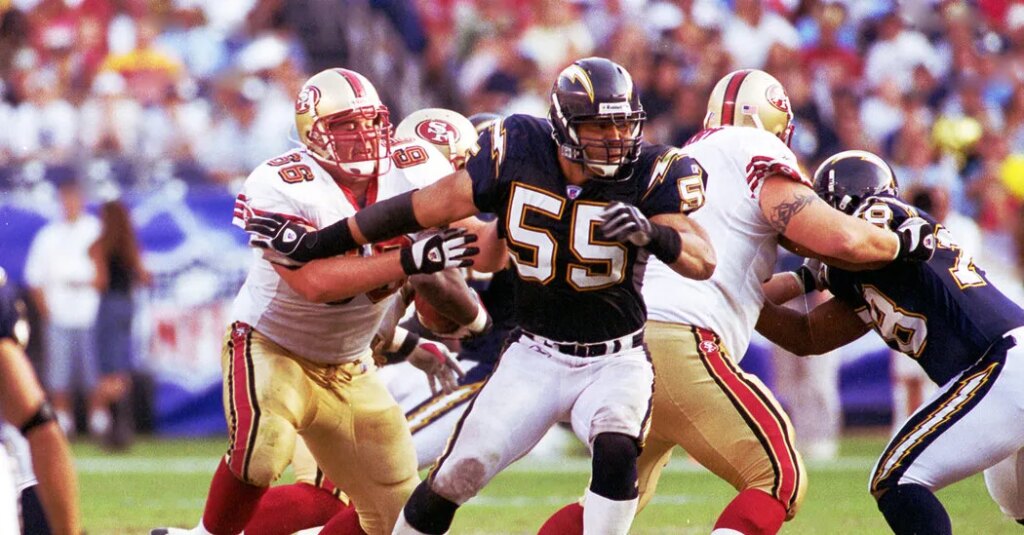
This summer, a scientific study sent reverberations through the football world, making headlines and deeply worrying players and families.
At least 25 percent of retired N.F.L. players who died over a recent six-year period, the study found, had C.T.E., or chronic traumatic encephalopathy, the neurodegenerative brain disease associated with repeated hits to the head.
But most of the other 75 percent of deceased players were never tested. That left a complex, high-stakes question — the actual prevalence of C.T.E. among deceased ex-N.F.L. players — open for analysis.
Now, the same research team has deployed statistical techniques to home in on a more precise number. In a new study published Wednesday, they estimate that three out of four former N.F.L. players who died between 2008 and 2023 most likely had C.T.E. in their brains at death.
By contrast, the same researchers studied brain banks that reflect the general population and estimate that only 0.6 percent of people have C.T.E.
This remarkable disparity sharpens the question faced by current players, N.F.L. retirees, football fans and parents: Just how dangerous is football?
Because C.T.E. can be diagnosed only by autopsy, the quest for an answer has revolved around brain banks that include donations from former N.F.L. players. Brains are sliced, stained and studied under the microscope for signs of C.T.E., which causes brown tangles of protein to build up around the deep grooves of the brain.
These donations have taught doctors and scientists about the biology and stages of C.T.E., which is progressive and linked to dementia and behavioral changes — but does not always, particularly in the early stages of the disease.
Across nearly 400 brains of former N.F.L. players that were donated and studied, the statistics look impossibly grim: More than 90 percent showed signs of C.T.E.
But researchers have long cautioned that this is most likely an overestimate. Brains are usually donated because former players or their families saw symptoms that aligned with C.T.E., including headaches, memory loss and unrecognizable shifts in personality. Since families that did not see those symptoms are far less likely to donate a player’s brain, banks provide a distorted snapshot of the overall population. Extrapolating broader lessons, policy recommendations and prevention strategies from this sample has turned into an urgent, and fraught, statistical puzzle.
“Symptoms really drive donations,” said Yorghos Tripodis, a professor of biostatistics at Boston University School of Public Health who was a leader of the new study, published in the journal JAMA Network Open.
In the new study, the researchers tried to quantify the selection bias and analyze the likelihood that untested brains had C.T.E.
They estimated that among deceased players, those with obvious cognitive symptoms were about five times more likely to have their brains donated to a bank than someone without. They reviewed death records for the 2,362 former N.F.L. players who retired between 1951 and 2021 and died from 2008 to 2023, studying causes of death and mentions of dementia or other neurodegenerative diseases that might have been misdiagnosed. They studied the ages at death, the years of N.F.L. experience, even the positions played.
They arrived at the estimate that three out of four N.F.L. players who died between 2008 and 2023 would have had some level of C.T.E. if autopsies were performed.
Zachary Binney, an epidemiologist at Oxford College of Emory University, whose previous study, published in Neurology, found a minimum of one in 10 deceased players had C.T.E. pathology in their brain, said in an email that the work was “pretty rigorous, and the methods seem reasonable and valid.”
“It is higher than I would have guessed previously,” he said. “But this paper has a larger data set and applies stronger methods than previous work.”
In a statement, the N.F.L. said it “strives to make the game of football safer, including by implementing strategies to reduce concussions and head impacts.”
In the decade since the N.F.L. first acknowledged the risk of C.T.E., it has altered rules and safety protocols — at the same time that it has increased the number of regular season and postseason games.
The overall impact is unclear, and until C.T.E. can be tested with certainty in the living, no one can be sure whether today’s players are more or less susceptible to C.T.E. than those who played in previous eras.
C.T.E. symptoms can include memory loss, headaches, mood swings and a loss of impulse control. Addiction issues and a reduction in executive function are not unusual. In the new study, researchers estimated that nearly three in 10 of the players had dementia, but underscored that this was a minimum and that the true number could be higher.
For years, studies have been showing that dementia is about four times more common in N.F.L. retirees than in the general male population, Dr. Binney said.
Several outside researchers cautioned against the temptation to extrapolate this frightening statistic to all former N.F.L. players. And there are even more caveats when trying to understand the implications for people at lower levels of the sport.
“This is specifically people who have died, and doesn’t say anything about people who are still alive,” Sebastian Haneuse, a biostatistician at University of California, Irvine, said.
In its statement, the N.F.L. said the league was committed to ensuring access to resources to support players’ physical and mental well-being: “We encourage former players to utilize these resources to identify and seek treatment when they are concerned about their health.”
Researchers do not know why some people get C.T.E. and others do not, despite similar histories of head trauma. They believe that the likelihood of C.T.E. grows with each year of exposure (how many seasons of tackle football someone plays, for example, including as a child) and by the cumulative force of the hits over a lifetime.
The biological signs of C.T.E. can appear in the brain without symptoms, especially when the damage to the brain is more minimal. In the earlier study, for example, 93 percent of donated brains showed C.T.E. pathology, but only 60 percent of the people had a diagnosis of dementia.
In a published response to the August study that made headlines, a group of researchers led by Marc Weisskopf at Harvard T.H. Chan School of Public Health pointed out that most former N.F.L. players were still alive. If the known cases of C.T.E. cited in the study were compared with the full population of N.F.L. players (not just those who died in that six-year span), he and colleagues argued, the lower bound of risk among all N.F.L. players could be one in 83.
Dr. Weisskopf added in an interview that the people who have died may have been in worse health and more likely to have C.T.E. than those who are still alive. That group’s research receives funding from the N.F.L. Player’s Association, but the association does not have a say in where and what researchers publish.
Some researchers argue that attention to C.T.E. itself has become a negative influence on player health. A study in the Journal of Neurotrauma examined suicide rates in professional athletes in the N.B.A., M.L.B. and N.F.L. and found that football players’ suicide rates alone rose sharply after 2010, once the C.T.E. risk began to be widely recognized.
“People care about players — they care about N.F.L. players’ health, future players and current players and former players,” Rachel Grashow, a senior research scientist at Harvard, said. Dr. Grashow said she hoped that the conversation could shift toward interventions that focus on treating and preventing symptoms in living players.
Christopher Nowinski, co-founder and executive director of the Concussion Legacy Foundation, and one of the study authors, played football at Harvard and recalled that the captain of his team had Stage 2 C.T.E. and pronounced changes in his behavior.
“I would say that none of us wants this to be true,” Dr. Nowinski said. “As a former college football player, none of us wants to think a lot of us may have this. It’s important to get it right.”
If you are having thoughts of suicide, call or text 988 to reach the 988 Suicide and Crisis Lifeline or go to SpeakingOfSuicide.com/resources for a list of additional resources.
The post The High-Stakes Effort to Grasp the True Rate of Brain Disease in the N.F.L. appeared first on New York Times.