The Federal Reserve held interest rates steady Wednesday, days ahead of the midterm elections, even as inflation has picked up and spread beyond the gas pump into the broader economy.
While inflation “remains elevated,” the majority of the Federal Open Market Committee said in a statement accompanying the decision, the panel will await more information to decide the best future actions “to ensure a timely return of inflation to the Committee’s 2 percent goal.”
“Economic activity is expanding at a strong pace,” the committee’s statement said. “While uncertainty remains elevated owing, in part, to geopolitical developments, domestic spending has been resilient. Productivity growth is strong, and capital investment is robust.”
Fed officials added that “the unemployment rate has changed little.” Two committee members, Lisa D. Cook and Beth M. Hammack, dissented, saying they preferred to raise rates again.
The Fed had already raised interest rates by a quarter of a percentage point last month to fight inflation. That was the first increase in more than three years.
For households, Wednesday’s decision is a mixed blessing. Borrowing costs will remain steady on a wide variety of credit cards, car loans and business loans, but prices are still rising faster than paychecks.
Yet other economic signs point to more room to move slowly to address inflation. Americans and businesses are still spending, which fuels economic growth, and employers are still hiring, although at a much slower pace.
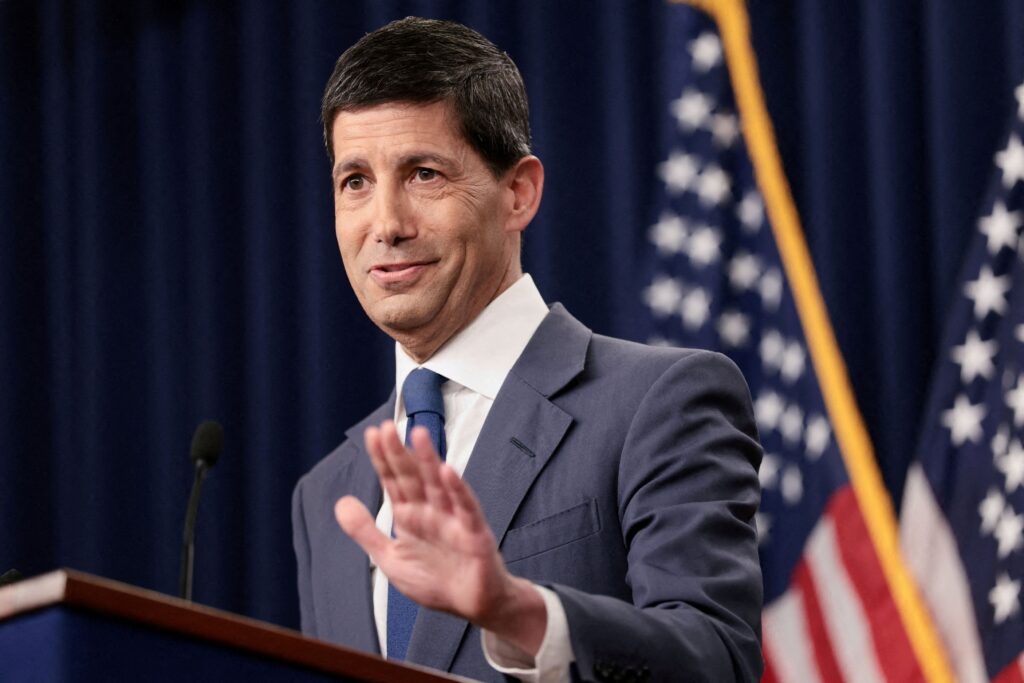
The move to hold rates steady puts Fed Chair Kevin Warsh in an awkward spot. Investors took his August speech in Jackson Hole, Wyoming, as a sign that he would get tough on inflation, and the Fed followed through with the rate hike in September. Since then, inflation has only picked up.
“He kind of risks the credibility factor, in my opinion, if he doesn’t raise rates,” Tracy Shuchart, senior economist at the futures trading platform NinjaTrader, said Tuesday ahead of the decision.
Shuchart said bond investors could read a pause as a sign that Warsh is “afraid to raise rates in front of the midterms,” which could revive questions about his independence from President Donald Trump, who has been lobbying the Fed to lower rates since he took office.
Congress set up the Fed to be insulated from political pressure, because presidents and other elected officials often prefer lower interest rates to spur immediate growth, even if it risks harm to the economy down the line.
Inflation rose 3.7 percent in September from a year earlier, continuing an upward march most of this year, according to the most recent report from the Bureau of Labor Statistics. Gasoline prices jumped 9.1 percent in September alone, and a gallon of regular cost $4.25 on average Wednesday, according to AAA. Prices also climbed for used cars, airline tickets and housing, a sign that the increases are no longer confined to energy. Inflation has exceeded the Fed’s 2 percent target for more than five years.
Stubbornly high prices have been a political problem for Trump and Republicans heading into the midterms. Some of that pressure traces to Trump’s own decisions. The war with Iran has driven up fuel prices, and his tariffs have raised the cost of imported goods, though some Fed officials said in September that the tariffs’ effect on prices was fading, according to minutes of their meeting.
Still, Fed officials had signaled that they are in no hurry. Fed governor Christopher Waller said in an Oct. 8 speech that he expected more rate increases. “The hikes do not need to come at consecutive meetings,” he said, “but they should be in place in an acceptable period of time.”
Warsh gave no hint of a hike when he spoke at the International Monetary Fund’s annual meetings in Bangkok this month, and investors took that as a sign that he wasn’t going to raise rates, Shuchart said. By Wednesday morning, traders who bet on the Fed’s moves put the odds of a hike at less than 10 percent, according to CME FedWatch.
Wednesday’s decision leaves the Fed’s benchmark rate at a range of 3.75 to 4 percent. The rate sets the cost of overnight borrowing between banks, which ripples out to what millions of consumers and companies pay to borrow. Mortgages and other long-term loans are priced off Treasury yields, which are set by markets according to their own expectations for growth and inflation. The average 30-year mortgage rate was 7.32 percent last week, according to Freddie Mac.
The labor market has also slowed, giving officials another reason for caution.
Paychecks aren’t keeping up: Average hourly pay rose 3 percent over the past year, less than inflation. Employers added 29,000 jobs in September, well short of forecasts, and the unemployment rate ticked up slightly to 4.2 percent.
Most Fed officials signaled in September that they expected to raise rates again before the end of the year.
Trump picked Warsh in January after spending a year attacking his predecessor, Jerome H. Powell, for refusing to cut rates. Warsh has promised to set rates without regard to politics, and he has stopped the Fed’s practice of signaling its next moves in advance. “I don’t believe in saying now what I might do at the meetings that we have in the balance of this year,” he said this month in Bangkok.
The post Federal Reserve holds interest rates steady appeared first on Washington Post.