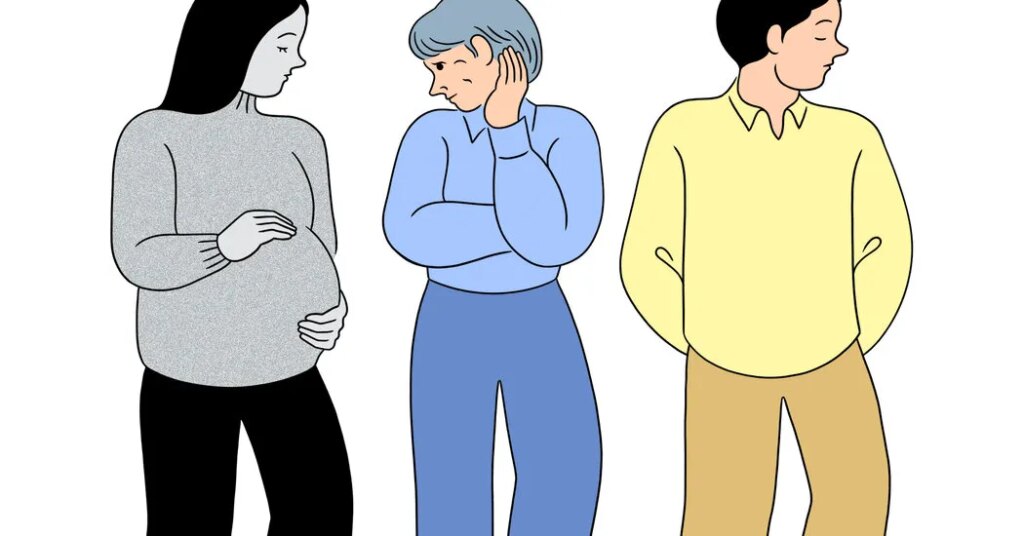
My oldest nephew is a kind, sincere man with a good soul. My sister contracted rubella while pregnant with him, and he has struggled with learning disabilities and cognitive limitations throughout his life. These aren’t obvious in casual conversation, but their consequences have been profound.
He has repeatedly lost jobs because he couldn’t meet performance standards and was even discharged early from the military. He has been chronically in debt, requiring repeated family bailouts. His marriage ended in divorce, and although he loves his two children, his relationships with them are strained. At one point, his immediate family left him homeless as an exercise in tough love. He now lives in a residence for men facing hardship and works at a big-box store. He has also suffered serious medical crises, including leukemia.
As far as I know, no one has ever told him that his difficulties might be related to his mother’s rubella infection. I’m not sure his brothers even know about it. My sister and I may be the only people who do.
Should he be told? Would knowing help him make sense of his failures, or damage him psychologically? His devout Christianity has been a source of solace through his hardships, and I worry about unsettling him. I also worry about my sister, who I suspect harbors deep feelings of guilt and may resist acknowledging any connection between her illness and his limitations.
Could revealing this history help his family see him more compassionately, or would it deepen the fractures? Should my sister tell him, or should I? Or would everyone be better off if I remained silent? — Name Withheld
From the Ethicist:
Congenital rubella syndrome (C.R.S.) can have serious consequences, including deafness, eye problems and heart disease, along with cognitive and developmental impairments. So if your nephew’s problems are indeed the result of C.R.S., he would seem to have escaped some of the worst possible effects. But it’s unclear what he would gain from knowing that rubella might explain his disabilities. The diagnosis suggests no obvious treatment, though you could ask a doctor whether it might be useful to his medical care in other ways.
I suppose there’s a scenario in which your theory might come as a relief to him; he may welcome the possibility that some of his difficulties stem from a prenatal infection. But, equally, there’s a scenario in which it leaves him feeling permanently damaged, makes his mother feel accused or leads him to resent her. And the connection remains conjectural. Yes, the fact that his mother had rubella is relevant medical history; I wouldn’t conceal it if your nephew expressed curiosity about the possible origins of his difficulties. But there’s no compelling reason to offer him a conjectural diagnosis, especially when the benefits of doing so are even more conjectural.
I’m in favor of telling people important facts about their situation; I’m not persuaded that your speculative explanation counts as an important fact. You seem to think that identifying the cause of his difficulties would vindicate your nephew. But if your aim is to change how the family treats him, why not make that case directly? They already know about his lifelong deficits and difficulties, and, whatever their origins, you have ample grounds for urging the family to respond with more compassion.
Readers Respond
The previous question was from a reader who was unsure of how to handle a recent interaction with her estranged aunt. She wrote:
My father is the oldest of three siblings. … His sister, my aunt, is largely estranged from the whole family. My aunt has long struggled with physical and mental-health problems and has few close relationships. She tends to become heavily dependent on one relative until the relationship breaks down. … During the pandemic, she reached out again. We’ve been in occasional contact since then, which suits me. I don’t want her to feel isolated, but I don’t feel close to her. … Two days ago, she sent and then deleted several voice notes. In one, she tearfully told me that she loved me and was proud of me, that her health had worsened and that she had decided to seek medical assistance in dying (MAID). She asked me not to tell my parents. I was shaken. I don’t want her to feel unsupported, but I’m wary of being drawn into a level of involvement I can’t sustain. I’m also uncomfortable keeping this secret. I sent a brief message saying I loved her and was thinking of her. The next day she replied: “I’m so sorry for leaving you that message. It was selfish of me, and I apologize. Please be safe. XO.” What is my responsibility now? How can I offer support without becoming responsible for a crisis, or a relationship, that I am not equipped to manage?
In his response, the Ethicist noted:
When people face the sort of medical problems that make MAID something to contemplate, they are likely to be in severe distress. When they’re also socially isolated, it’s hardly surprising if they reach out to someone with whom they feel at least some connection. … Still, her behavior fits a troubling pattern you’ve described. … All of this, especially the requested secrecy, has the effect of recruiting you into a special relationship with her, setting you apart from the rest of your family and discouraging you from discussing the situation with others. … Your assumption should be that your aunt was genuinely contemplating an assisted death, genuinely regretted the disclosure and genuinely craved reassurance. At the same time, you can take seriously her message about seeking a medically assisted death without being drawn into a sustained, intimate engagement. Bear in mind, too, that a request for secrecy doesn’t impose a binding obligation when you haven’t agreed to it as a condition of receiving information. … It would be kind to give her a call, explaining that her messages left you concerned and uncertain about her situation. … You can ask whether she has spoken to her doctors about MAID and what they’ve told her. Just be careful about offering more than you can give. … Your relationship with her has been limited; your obligations to her are limited in turn.
(Reread the full question and answer here.)
⬥
Several years ago, I had an acquaintance who ended her life through MAID. In addition to renal failure, she was also a troubled person who had survived childhood abuse and struggled to maintain friendships. The death doulas who supported her in her last six months were amazing, and it did seem those last months were the best of her life (at least since I knew her). If the aunt chooses this path, she won’t necessarily be going through this process alone. — Holly
⬥
I don’t think you have a responsibility to do anything. You listened to her messages, which she then deleted, you accepted her subsequent apology and offered a kind response. Nothing is imminent, nothing is pending. There’s nothing that binds you to her vaguely floated, already retracted, possible future plans. — SJ
⬥
The letter writer can’t take responsibility for her aunt. But telling her to seek medical help in this context is akin to telling her that she’s worthless. What she is seeking is some connection to her family, to the people that matter to her. You can’t fix this situation. But you don’t need to do more — just continue to listen and be sympathetic. It may make the difference between life and death for her. — Carol
⬥
MAID is a legitimate response to unsurvivable health issues. Suggest the name of a local death doula to help the aunt through the steps and make the most of her final days. It’s a true source of support that doesn’t require your deep involvement. — Jane
⬥
It sounds to me like the aunt was feeling depressed, wanting to die (by legal and humane means), and reached out, possibly to say goodbye. Then the feeling and the thoughts passed, and she retracted her statement. The aunt has not asked for anything, and there is absolutely nothing the writer needs to do, unless she would like to seek counseling for her own feelings. If the aunt subsequently requests assistance with her plan to end her life, that would be the point when the writer could explain that she would not feel comfortable being involved. It’s the aunt’s life to do with as she chooses, as it is also the writer’s. — Samantha
The post I Think I Know Why My Nephew Has Had So Many Problems in Life. Should I Tell Him? appeared first on New York Times.