When Nathaniel Philbrick set out to write the definitive history of the California Gold Rush, he knew the story would at some point intertwine with the history of the Civil War. He didn’t realize how much the two were intrinsically linked.
Philbrick, 70, won the National Book Award for nonfiction in 2000 and has written more than a dozen titles, ranging from studies of George Washington to the 1820 sinking of the whaleship Essex. His latest work, “The Rush: California Gold, the Civil War, and the Making of the Modern World,” published this month, methodically outlines the history of California’s precious-metal boom. The narrative brings the characters of the Gold Rush to life, from carpenter James W. Marshall and his first discovery of gold at Sutter’s Mill in 1848 to the reckless vigilantes on the San Francisco Vigilance Committee, all the way through to Gov. Leland Stanford, who used his riches to create Stanford University and California’s modern-day gold mine, Palo Alto.
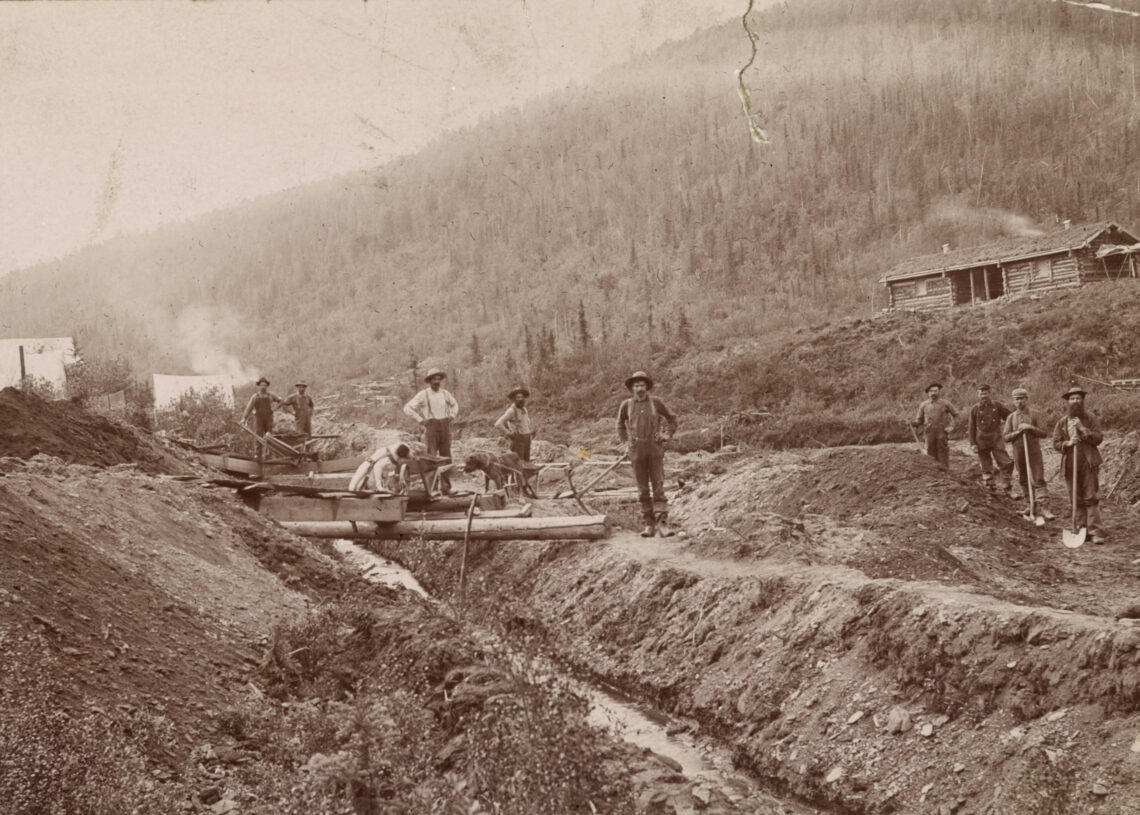
“The Rush” maps how the world descended on San Francisco, turning it into the epicenter of wealth and risk-taking. California, what the author describes as “an amphitheater of the gods,” became a site of soaring success and brutal atrocities. The state’s Native American population collapsed from at least 100,000 to 30,000 during the Gold Rush.
But the book quickly takes a turn. A tale of lawless treasure hunting becomes one about the battle for California’s allegiance in the Civil War and the state’s “razor’s edge” decision to side with the Union. “Most people are going to be very surprised that this famously blue state today was dominated by pro-slavery Southerners throughout the 1850s,” Philbrick tells me when we speak days after the book’s release. “Yes, it was a free state but in name only.” One of its first two senators was William M. Gwin (1805-1885), who hailed from Mississippi and pursued a “decade-long quest to bring slavery to California.”
His devious acts, which included using California’s position as a free state as cover to promote his pro-slavery “Chivalry” faction, coupled with a duel between another senator and the chief justice of the state Supreme Court, put modern politics into perspective. Despite the anguish and mudslinging of this year’s midterms, “The Rush” provides a strong counterpoint to claims that American politics has never been uglier.
“We’re always on the edge of catastrophe,” Philbrick says. “Yes, it’s awful right now. We’re in a situation that I’ve never experienced, and I grew up in the ’60s, which was not fun a lot of the time.” But the present, in a way, is no different. “We’ve been to the edge of the precipice before, and somehow, we’ve found a way to go forward,” he adds. So, too, today. “How that will happen? Who knows?”
Philbrick doesn’t editorialize. His characters are figures from the past, and the story he tells has already unfolded. Still, it is difficult not to draw parallels between the Gold Rush of the 1850s and the artificial-intelligence boom of the 2020s. Philbrick hints at this in the final paragraphs of the book.
“I think it’s a direct line,” he tells me. The explosions in wealth and technological advancement happened in San Francisco almost 200 years apart, yet “the discovery of gold in California created the outlook that we are all living in today.” He elaborates: “The ethic of the gold mines was you go in there as hard as you can. You don’t care about the consequences of what you’re doing, whether it’s to other peoples or the environment.” It’s nearly impossible, Philbrick suggests, to separate the acts of causing chaos and striking gold. “You may fail initially but keep going because if you break through, the consequences could be enormous,” he says. “And that’s kind of what’s happening in Silicon Valley.”
There are immigration parallels, too. The influx of entrepreneurs and ambitious foreigners from all over the world helps make California distinct. It did the same at the height of the rush. Hostility toward outsiders was a defining feature of that era’s politics, but there is no doubt that the wealth and innovation that sprang out of the 1850s couldn’t have been developed without them.
“This is the great paradox of America,” Philbrick says. “Violence” and “prejudice” are part of us, but so are “great opportunity and creativity.” Money plays a role. “You could call it greed,” he says, but you could also call it “wanting to get ahead.”
“That’s the thing about this book,” Philbrick says. “For me, I love this country. I really do, and I love it in all of its boisterous craziness. It can be horrifying, but it can also be so inspiring.” He returns to an earlier theme: “It’s never going to be perfect,” and yet “we all seem to muddle through one way or another.”
“The Rush” doesn’t read like an endorsement or warning about today’s tech bros and AI developers repeating the past. That’s left for the reader to decide. “We can’t look at history with rose-colored glasses and just say it needs to be a positive story,” Philbrick says. “That is ultimately, for me, an unpatriotic act. I mean, I think the deepest patriotism you can have is to look at it, in all of its splendor and horror, and try to recount it as close to what it was like to experience at the time, and that’s what I’m trying to do with this book.”
The result is faithful to that aim: a good guide for observing all of America, not merely its past.
The post California is striking gold again. Its history offers lessons. appeared first on Washington Post.