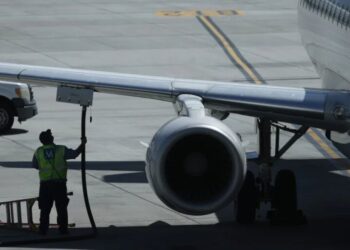
The Iran war continues to weigh on Americans’ wallets, and it’s costing them more in increased fuel costs than consumers in any other country in the world, new data finds. As President Donald Trump argues the cost of the war will be justified with economic prosperity, his administration may be pushing policies making the problem worse.
U.S. consumers have paid an average of $471 more in fuel prices since the beginning of the Iran war in February, according to a report published on Monday by Finland-based nonprofit research institute Centre for Research on Energy and Clean Air (CREA). That’s nearly eight times greater than the average of about $60 in increased energy costs per person globally. As a country, the U.S. has spent $160 billion total on increased fuel costs since the beginning of the war, with China following at $54 billion, and Canada coming in third at $17 billion.
The Iran war has cost U.S. households about $2,000, according to Mark Zandi, chief economist at Moody’s Analytics, a sum that includes both soaring prices at the gas pump as well as increased air fares and inflation as a result of increased transportation expenses and supply chain shuffles over the last seven months of Middle East turmoil.
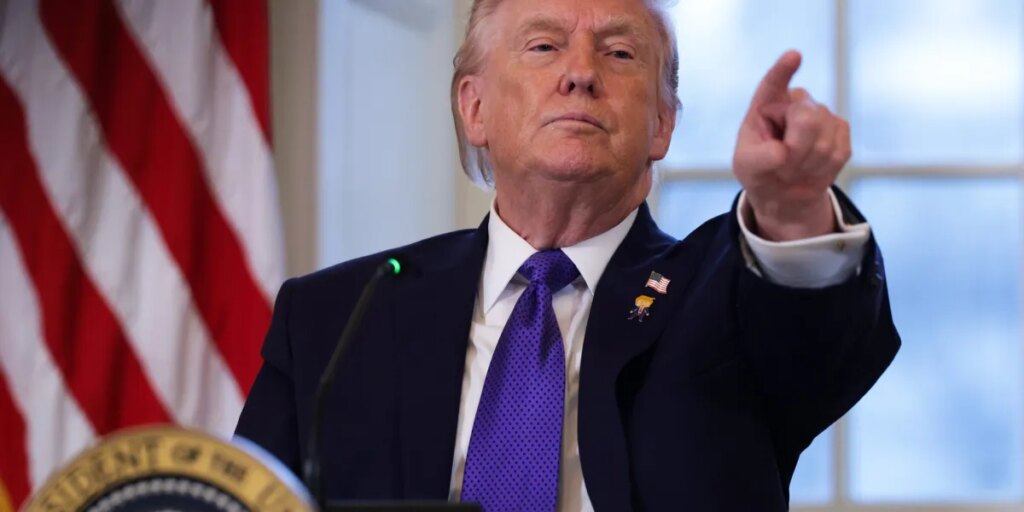
Trump has repeatedly tried to assuage Americans’ anxieties about increased costs associated with the war. At a rally in North Carolina in September, the president downplayed affordability concerns, and has argued the Iran war is necessary to prevent Iran from attaining nuclear weapons, and that the U.S. is making a “freaking fortune” as a result of increased energy production.
“It’s a very inexpensive price to pay for what we’ve done,” Trump said last month of fuel costs, which have now topped $4.26 per gallon, up from $2.98 before the war. “Remember that.”
The White House did not immediately respond to Fortune’s request for comment.
Why are fuel costs for Americans higher than in the rest of the world?
To be sure, the Iran war did not create the conditions under which American consumers in particular are paying higher energy costs. While global supply strains have increased fuel prices globally, the outsized impact on U.S. consumers is a result of an American economy and culture structured around oil.
“If you compare the U.S. with countries in Europe with similar levels of income, you can really see the effect of decades of lower prices for fuel and less emphasis on sustainable transportation,” CREA cofounder and report author Lauri Myllyvirta told Fortune. “Undoing that, of course, takes quite a bit of time and effort.”
The U.S. is heavily exposed to higher fuel costs in part because it is beholden to global market rates, a result of it still having to trade for heavy oil despite being a major diesel producer. But the heavier energy burden on American consumers is mostly due to the country’s reliance on oil over other sustainable means of energy, CREA argued.
The U.S. has less electric vehicle adoption than other countries, and less efficient gas-powered cars travel farther on American roads compared to other countries, meaning American consumers simply burn more fuel than consumers in other countries, the report found. CREA found a positive correlation between countries with the greatest EV market share—Norway, Sweden, Finland, the Netherlands, and Belgium—and fuel cost savings per person.
Across the world, EV sales have surged as fuel costs have increased. In Denmark, for example, EVs made up 81% of new vehicle sales in the first eight months of 2026. Nearly all new vehicle sales in Norway over the same period were EVs, and 57% of new vehicles sales in China were all-electric. Some European countries such as Germany saw a decrease in gas and diesel demand in 2026.
By comparison, only 7.3% of new vehicle sales in the U.S. over that span were plug-in EVs, and the report found that American drivers who made the switch to eclectic cars saw only a $17 increase in charging costs since early March as a result of electricity price increases.
How could Trump’s policies still increase fuel costs for Americans?
Myllyvirta suggested this pattern is primed to continue. A series of U.S. policy changes has disincentivized both Americans from purchasing EVs and automakers from building fuel efficient vehicles.
The Trump administration ended a $7,500 tax credit on new EVs in September 2025 it claimed would devastate the auto industry. Analysts have cited the end of the incentive as the reason EV demand flattened in the U.S., and the reason why companies like Ford rolled back production on all-electric cars in favor of hybrid vehicles.
Last month, Trump released new fuel economy standards, loosening Biden-era regulatory requirements for fuel efficiency to mitigate pollution—a move the president said would make cars more affordable, but that environmentalists argued would drive up fuel costs and cancel out any vehicle savings.
According to Myllyvirta, increased fuel costs for Americans are poised to continue, even if the war ends. While energy prices will level out once this conflict is over, the reliance on gas-powered cars will mean a repetition of this cycle during the next energy shock.
“The only certainty is volatility,” he said. “Prices are going to come down, and then there are going to be new shocks. And as long as the reliance on oil continues, that cycle is going to play out with effects on consumers, with effects on inflation, and economic policy.”
The post The Trump admin said energy costs were a small price to pay in Iran war, but U.S. consumers are paying nearly 8x more than anyone else in fuel costs appeared first on Fortune.