The United States has the world’s largest fleet of commercial nuclear reactors, and investors are putting up billions to reinvigorate the industry, thanks to a bipartisan shift in favor of the carbon-free energy source. But a big political headache remains unresolved: where to put the radioactive waste.
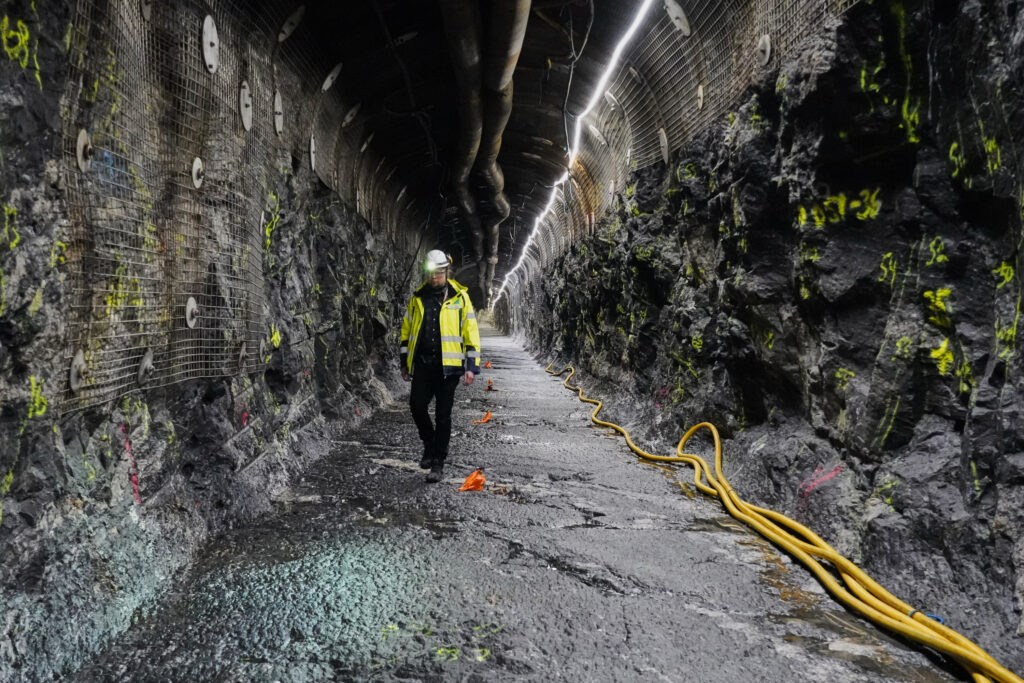
On that score, Finland just put the U.S. to shame. Last week, the Nordic country became the first in the world to grant an operational license for a permanent underground repository to store spent nuclear fuel. The facility, constructed next to an existing nuclear plant by the company Posiva, still needs a final thumbs up from Finland’s nuclear regulator before waste can be disposed there. As soon as that’s secured, the site will be able to accommodate 6,500 metric tons of uranium. (For context, the country produces about 100 tons of spent fuel a year.)
It took 22 years to build this repository and required blasting more than 1,400 feet into the bedrock, as well as years of bureaucratic wrangling. The extended timeline underscores why the U.S. has not managed a similar achievement: The Finnish undertaking required sustained political support, something American waste projects have never enjoyed.
Congress attempted to establish a federal repository in Nevada’s Yucca Mountain, designating the site for the project in 2002 over the state government’s opposition. But fierce local resistance continued. In 2009, President Barack Obama killed construction before it was completed.
Since then, U.S. nuclear waste management has operated in an expensive legal limbo. Plant operators have been storing their spent fuel in concrete casks near the reactors. Because the federal government has not met its own mandates to store the waste, utilities have sued to cover the cost of doing so. In total, U.S. taxpayers have paid more than $10 billion in damages to these companies since 1998 — a bill that will keep growing until the problem is resolved. That’s on top of the $15 billion spent on the unused Yucca Mountain site.
The good news is that fewer people are falling prey to overblown alarm about nuclear-waste storage. Earlier this year, multiple states volunteered to be considered as potential hosts for the Trump administration’s proposed “innovation campuses,” which would support all stages of the nuclear fuel cycle — from enrichment of uranium to its eventual disposal.
Rising demand for nuclear energy has created a market for commercial ventures that seek to reprocess spent fuel so that it can be recycled and used again. Start-up companies such as Curio and Oklo believe their reprocessing techniques will create a new stream of U.S.-controlled fuel and dramatically reduce the amount of radioactive waste needing to be stored.
But the question of where to put that waste is still unresolved. Congressional action will probably be needed, and Finland’s experience points the way. Local officials sold the Finnish repository to the public as generating tax revenue to fund a new library and school renovations. Similar economic opportunities might also win over Americans.
The post The nuclear option America actually needs appeared first on Washington Post.