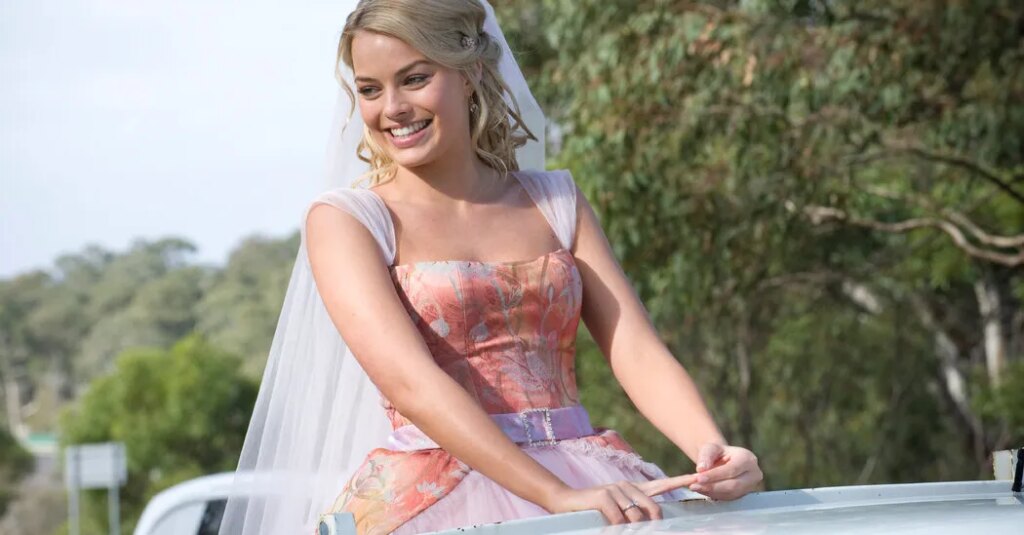
Long before the rise of artificial intelligence and her ascent to global celebrity, Margot Robbie acted in “Neighbours,” a generations-spanning Australian soap opera.
Now, Robbie’s stardom, early television appearances and modern technology are converging in a way few could have predicted when she played the spirited and fragile Donna Freedman nearly two decades ago. Some of her story lines are being extracted for microdramas — short, punchy vertical installments tailored for an audience accustomed to viewing videos on their phones.
Fremantle, the London-based entertainment group whose Australian division produced “Neighbours,” recently announced a partnership with RoseBerry Media, a digital studio. The companies aim to repurpose some vintage episodes showcasing Robbie’s character with the help of an editing tool assisted by artificial intelligence.
Microdramas originated on Chinese smartphone apps before surging into a global industry projected to generate more than $14 billion in revenue this year. At the start, they were largely written off by television executives as disposable filler.
Now, they are emerging as the latest battleground for legacy studios struggling to reach younger audiences where they consume entertainment. Traditional production houses and streaming networks are scrambling to capitalize on the new format by developing microdramas to turn mobile attention time into tangible revenue.
“Neighbours” broadcast for four decades, with more than 9,000 episodes. Robbie, who has yet to comment publicly on the microdrama agreement, played Freedman from 2008 to 2011. The series also featured Kylie Minogue and Jesse Spencer, among others.
Some of Robbie’s former castmates have already spoken out against the show being repurposed for bite-size installments. And the venture has raised legal questions over whether decades-old contracts, signed before vertical videos and algorithmic editing existed, give studios the right to re-engineer archival footage.
“It is a gray area, at least to me, of what is owed to me as a performer for that reuse of the performance from all those years back,” said Sam Clark, who starred as Ringo Brown, the on-screen boyfriend and eventual husband of Robbie’s character in the show.
“I don’t know if they’re adjusting any of the story lines,” he said. “Are they using the footage that currently exists to train the A.I. platform? I have no sort of insight into all those sides of things.”
Most repackaged scenes with Robbie would likely feature Clark, who said he learned of the project only when a friend forwarded him an article about it.
“There was no sort of request or outreach saying, ‘Hey, this is going to happen,’ or requesting any sort of approvals from my side,” Clark said. “Obviously, A.I. wasn’t a thing when I signed my contracts many, many years ago. It was not something I assumed was on anyone’s radar, really, at that point.” (Fremantle and RoseBerry did not immediately respond to requests for comment.)
Clark was 18 when he began acting on the show. After “Neighbours,” he started a music career in Australia before moving to Los Angeles and appearing in “Fox’s Grease: Live.”
“It’s a pretty new world so I don’t know what to look out for, whether there are any potential pitfalls for this coming out again 20 years later and being in a different medium than intended,” he said. “Or if it’s just nice that the story lines get to live on in a way and maybe reach a new audience. I see potentials for positives and negatives throughout the whole thing.”
Clark said he and his management have reached out to the Australian performers’ union in search of clarity regarding the reinvention of “Neighbours.”
While performers in Australia await clarity, actors in the United States operate under union guardrails.
Whether American studios could try such a maneuver with their own vast television archives is a different situation, according to Jonathan Handel, an entertainment lawyer in Los Angeles. Hollywood studios are barred by union contracts from creating different series from existing footage without the consent of every actor who appeared throughout it, except for standard uses like flashbacks or promotional trailers, he said.
Cropping existing episodes to fit vertical screens would likely be permitted with residuals paid to the cast and crew, Handel added. He compared the technical shift to earlier eras of modern entertainment, such as the colorization of black-and-white films.
“The studio is the owner of the copyright and will generally seek to maximize viewership,” Handel said. But American actors are likely shielded from their shows being made into microdramas without their consent under Hollywood’s guild protections.
The post Plans to Make Microdrama Out an Old Margot Robbie Show Stir Debate appeared first on New York Times.