A kind of sociological law of nature in the world holds that the weak think about the strong more than the strong think about the weak. When it comes to the upcoming American and Israeli elections, this law breaks down.
Politicians on the left and right in the United States these days often seem more focused on Israel, its treatment of the Palestinians and its policies in the Middle East than on the usual local concerns, like the number of children in a classroom or unemployment. This preoccupation is a puzzle to many Israelis, but there is a bigger conundrum: the absence of Israeli interest in the American elections.
None of the candidates, neither Prime Minister Benjamin Netanyahu nor his opponents, in Israel is having a serious conversation with voters ahead of the Oct. 27 contest about Israel’s shifting status in the United States and the world. Israel’s image crisis does not even break into the top five central issues in their campaigns. A sociological law of nature has indeed been broken. The American superpower obsesses about Israel, and Israel is relatively indifferent to its status in the United States. If Mr. Netanyahu loses the election, it won’t have anything to do with Israel’s reputational crisis. If he wins, which is very possible, it won’t have anything to do with Mr. Trump’s endorsement on Oct. 18.
Do Israelis really not care what the world thinks about them? No. They care a lot. But what concerns them even more is what their enemies think. Israel’s problem is that it must cultivate two reputations, one for the West and one for the Middle East. These two reputations clash. Israelis want the Western world to love them, but their enemies in the Middle East to fear them.
In the days after the Oct. 7 massacre of Israelis by Hamas, most Western countries displayed a deep empathy for Israel. But the coin had another side. Hamas’s invasion and the slaughter signaled to the neighborhood that Israel had lost power. Western love moved Israelis, but their enemies’ dissipation of fear aroused existential anxiety.
Three years later, the successes of the Israeli Army, which included assassination of the leaders of Hamas and Hezbollah, the dismantling of their chains of command and the disabling of their ability to fire rockets, rehabilitated the army’s deterrent power in the Middle East. The trouble is that the actions that restored Israel’s image in the region have severely damaged its image in the West.
Between fear and love, it’s a zero-sum game. Any restraint that Israel might have shown to maintain Western sympathy would have prevented it from restoring the fear felt by its enemies. And everything it did to establish fear eroded sympathy. The catch is, it can’t have both.
This paradox can be understood by distinguishing between two types of moral dilemmas, binary and tragic. A binary dilemma positions people between a good choice and a bad choice. A tragic dilemma places them between bad and bad. In one of the stages of Odysseus’ journey home to Ithaca, his ship is forced to navigate an extremely narrow strait. On one side is a six-headed monster called Scylla. If they near it, six soldiers will be devoured. On the other side is Charybdis, a monster that swallows and belches out seawater, creating a maelstrom that will take down the ship and all its men.
Odysseus must choose between the two. He asks the goddess Circe whether he can stay clear of the whirlpool while repelling the monster on the other side, and thus emerge safely. She explains that this is impossible and that the only rational course before him is to stay away from the whirlpool and approach Scylla. Odysseus must choose disaster in order to avoid annihilation.
After Oct. 7, Israelis also faced a tragic dilemma, forced to choose between two bad options. Hamas and Hezbollah are not ordinary armies; they are terrorist armies. What’s the difference? An ordinary army defends its citizens; a terrorist one uses citizens for its own defense. Going to war against an army of this kind requires ground operations amid a civilian population — a blueprint for large-scale death and devastation. The decision to go to war was a bad decision.
But not going to war would have left Hamas with the ability to repeat the massacre, signaled to Israel’s enemies that it had lost the ability to defend itself and stripped Israelis of confidence that they could continue building a future in their own country. The decision not to go to war would also have been a bad decision.
For most Israelis, the choice between the first option and the second is a choice between a six-headed monster and one that will drown them all. Despite the heavy costs of this decision, it is not being judged by Israeli voters. The war and its justifiability are not topics of public debate in the current elections. It is not one of the issues separating Mr. Netanyahu from the candidates who are vying to replace him. There is broad agreement in Israel: We chose disaster over annihilation.
Yet where Israelis feel moral clarity, they experience the moral judgment of the West. This disconnect between how Israelis and the West view Israel’s behavior is rooted in a categorical failure. It is a failure that explains why Israel today is the most misunderstood nation in the world. It was caught up in a tragic dilemma, but it was judged as if it were in a binary one. Israel was required to choose bad over worse, but judged as if it chose bad over good.
The elections present another dilemma. Israel today is divided into two blocs: Mr. Netanyahu’s supporters and his opponents. For many Israelis, this is binary — one is bad, the other good. But if the election produces a stalemate, as polls predict, Israel will likely face two different paths, both very unpopular: another election or a power-sharing government between Mr. Netanyahu and Gadi Eisenkot, his main rival. In that case, many Israelis will once again face a tragic dilemma — this time on the domestic front.
Micah Goodman is a research fellow at the Shalom Hartman Institute in Jerusalem and co-host of Beit Avi Chai’s “The Party of Thoughts” podcast. He is the author of seven books, including “Catch-67: The Left, the Right and the Legacy of the Six-Day War.”
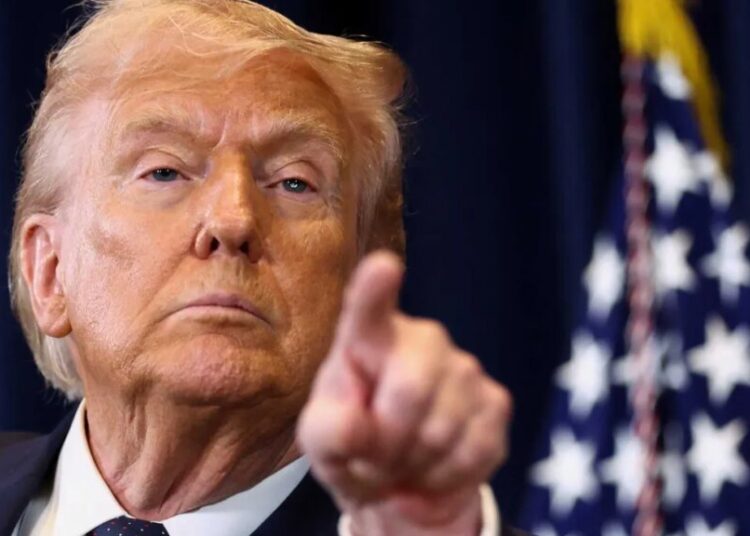
Photo illustration by The New York Times; source images by Getty Images.
The Times is committed to publishing a diversity of letters to the editor. We’d like to hear what you think about this or any of our articles. Here are some tips. And here’s our email: [email protected].
Follow the New York Times Opinion section on Facebook, Instagram, TikTok, Bluesky, WhatsApp and Threads.
The post Israelis Have Chosen to Be Feared, Not Loved appeared first on New York Times.