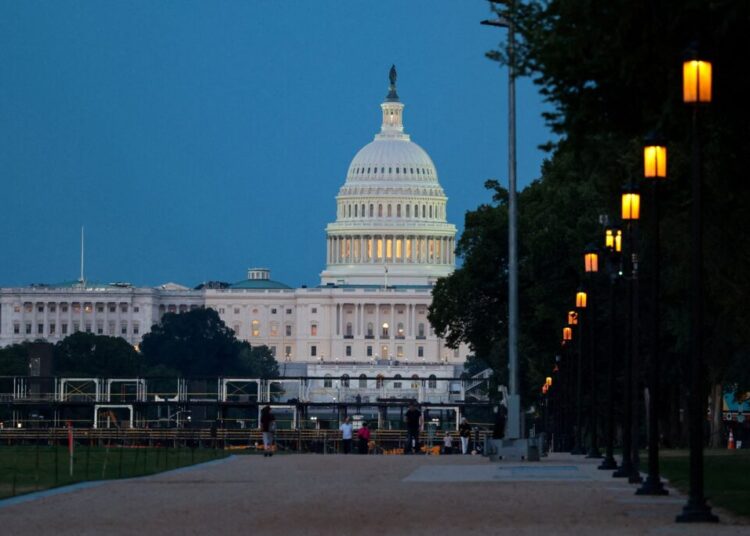
It’s officially global election season. Today, Israel votes in what many consider its most important election ever. Next week, the United States holds its midterms, which some voters see as a referendum on the presidency of Donald Trump. (Speaking of which: The New York Times is making its U.S. election coverage free for the next week or so, so download the app here if you want to take advantage of that.)
First, though, let’s talk about Brazil, and about Serbia. There were surprising election results in two very different countries — one big, one small; one in Latin America, the other in the Balkans. But both were a reminder that democracy can produce unexpected results. Today, I write about how voters in Brazil and Serbia defied predictions and what this says about our political moment.
What just happened in Brazil and Serbia?
It seemed all but inevitable: Brazil would swerve right, like all the other Latin American countries that held elections in the last 18 months, and elect another Bolsonaro.
Brazil’s president, Luiz Inácio Lula da Silva, was the underdog heading into Sunday’s vote. He was an incumbent in anti-incumbent times. A leftist out of step with an ascendant right. And he was meaningfully behind after the first round of voting earlier this month.
Some 10,000 kilometers northeast, voters in Serbia were also taking part in an election that to many seemed, if not a foregone conclusion, a pretty safe bet.
On the one hand, it was Serbia’s most competitive vote in years, thanks to the student protests over corruption that had been ongoing since 2024. On the other, Serbia’s longtime nationalist strongman, Aleksandar Vucic, had dominated Serbian politics since 2012. He also had a firm grip on the police, nearly all major media outlets and the electoral commission. Surely he would win again.
As it happens, these predictions were most likely also the preferred outcomes of Donald Trump, a Bolsonaro ally, and Vladimir Putin, a Vucic ally.
But as the election results show, voters had other ideas.
High stakes, high turnout
The first rule of comparing election results in two very different countries is that it’s very hard to compare elections in two very different countries. The population of Serbia is smaller than the population of Rio de Janeiro. The elections were focused on different issues. In Serbia, voters effectively kicked out the incumbent; in Brazil, they voted to keep him.
Still, it’s worth pointing out at least one parallel: Both elections had very high voter turnout.
Lula did something that no candidate has done since Brazil restored direct presidential elections in 1989: He won after finishing second in the first round of voting. As my colleagues explain, in each of the nine preceding elections, the first-round leader also won the presidency.
But Lula added more than 10 million votes in between the rounds. He gained support across the country. In the end, he turned a 2-point deficit into an almost 4-point lead. Far more people cast their ballot on Sunday than in the earlier round.
That’s unusual. Normally, the number of voters drops from the first round to the second, my colleagues write. But voters were mobilized by a sense of urgency and high stakes. Lula framed the vote as a fight for Brazilian democracy (his opponent, Flávio Bolsonaro, is the son of a former president currently in jail for attempting a coup four years ago) and a fight for the country’s sovereignty (Bolsonaro and his father both have a warm relationship with Trump).
Social media seems to have played a role. A wildly popular pro-Lula channel on WhatsApp, a platform long dominated by Bolsonaro’s right-wing movement, helped galvanize Lula’s supporters in the final stretch of the race, my colleagues write. What ultimately mattered, though, is that Brazilian voters cared. In a deeply divisive election, choosing between two very different visions for the future of Latin America’s biggest nation, they turned out to make their voices heard.
The same was true in Serbia. There, too, voters were mobilized by a sense of urgency and stakes.
A Serbian student movement spent the last two years protesting against corruption — the same issues that prompted voters to oust Viktor Orban in nearby Hungary. As the protests swelled, at times drawing as many as 100,000 people, they morphed into calls for Vucic to step down.
Instead, he called a snap election — which he lost resoundingly. Vucic’s party won only about 105 seats in Serbia’s 250-member legislature. The list of candidates selected by the protesting students — professors, scientists, doctors, workers, actors and activists, most of them unknown to the public — won 135.
Not invincible
Another similarity: Both elections also look like losses for the brand of authoritarian-adjacent right-wing populism that, in recent years, has seemed to have so much political momentum behind it. Vucic and Bolsonaro share DNA with, and are allies of, Trump’s MAGA movement.
As my colleague Andrew Higgins, who’s been covering the Serbian elections, points out, in big Western European countries like France or Germany, where far-right populists are now leading in opinion polls, “the anti-establishment nationalist camp has taken on the appearance of an invincible juggernaut” — and its leaders may yet win.
What recent votes in Poland and Hungary, and now Serbia and Brazil, show, however, is that once these parties have actually governed, they, too, can become targets of the voter anger they’re so adept at harnessing, Andrew writes. Even in places where they succeed in tilting the political playing field in their favor, like Serbia, sometimes the anger can become so overwhelming that they still lose.
Just because voters can still deliver election surprises doesn’t mean democracy is healthy in 2026. In Brazil, Flávio Bolsonaro still hasn’t accepted the election results; in Serbia, the process of unwinding Vucic’s grip on state institutions will be long and difficult. But it is a sign that democracy is still alive.
Related: Lula gained ground nearly everywhere. Scroll through the maps to see how.
MORE TOP NEWS
A.I. gets ready to go public
How long can the artificial intelligence boom continue? That’s the crucial question posed by Anthropic as it prepares for a public offering that could value the company at $2 trillion.
Yesterday, the company painted a picture of rapid growth — including coming advances in science and explosive economic expansion — as its revenues increased 14-fold to $16.3 billion in the first half of the year. It is still losing billions of dollars every year.
The entire global economy is arguably riding on upcoming stock market listings of Anthropic and OpenAI. They sit atop a pyramid of investors, partners and suppliers — including infrastructure providers, chipmakers, energy companies and A.I. start-ups — that have all spent and borrowed heavily because they believe demand will keep growing. Anthropic’s I.P.O. filing also warned that its products could bring about disasters, including loss of control of the technology and authoritarian abuses. Here are some excerpts.
Related: Meta and SpaceX said they would each raise tens of billions of dollars to fund their A.I. expansion plans.
OTHER NEWS
-
Officials from Saudi Arabia, Turkey and Pakistan visited Iran in an attempt to stave off war, after reports that the U.S. and Israel were drawing up renewed attack plans.
-
The Chinese leader Xi Jinping, known for constant purges of the country’s top leaders, warned that some officials still can’t be trusted.
-
Gadi Eisenkot has emerged as Benjamin Netanyahu’s main opponent in Israel’s elections. Watch our Jerusalem bureau chief explain why he’s resonating with voters.
U.S. MIDTERM ELECTIONS
We’re making our election coverage free in The New York Times app for a limited time.
-
Trump went on an Islamophobic rant in Michigan, contending that a Muslim Democratic candidate would “invite hordes of jihadis to our shores.”
-
Who’s winning the race for Congress? We mapped it out.
WHAT ELSE IS HAPPENING
-
The pop star Chris Brown received a suspended prison sentence over a 2023 nightclub assault in London.
-
An Australian man serving a life sentence for murder lost his legal fight to eat Vegemite behind bars.
TOP OF THE WORLD
The most clicked link in your newsletter yesterday was about an island far, far away.
SPORTS
Football: The world’s best players are being honored at the 2026 Ballon d’Or ceremony in London. We have live updates.
Basketball: The N.B.A. announced partnerships with two prediction market giants, Kalshi and Polymarket, deepening its involvement with what is effectively sports betting.
CULTURAL THROWBACK OF THE DAY
Vintage Ghanaian movie posters
Kermit the Frog brandishing a pistol. A muscle-ripped humanoid shark from “Jaws.” Throughout the 1980s and ’90s in Ghana, hand-painted posters depicting action-packed and absurdist scenes were used to entice moviegoers to small, traveling cinemas known as video clubs. In the bootleg poster industry, the zanier the art, the likelier people were to buy tickets. Sometimes the artists hadn’t even seen the films. See more posters here.
MORNING READ
Thousands of Senegalese migrants have made the long and often perilous journey to New York City. Despite Trump’s immigration crackdown, many are sustained by their faith and an unwavering belief in the American dream.
While Senegalese immigrants have long had a foothold in the city, a surge of newcomers, many of them young men seeking asylum, have struggled to find jobs and adapt. Many work on the sidewalks selling an array of goods, including coffee and knockoff designer handbags. Read more.
AROUND THE WORLD
The new ‘it’ snack in Denmark
The hottest food in Copenhagen these days is simple: bread, butter and hard cheese, known by its Danish nickname, BMO (short for a bolle med ost, or bun with cheese). The on-the-go snack is filling and inexpensive (about $7).
The simplicity is a 180 from high-end Danish cuisine, known for foraging and fermentation. But even though the BMO is hard to mess up, it’s also almost impossible to perfect. Take a look.
RECOMMENDATIONS
Watch: In “Possible Love,” the South Korean director Lee Chang-dong focuses on two couples from very different worlds.
Rest: Do you wake up “very tired” and identify as a night owl? Your sleep habits may point to a specific type of depression.
Visit: A museum in London suggests that your child’s blurry selfies might be art.
Style: These kooky, maximalist accessories will steal the scene.
RECIPE
Khichdi is a traditional South Asian dish made from a one-pot combination of rice and lentils. In India, it can be on the firmer side or more mushy, stripped down to the basics or more embellished, but it’s always a comfort.
WHERE IS THIS?
Where is this beach?
TIME TO PLAY
Here are today’s Spelling Bee, Mini Crossword, Wordle and Sudoku. Find all our games here.
That’s it for today. See you tomorrow! — Katrin
We welcome your feedback. Send us your suggestions at [email protected].
The post Election Surprises appeared first on New York Times.