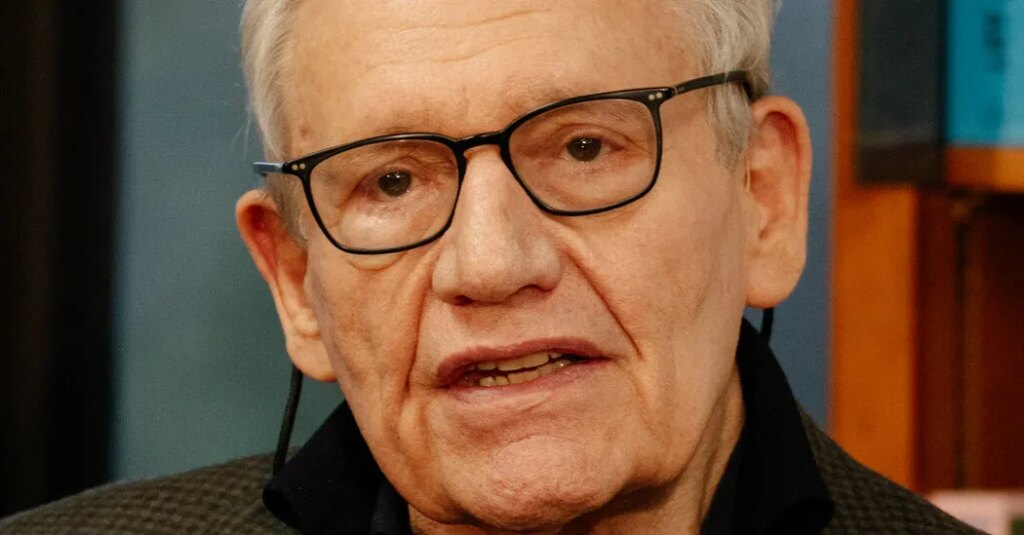
When Bob Woodward, the veteran star Washington Post reporter of Watergate fame, was about to publish a hard-hitting book about President Trump in 2018, he called the owner of his newspaper, Jeff Bezos, to warn him.
“Don’t worry, I have your back, Bob,” Mr. Bezos told him. “I’ll always have your back.”
“Always” turned out not to be as long as it used to be, Mr. Woodward now says he discovered. After more than a half-century breaking stories about Washington, one of the scoops in Mr. Woodward’s new memoir is his own breakup in all but name with Mr. Bezos, who in his view turned out to not have the backs of the journalists working for him, after all.
Instead, Mr. Woodward writes, Mr. Bezos has been “compromising public trust in The Washington Post’s aggressive and independent journalism” in deference to Mr. Trump. While he says Mr. Bezos has not interfered in news stories, Mr. Woodward writes that the billionaire owner’s sweeping staff cuts, reorientation of the editorial page and personal ingratiation to the president have betrayed the legacy of a newspaper known for courageous coverage.
The condemnation of Mr. Bezos by his most famous employee is one of the headlines from “Secrets,” the long-awaited memoir of his 55 years in journalism to be published Nov. 24 by Mr. Woodward, who still holds the title of associate editor at the paper.
A copy of the memoir was obtained by The New York Times. Here are six takeaways:
He names sources.
For decades, Mr. Woodward guarded the identity of the sources of his blockbuster stories and best selling books. But now, he finally names names. Many of his early sources have died, and he received permission from others still alive to identify them.
While W. Mark Felt, the former deputy F.B.I. director, unmasked himself in 2005 as the famous Watergate source called Deep Throat, much of Washington will pore through this new book to learn who else talked. It turns out that lots of people did, including presidents, cabinet secretaries, generals, spymasters, Supreme Court justices and F.B.I. agents.
Mr. Woodward discloses for the first time his sources for one of the most iconic scenes he ever reported, a moment shortly before Richard M. Nixon resigned because of Watergate, when the sobbing president asked Secretary of State Henry A. Kissinger to fall to his knees and pray with him.
The sources, the book now reveals, were two of Mr. Kissinger’s lieutenants, Brent Scowcroft and Lawrence S. Eagleburger. While neither was present for the scene, Mr. Kissinger described it to them shortly afterward and the two then listened in on the phone when Mr. Nixon called Mr. Kissinger to ask him not to tell anyone he had cried.
Mr. Woodward also describes lengthy conversations with two of Mr. Nixon’s own lawyers, J. Fred Buzhardt Jr. and Leonard Garment, neither of whom seemed to hold their client in high regard. “He flat out lies,” Mr. Buzhardt told Mr. Woodward. Mr. Garment separately told Mr. Woodward that Mr. Nixon was “a very strange man, very strange” and “guilty of misdemeanors.” By not destroying his secret Oval Office tapes, Mr. Nixon was “letting America into the toilet of his mind,” Mr. Garment said. “The impeachable offense was letting us all see.”
The new memoir also describes Mr. Woodward’s closeness with Richard G. Darman, a key Republican official under multiple presidents who became both one of his best sources and best friends. As excerpted in The New Yorker, the conflict ultimately led to a rupture after Mr. Woodward published a harsh series on President George H.W. Bush’s economic policies shortly before the 1992 election, based in part on Mr. Darman’s descriptions.
He took a document from a groggy clerk.
One of Mr. Woodward’s earliest books was “The Brethren,” a penetrating look inside the normally secretive chambers of the Supreme Court, written with Scott Armstrong, that stunned the legal world and beyond. For years, lawyers and judges wondered how Mr. Woodward got inside one of the most tightly guarded institutions in Washington.
In “Secrets,” Mr. Woodward discloses the names of five justices who spoke with the authors, all of whom have since died: Potter Stewart, Lewis F. Powell Jr., Byron R. White, Harry A. Blackmun and William H. Rehnquist. And he describes how he obtained one of the documents that informed the book: a secret history of the Nixon Watergate tapes case, which revealed the internal debate among the justices over how to rule.
He went to the home of Steven P. Goldberg, who was a clerk to Justice William J. Brennan Jr. and had authored the case history, but refused to give it to Mr. Woodward. The reporter convinced him to instead read it to him, which Mr. Goldberg proceeded to do. But it was long and Mr. Woodward took his time scribbling down notes. Finally, an exhausted Mr. Goldberg nodded off.
Mr. Woodward waited 20 minutes so that Mr. Goldberg would reach a deep sleep. He decided not to simply take the document — “that seemed a little too far, even for me” — so he nudged Mr. Goldberg and simply told him that he would borrow it and bring it back the next morning. The groggy clerk stirred and mumbled his assent. Mr. Woodward wrote that he did his best not to race out the door with the document. “If I was on a security camera I wanted to be behaving properly, with whatever might be left of my dignity,” he writes.
Supreme Court justices revealed candid views.
Mr. Woodward also writes about encounters with more recent justices. He reports that his wife, Elsa Walsh, a former journalist for The Post and The New Yorker, sat next to former Justice Stephen G. Breyer at a dinner and he told her that he was “forced out” to make way for someone younger on the court.
He also recalls running into Justice Elena Kagan at a Washington party in 2023. Justice Kagan expressed admiration for “The Brethren” and Mr. Woodward noted that the main point was how the ideological center of the court in that era dominated. “Yes, I prefer it that way,” Justice Kagan said. “That’s exactly what it should be.”
When he asked her if she was happy on the court, Justice Kagan said no, she was not, given the situation.
His investigative instincts started close to home.
For all his fame, Mr. Woodward is known in Washington as something of a closed door himself. He loves talking about reporting and politics, but has generally been reticent about his personal life. While this book, his 24th, is not exactly an exercise in introspection, at age 83 he finally opens up at least a bit more than he has done in public.
He recounts growing up in a broken home in Wheaton, Ill. He caught his mother kissing another man and then discovered that his parents were getting divorced when he rummaged through his father’s sock drawer and found a private letter. He writes that he “learned at a very young age the pain of secrets and how they can destroy lives and started down a path of trying to find them.”
Mr. Woodward also writes that a fire gutted his home as a child, leaving him so anxious to this day that he keeps multiple fire extinguishers throughout his Washington home. He describes finding a way as a young Navy officer to get out of a deployment to Vietnam, only to learn later that the man who went instead ended up dying. And he recalls falling out with his Watergate partner Carl Bernstein during the writing of their second book, “The Final Days,” and how it took years to repair the friendship.
He takes on some journalistic controversies.
Mr. Woodward addresses some of the controversies of his career. He insists that, despite denials and doubts, he did get into a hospital room to see a dying William J. Casey, the C.I.A. director in the 1980s — he was let in, he writes, by a security agent he had befriended. He publishes images of the notes that he took quoting Mr. Casey acknowledging a role in the Iran-contra affair by saying, “I believed.”
By contrast, he accepts blame for “my spectacular failure” as an editor in publishing a fabricated story by the Post reporter Janet Cooke about what turned out to be a fictional 8-year-old heroin addict. That incident convinced him “that I was not cut out to be an editor.”
He is ‘pained’ that Bezos remains silent about Trump’s attacks on the press
One of the other mistakes in judgment Mr. Woodward acknowledges was his faith in Mr. Bezos. “I remember feeling relief when Jeff decided to buy The Post in 2013,” he writes. “I believed at the time that Bezos would provide the finances for The Post to continue to operate courageously.”
But his views began to change in 2024, when Mr. Bezos decided just before the election to pull an endorsement of Kamala Harris and declare that The Post would no longer endorse presidential candidates. “At the time, I thought, is he not reading his own newspaper or my books about Trump?” Mr. Woodward writes. The timing made it look “like Bezos and the newspaper were capitulating to Trump.”
Mr. Bezos then shifted the opinion pages to only advocate “personal liberties and free markets” with no dissenting views. “I could only imagine the agony this kind of decision would have caused Kay or Ben,” he adds, referring to Katharine Graham and Benjamin C. Bradlee, the publisher and executive editor during Watergate.
He came to believe that the “benefit of the doubt” that he had given Mr. Bezos was unwarranted. While he notes that The Post continues to produce aggressive coverage of Mr. Trump, Mr. Woodward laments that Mr. Bezos has not publicly defended independent journalism against the president’s campaign of intimidation the way that A.G. Sulzberger, publisher of The Times, has. “It pains me that Jeff Bezos has remained silent,” he writes. “It is not too late for media owners to prioritize moral courage over financial gain.”
A representative of Mr. Bezos did not immediately respond to a request for comment. Jeff D’Onofrio, The Post’s publisher, defended Mr. Bezos in a statement to his own paper. “To be clear, Jeff remains unwavering in defense of our work, our independence and the safety of our journalists,” Mr. D’Onofrio said. “He hasn’t and doesn’t meddle in our reporting (and knows no worthy editor would accept it if he did).”
The post Bob Woodward Thought Jeff Bezos Had His Back. Now He Feels Disillusioned. appeared first on New York Times.