This essay is from THE SELF-DESTRUCTION ISSUE of VICE magazine. Find it in a store near you, or get 4 issues each year sent straight to your door, by subscribing.
1.
On Thursday night I slept normal. It was equinox eve, so I felt sure that, come morning, I’d hit the ground running.
Only, come Friday morning, after an extremely rare eight nocturnal hours, I was up at dawn but shivering in sweats, aching too cold to get up for water despite being absolutely parched.
And the same all day the next day and all night the next night: completely destroyed, starting out spring shipwrecked on the shores of my own bed, as my racing mind flooded with visions of self-destructors from throughout literary history…
2.
And that night, deep in my fever dream, I return to the Garden. For who else but Eve could be our primordial self-destructor, reckless exerciser of the will to destroy what was. Transgressing in a way that, as far as she knows, will ensure her world’s destruction.
Not knowing what this means, nor what of it will come, just that this—here, now—will not do.
Eve wanted to find out.
And destruction of the self, as we know it, prefigures all knowledge, self-knowledge, transfiguration—I sit up to manically, illegibly scrawl, around midnight. Every metamorphosis first a destruction, an exiling of oneself to oneself (as even Ovid had to learn the hard way).
3.
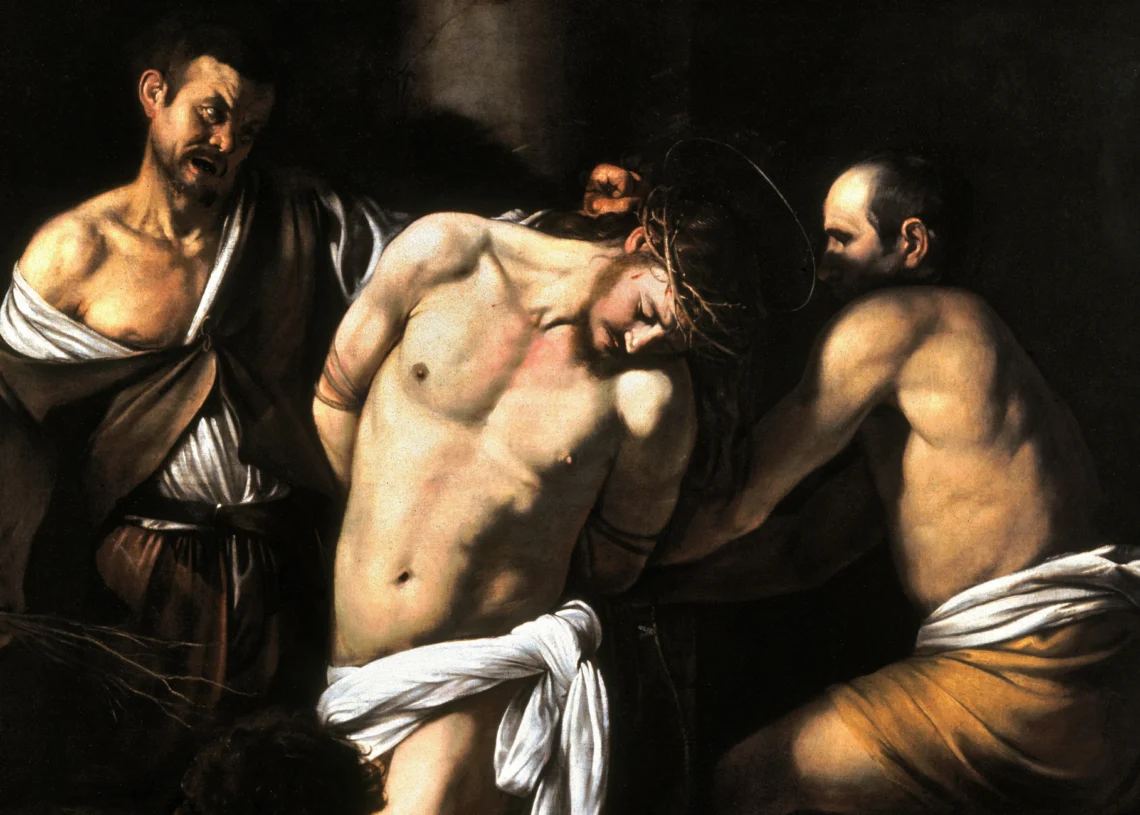
Sometime near morning that first fraught night, in my dehydrated daze, I consider self-destruction otherwise: as the fallen, shadow side of self-sacrifice. Most exemplified, a mystic like Borges might say, by Jesus and his treacherous twin / gnostic double Judas, fellow self-destructor but for a greater cause. This mutual instinct to, despite knowing the consequences: walk forthrightly into Jerusalem, head high, on the one hand; and commit the one act that allowed for the story’s full fruition (and his own destruction), on the other, respectively.
Self-destruction for a greater cause is one thing. But in the hierarchy of literary heroism, the more honorable act is self-destruction for a lost cause; or best yet: self-destruction for a doomed cause.
4.
After 24 hours completely dead, I get up around sundown, get water, and go digging into Under the Volcano, that single Day-of-the-Dead-long self-annihilation by the self-destructing dipsomaniacal man-volcano himself: Malcolm Lowry.
It’s the year before the second world war, and our Lowry stand-in, the Consul, sits there drinking, drunk at the bar, he’s been drinking all day, he need only answer a single question, make one simple concession to a harmless innocuous imperial query to survive at least one more day: Do you want Mexico to be saved? Do you want Christ to be King? And it’s this calm, final, indignant “No”—this doomed refusal to bend the knee, as the sun fades on that long, fateful, extremely mezcal’d Cuernavacan afternoon—that the Consul chooses to self-destruct for.
“Perhaps Adam was the first property owner,” he says. “And God, the first agrarian… kicked him out.”
5.
And all that night, shivering under multiple blankets, I stay stuck on that line, on the Consul’s self-destruction, and how exactly it prophesied Lowry’s own drunken self-demise a decade later. Wondering what really was the cause he was fighting for. Because some self-destructions have nothing to do with causes whatsoever. Eve isn’t even on God’s property lease. Anna Karenina self-destructs because life is a trap, and she’s finally fully trapped: A husband who won’t let her go, a society that disdains her, and a lover who won’t protect her—who she fears won’t.
Some self-destructions are because of a feeling, a sense of overwhelm with the incontrovertible ugliness of the world: “Ugly, insolent, and hurried,” Anna thinks of a man on the train platform that day. About a couple she sees: “How sick they were of each other and how they hated each other,” how “impossible not to hate such pathetically ugly people.” These feelings, while valid, were temporary. They would have passed.
Yet others still self-destruct because of an inability or refusal to forget. Under the Volcano is the Day of the Dead—a long day in hell—because the Consul, Yvonne, and Hugh are all stuck in past memories, past regrets and hurts, refusing to let them go. Faulkner’s Quentin Compson self-destructs because he can’t forget, because the past ever encroaches, because ofan eternal glitch in his temporal tense agreement: “It isn’t ever Time until it already was.”
6.
And on Saturday the sun rises confident and springlike, it’s the first springlike day, making my condition all the more nonsensical. I open the blinds and, returning to the eve of the second world war, consider things yet otherwise: How, sometimes, self-destruction is the sanest possible thing. When all extant causes are lost. Bolaño’s final protagonist, Hans Reiter—whom he forestalled his own self-destruction to write the full life of, in 2666—is fighting for his home country Germany on the Russian front. He tries to self-destruct, throwing himself into the line of fire, and for that gets a Purple Cross and a temporary loss of the ability to speak when a bullet pierces his throat. And it’s only at this point, with the self he knew himself as (and that his country knew him as) dead, that he becomes Archimboldi the writer—when he defects, sees himself in the Enemy, and changes his name.
Becomes an exile to himself.
Bolaño says: “All literature carries exile within it.” And later: “Every writer becomes an exile simply by opening a book.”
7.
Today, self-destruction abounds. It’s all around us, ever imminent, totally logical seeming. We can’t romanticize it like we did in Lowry’s time, in Hemingway’s, even as recently as DFW’s. There was a clear enemy then: the fascism of progress. In 2026, the lines are all blurry, and the ground shakes—
Come Sunday morning the sun rises beaming and optimistic, and I slowly get up and open the windows. It’s been 72 hours completely destroyed. I slowly hydrate, water my plant, listen through the cracked window for the creek-trickle, the bird-rustle in the forest, and I’m not the same as I was before, my skin shed a full layer is back sensitive and sensitized. I put on my cap, some shades, and sit beneath the tree in the shade—
And if we can just stay calm in this space, defer without destructing, live as Bolaño exhorts, as voluntary residents of this incomprehensible dream, eyes open in the middle of a nightmare, then maybe we can go down with the ship completely, sink fully into the soil at the bottom of the sea, knowing that only then will we be able to see what might sprout up differently than previously possible—
Only the minute I’m back upright, kicking again, I’ve already forgotten how it all felt before—
The minute I’m able to, I’m back chugging coffee, blasting cigs.
Sullying this new self I’ve spawned into.
Resurrected just to self-destruct anew.
Sean Thor Conroe is the author of Fuccboi. His new novel, Savior, is forthcoming next year from Dalkey Archive.
This essay is from THE SELF-DESTRUCTION ISSUE of VICE magazine. Find it in a store near you, or get 4 issues each year sent straight to your door, by subscribing.
The post A Restless 72 Hours in Bed With Sean Thor Conroe appeared first on vice.