There are some days when there’s so much that needs to get done, I daydream about having a clone of myself. Between paying bills, life admin like renewing my driver’s license, keeping up with doctor’s appointments, and planning meals, it’s a lot. And that doesn’t even begin to touch the work that goes into making a podcast or managing my social life.
This feeling of overwhelm resonates with Sari Azout. She’s a mom of three who works in tech. “There is just so much doing,” she told Explain It to Me, Vox’s weekly call-in podcast. “I wake up, and I have to do meal coordination and get my kids up for breakfast, coordinate carpools. Then a lot of work during the day, but there’s the email from the teacher, there’s the 20 group chats asking if you want to participate in this group gift. They don’t call it ‘the invisible load’ for no reason.’”
Silicon Valley says it has a fix for this kind of mental overload. They don’t want to clone us — at least not yet. But they do think they have the next best thing: AI agents.
Azuot was skeptical when she first got an invite to try an agent, but she says she eventually came around on the technology after back-to-school shopping snuck up on her. She used her agent to get it done. “It blew me away,” she said. “I remember that night coming home just feeling so calm and reading my son a book and feeling present. And I was like, ‘Wow, I actually was very cynical about something that is giving me more time for living.’”
Azout’s experience is, more or less, the sales pitch for AI agents: They’ll help you save time with everyday tasks, so you have more of it for what you want to do. But what are agents, exactly? Are they really all that? And what do we gain — and give up — when we use the technology?
On this week’s episode of Explain It to Me, I spoke with Reece Rogers, a senior software reporter at Wired, to find out. Rogers says to think of agents as the next evolution of AI chatbots like Claude and ChatGPT.
“I’d create this mental model of a tiny digital assistant that’s constantly searching the web, going through your email, and checking your calendar, trying to find ways it could proactively be helpful for you,” he explains. “Agents are more proactive. It’s scanning your email 24/7 and sending you a message, maybe highlighting a potential calendar conflict.”
Below is an excerpt of my conversation with Rogers, edited for length and clarity. You can listen to the full episode on Apple Podcasts, Spotify, or wherever you get your podcasts. If you’d like to submit a question, send an email to [email protected] or call 1-800-618-8545.
What agents are out there right now?
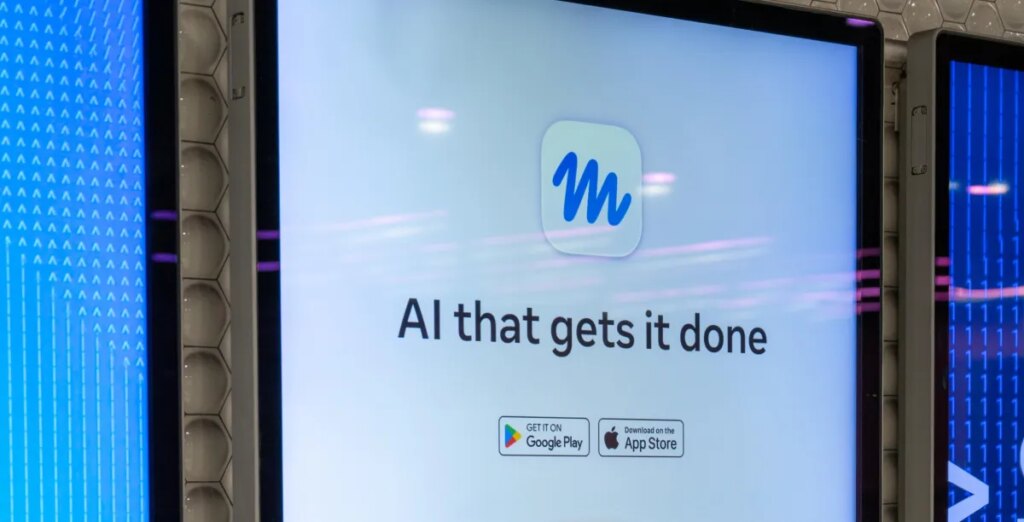
At the start of this year, there was a tool called OpenClaw that really sparked this with early adopters in San Francisco, but now there are much more consumer-friendly versions, with one of the most notable being Meta’s Muse.
There’s also a tool from OpenAI called Dots. But where Meta’s Muse is free to download, OpenAI’s Dots is still behind a $100/month paywall.
You tried an AI agent for a recent story you wrote. How was that experience?
One personal example, to share something that I’ve actually been using agents for, is our couch. It’s broken, and finding a new couch has been a pain. We want a sleeper bed, but we want these specific colors. We have this specific budget. I’ve been using Meta’s Muse and OpenAI’s Dots to try to find a few different options for us.
One interesting thing is that Meta’s Muse is connected to Facebook Marketplace. There are these really good integrations where I can give it all these details, and it found a few good couches that are only maybe a couple blocks from me.
I really enjoyed OpenAI’s Dots experience as well. I spent about an hour talking to it on the phone, and the AI agent made a packet of all these different options I could find. Just this morning, it flagged that one of them is now 40 percent off.
Is that how this tech is typically used?
Most people are using this as part of a workflow. I attach it to my email, I attach it to my calendar, and I’m using it as a personal assistant to organize my life. But people have been quite creative.
One of the breakout uses for Meta’s Muse is people have been connecting their bank account statements and then using it to scan for subscriptions they might want to cancel. So it can be used in many different ways, though I will say I do not connect it to my own bank account for a myriad of reasons.
I’m not going to lie, the idea of giving any third party access to my bank information does not thrill me. I don’t love that concept.
That’s one of my biggest concerns about these AI agents: how much personal information we’re handing over to these large companies.
When I tested Meta’s Muse, it wanted access to my email, my bank account, even my passport expiration details. The pitch is convenience, but Muse users are automatically opted in to having all of their interactions with Muse used to train Meta’s AI models.
I would definitely recommend, if you’re sharing personal details, go into the settings and turn that off because you might be handing over even more information about yourself than you initially realize.
What is the privacy situation with all of this? We all have various apps where we don’t read and still click “I agree,” but this feels like it could be more invasive.
Yes, especially because it’s all about automation. If you’re automating things and it has access to all of your data, it could make mistakes and embarrass you in ways you might not even be thinking about.
There was this one really interesting story of someone who had connected an AI agent to their work Slack in addition to their bank account. And their agent just automatically posted how much money was in their checking account for all of their coworkers to see.
Oh no.
I would be mortified. So there are these kinds of mistakes that these AI tools can still make. If you’re interested in experimenting with them, I would be really thoughtful with how you’re setting up these tools as well as what kind of information you feel comfortable sharing.
“You can see in the marketing that these companies are trying to find some way to entice new users.”
How are these AI agents being marketed? AI is not popular right now. Just ask any politician who has a data center coming to their state. People are not loving it. How are they trying to sell this to the average person?
The AI backlash really is at a fever pitch right now. You could almost see that in the way that AI companies are trying to market these tools. They’ve really, really leaned into cuteness and into adorable mascots.
Muse, if you haven’t seen its agent, looks like a mix between a Labubu and an Ewok. It’s very furry, very cuddly, very cute. OpenAI’s tools also have similar kinds of blobs with large eyes that might be a little endearing.
I feel like companies are hearing this kind of feedback that people aren’t trusting AI right now, or maybe they have moral or ethical reasons they don’t want to use these tools. You can see in the marketing that these companies are trying to find some way to entice new users.
Do you think AI agents are ultimately going to worm their way into our lives despite how unpopular AI companies are?
I do think so. I think in a couple months, maybe when I go home from Christmas, I would not be surprised if my mom had an agent on her phone because it does feel like it’s breaking through to average people in the way that ChatGPT had a moment a few years ago.
Even though there’s a lot of distrust for large companies like Meta, I think there are some appealing parts of this that will bring in millions of people. I do see this as the future of the internet.
When I think of the dream of the average person working in AI in Silicon Valley, it’s “We’re going to use AI. It’s going to free up the free time of so many people. Work is going to get done faster. You’re going to have more leisure time.”
Has that been the case for the people you’ve spoken with who are using this? Has it given them more free time to enjoy themselves or has it done something else?
You would think so, right? You would think that if people are automating these boring aspects of their life, that they would have more time to go touch grass, go see a movie, have some fun. But it does feel like that time just gets filled with other work, other productivity measures.
While agents may be able to take some more annoying or tedious things off of your plate, I am not as optimistic that it’s going to give us this utopia or freedom where I’m always at the beach.
The post When AI agents run your life appeared first on Vox.