It wasn’t until after Jamie Lee Curtis made a name for herself in “Halloween” and “A Fish Called Wanda” that she fell in love with the multicam sitcom. Partnered with the late Richard Lewis, her leading role in ABC’s “Anything but Love” (which ran from 1989-1992) unlocked the power of making TV in front of a live audience, teaching her tricks of physical comedy that she carried into a storied filmography that includes “True Lies,” “Freaky Friday” and her Oscar-winning turn in “Everything Everywhere All at Once.”
“The combination of good writing and laughter from real people — that was magic,” Curtis told TheWrap. “That collision between a live audience and doing something like a play … it allowed my comedic abilities to come out. It allowed me to explore them.”
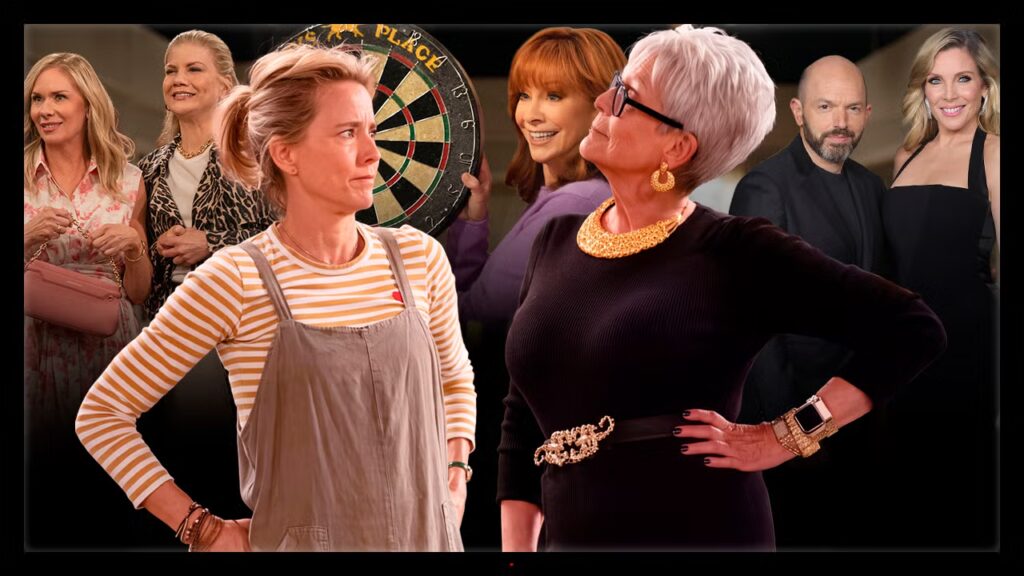
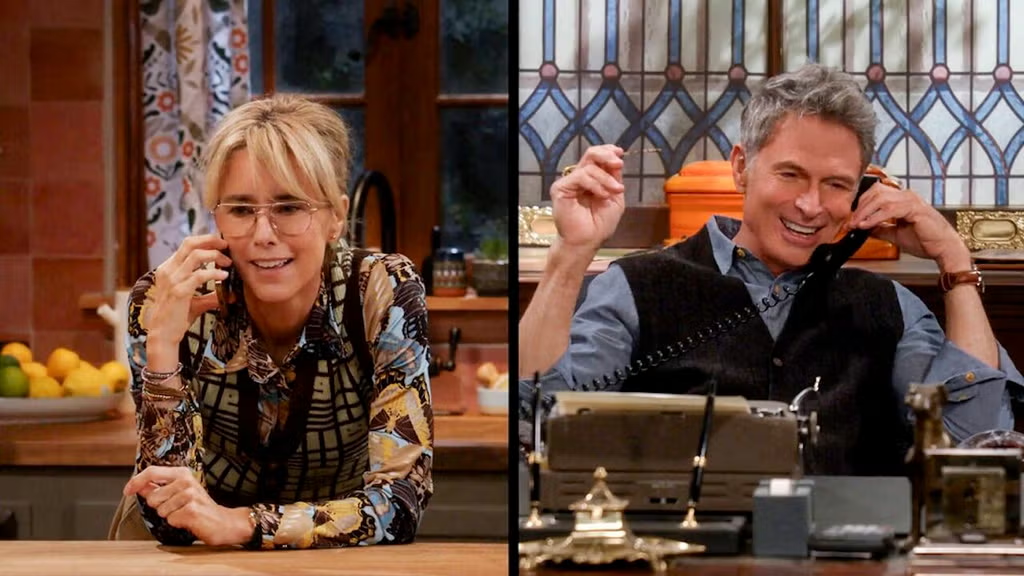
Curtis told her agents she wanted to do another multicam for years, but the genre went largely out of style with the rise of single-camera comedies, kicking off a new wave of mockumentaries like “The Office” and prestige shows like “Girls.” But, now, over three decades later, she’s returning to the format with NBC’s “Newlyweds,” a romantic comedy starring real-life couple Téa Leoni and Tim Daly, which Curtis co-created, executive produces and serves as a recurring star.
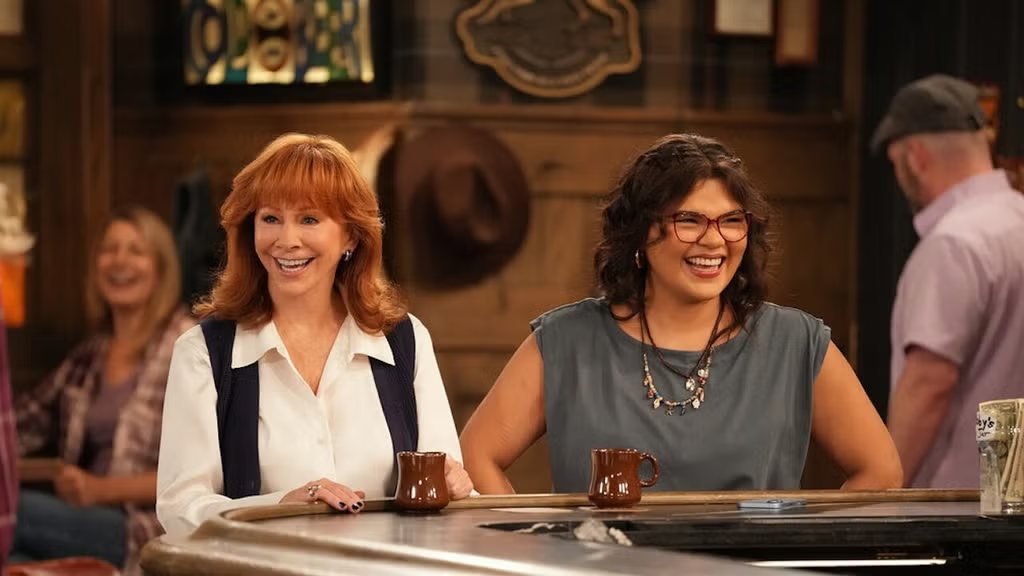
“Newlyweds,” which launches Friday to fill out NBC’s hour-long end-of-the-week comedy block alongside the Reba McEntire-led “Happy’s Place,” marks a commitment to the classic TV format and sets the stage for a resurgence. Beyond NBC, the genre is seeing momentum on both broadcast and streaming, with “Friends” co-creator Marta Kauffman heading up the improv-based sitcom “Dinks” for Prime Video, the streamer’s first foray into multicams.
The green lights are a point of hope for creatives who spent years getting their feet wet on multicams and see the positives of live performance and production that is low-budget and local to Los Angeles, even if the shows are looked down upon in the age of prestige dramas. But in an industry going through turmoil and consolidation, a return to a classic staple might be just what networks and streamers — and their audiences — need. There’s always the chance a sitcom of today could be tomorrow’s “Friends” or “The Big Bang Theory,” streaming juggernauts that have risen in popularity with a whole new generation of audiences.
“There’s real opportunity in multicams, despite the fact that you can find very few of them on network or streaming at the moment. That’s why there’s opportunity,” former NBC Studios president Tom Nunan told TheWrap. “Whenever a format becomes quiet or even seems to disappear, it isn’t because it’s dead — it’s because it’s in transition.”
In and out of style
In an age where the most recent Emmys for outstanding comedy series went to Apple TV’s “The Studio” and “Widow’s Bay,” it’s hard to imagine that multicams were once king. But they were a foundational piece of television’s evolution.
Multicams trace back to the 1951 launch of “I Love Lucy,” but largely had their boom in the ‘80s and ‘90s with talent-driven productions like “The Cosby Show” and “Everybody Loves Raymond.” Shows like “Cheers” topped the ratings or remained in the top 10 throughout most of their runs. At the time, it was single-cam comedies that were out of fashion, according to Nunan, only for HBO to bring them back in vogue with edgy and buzzy shows like “Dream On” and “Sex and the City.”
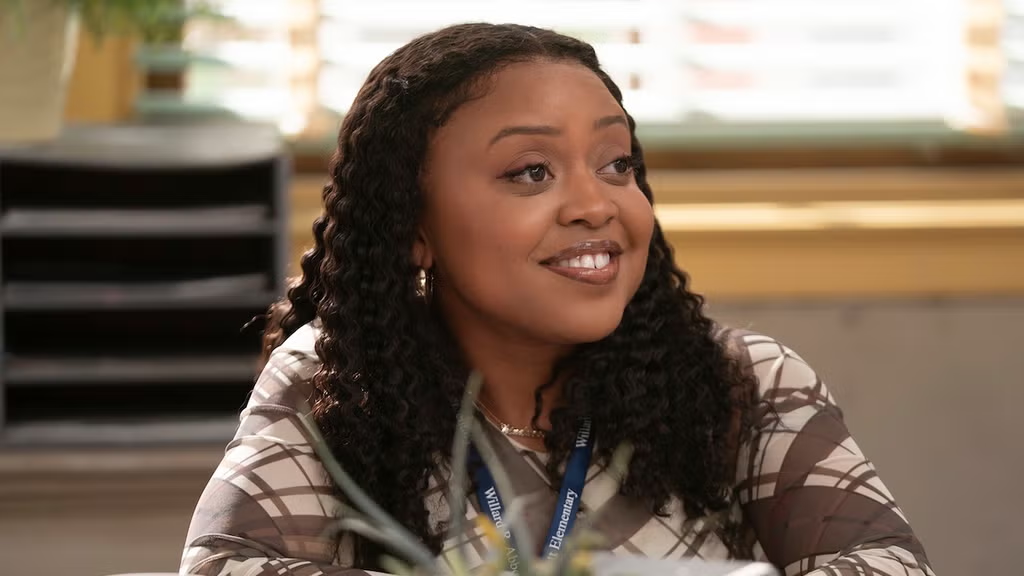
As single-cams came to be associated with prestige, Nunan noted multicams “ran out of steam” by the aughts, and trickled down to children’s channels, which began the association of the genre with juvenile and lower fare programming. The wave of popularity for the mockumentary — as seen in “The Office,” “Modern Family,” “Parks and Recreation” and “Abbott Elementary” — put the nail in the coffin.
“People were trying to get their comedies to be cooler, edgier, so that sort of went away from the standard of multicamera,” Kauffman told TheWrap.
To this day, Nunan described the multicam landscape as a “wasteland,” but noted veteran creator Chuck Lorre is nearly solely responsible for keeping the genre going. “Chuck kept the lights on with multicams for adults, but it was exclusively on CBS — no one else was doing it,” Nunan said.
Lorre, who just published his memoir, titled “Sitcom,” resents how multicams have been looked down upon in recent years. “If you’re one of those people who insist on labeling all sitcoms as being cheap, juvenile and unsophisticated, well … all I can say is, blow me,” he wrote in the author’s note. “The truth is, making a live studio audience laugh for 20-odd minutes every week, for 22 weeks is incredibly hard and unbelievably stressful.”
Recent momentum
It’s Lorre who has been behind two of the multicams on air now. He is responsible for both CBS’ “Young Sheldon” spinoff “Georgie & Mandy’s First Marriage,” which went back to the multicam format embraced by flagship “The Big Bang Theory,” as well as the Leanne Morgan-led “Leanne” on Netflix.
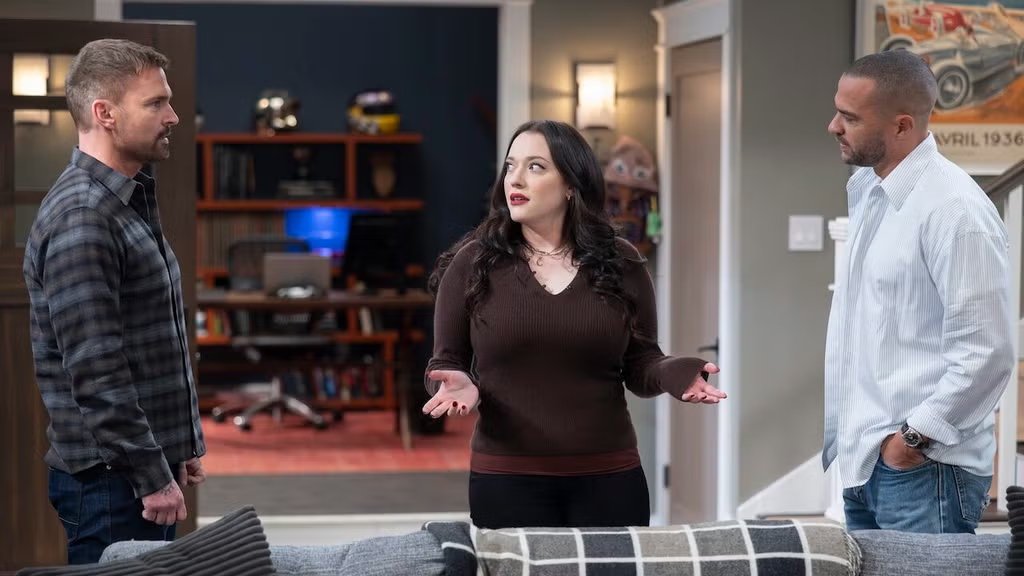
ABC’s Tim Allen and Kat Dennings-led “Shifting Gears” is set to return for its third season in 2027, and BET remains a steady source of multicam entertainment with titles like “The Ms. Pat Show” and “Tyler Perry’s House of Payne.” But the genre is seeing momentum as NBC builds its Friday programming around two sitcoms this fall and as Prime Video prepares to premiere its first.
“The multicam has been dying throughout my entire career supposedly, and it just never seems to actually go away because audiences do like it,” “Happy’s Place” showrunner Kevin Abbott told TheWrap.
And while both sitcom leads and their audience tend to skew older, Gen Z has gravitated towards the genre as “Friends” and “The Big Bang Theory” remain popular on streaming. “Big Bang” is on its 13th consecutive week at the top of Nielsen’s acquired streaming shows chart.
Real-life couples saving the genre
Notably, in addition to showrunners like Lorre, Abbott, Kauffman and “Shifting Gears” boss Michelle Nader, who all came up in multicams, it’s three real Hollywood couples who are at the forefront of this renaissance: McEntire and Rex Linn on “Happy’s Place,” Leoni and Daly on “Newlyweds” and June Diane Raphael and Paul Scheer on “Dinks.”
Curtis said she’s encouraged NBC to license the tagline, “Friday’s I’m in love,” to match the sitcom block. But more than a catchy tagline, if mined properly, the real-life relationships could be on-screen gold, with Abbott noting, “There is a dynamic that if you can get it on screen is special, and I think certainly I feel that way about Rex and Reba.”
“The one type of show we never really pulled off too well to my satisfaction was a love interest with Reba, because she can do almost everything at a superstar level. I was never convinced with the chemistry with the actors we cast as love interests and … they were great actors,” Abbott said of the flagship “Reba” show, which he also ran. “When we brought Rex in to play Emmett, it was there, and suddenly I believed it.”
But it hasn’t been a smooth road for “Newlyweds,” after NBC fired co-creator and showrunner Gail Lerner and replaced her with Bruce Helford, a sitcom vet who Curtis worked with on both “Anything but Love” and “The Drew Carey Show.” But that’s not intimidating for Curtis, who recalled her first experience on a multicam included “creative reshuffling” before creator Peter Noah took the helm of “Anything but Love.”
A different energy and a smart business decision
Curtis will be the first one to tell you that single-camera doesn’t scratch the same itch for her as a viewer or a performer, previously lamenting that “[it’s] silent, and it’s awful for me.” And she’s not alone; Nader, who has created single-cams like Hulu’s “Deli Boys” and “Dollface,” noted the energy from the live studio audience is undeniably part of her ABC show’s DNA.
“It’s like having a big wedding, bar mitzvah, sweet 16 — it’s a big party on Tuesday night. Everybody comes out and the actors love it,” Nader said. “When the audience comes, they just level up so much and it makes them all excited and we get to see, as writers, what’s really hitting with people … It’s like a workshop for us as well as a celebration.”
The live performance aspect of multicams means that the cast and crew have the benefit of more normal working hours compared to other productions, as well as the ability to stay close to home and family with a minimal commute to Los Angeles’ studio lots. But the steady sets and local production also mean lower budgets for networks, providing greater incentive to keep production in Los Angeles.
“It’s always been a little bit of a puzzle to me too, because just from a corporate standpoint, they should be much more popular than say even single-cam because we’re less expensive,” Abbott said. “But it doesn’t seem to work that way. It seems to be more about trying to catch the next hot thing, as opposed to something that the audiences will enjoy for a long time.”
Gloria Calderón Kellett, who hasn’t landed a green light for a multicam since Netflix’s “One Day at a Time,” admits that it “hurts [her] brain” to think about why networks aren’t eager to make more, but noted the “bigger concern is we’re losing people who know how to do it.” She also pointed out the lack of diversity in the genre, calling it a “dire wasteland of people of all sexes and orientations and races that are out of work.” That doesn’t stop her from continuing to pitch Latino stories.
Abbott echoed Calderón Kellett’s concerns about building the next generation of TV showrunners as writers’ rooms shrink and minirooms disperse them before production.
“You need that training,” he said. “There’s the art and the craft of this business. The craft is knowing the rules and why those rules are in place, and the art is knowing when and why to break the rules to create something different.”
For Nunan, however, the impetus is on creators to “show the networks and streamers that this is still viable, that this can still really work and win awards.”
Refreshing the genre
If you’re thinking sitcoms could use a blast of fresh energy just as “The Pitt” revitalized the medical drama space, Kauffman is cooking up what you ordered. While the “Friends” co-creator said she wouldn’t return to multicam “unless someone was able to reinvent it,” she went ahead and did it herself in a way that gets at the core of what she loves about the genre.
“Dinks” will be performed in front of a live studio audience like a typical multicam, but use audience suggestions to move along the plot, with Raphael and Scheer — as well as production — adjusting their action and dialogue on the spot.
“You’re in front of a live audience, so it’s a little bit like theater, and feeding off the audience is so exciting,” Kauffman told TheWrap. “The audience tells you things. They tell you if a moment doesn’t work, and we all love improv. And it just kind of came to, ‘Hmm, can these two things go together?’”
In practice, the improv aspect means that during filming for the pilot, production asked the audience where they would go on a special date with the set dressings for an Italian restaurant, an Asian restaurant and a French bistro at the ready, but had to shift when one woman shouted out “Denny’s!”
“It’s like nothing I’ve ever done before, and that’s really exciting at my age — having been in the TV business for a long freaking time — to do something that feels fresh, not only in the larger sense, but in terms of what we’re doing on a day-to-day basis,” she said.
And, to Nunan’s point, both Nader and Calderón Kellett keep on pitching their ideas for their next hit.
“I still go out with comedy every year — I’m going out with a multicam pitch right now,” Calderón Kellett said. “I’m determined to continue until I get another multicam on. Until I [don’t] have breath in my body, I will still be going out with multicam.”
The post Whatever Happened to the Multicam Sitcom? appeared first on TheWrap.