At the start of the remarkable documentary “One in a Million” (in theaters), a group of people are driving in a van through the streets of the northern Syrian city of Aleppo in 2025. A voice asks, “Are you coming to visit or to stay?”
One passenger, a woman in her 20s, hesitates before replying. “I don’t know,” she says. When you’re from one place but feel at home in another, are you really a visitor? And if so, what changed?
The past decade has brought many excellent documentaries about people who fled Syria during the country’s civil war, which began with the Arab Spring in 2011 and ended with the fall of Bashar al-Assad’s regime in 2024. But even among those films, “One in a Million” stands out, a heartbreaking and sensitive chronicle of 10 years in the lives of a family of refugees.
It’s about leaving your country, but then it grows into something more: a meditation on how living in a new culture changes family dynamics, and how longing for home can be part of that.
Directed by Itab Azzam (who is Syrian) and Jack MacInnes (who is British and married to Azzam), the film primarily traces the relationship between Israa, who is 11 when the film begins in 2015, and her father, Tarek, who is 48. Along with a number of relatives, they are in Turkey, where they’ve fled to, intending to take the dangerous boat trip to Greece and from there make their way to Germany.
Azzam and MacInnes combine vérité footage and conversations with Israa and Tarek about what they’re feeling and thinking. Rapidly, we travel with them across the continent until they settle in Cologne. Tarek is pleased to have brought his family to a country that embraces them; in one memorable sequence, he stumbles upon a group of protesters in the street and asks the person holding the camera, “Are these with us or against us?” When he learns they are protesting the far-right AfD party, he can barely contain his joy. “These are great people,” he says, adding, “we should adopt their customs and traditions, the ones that are right.”
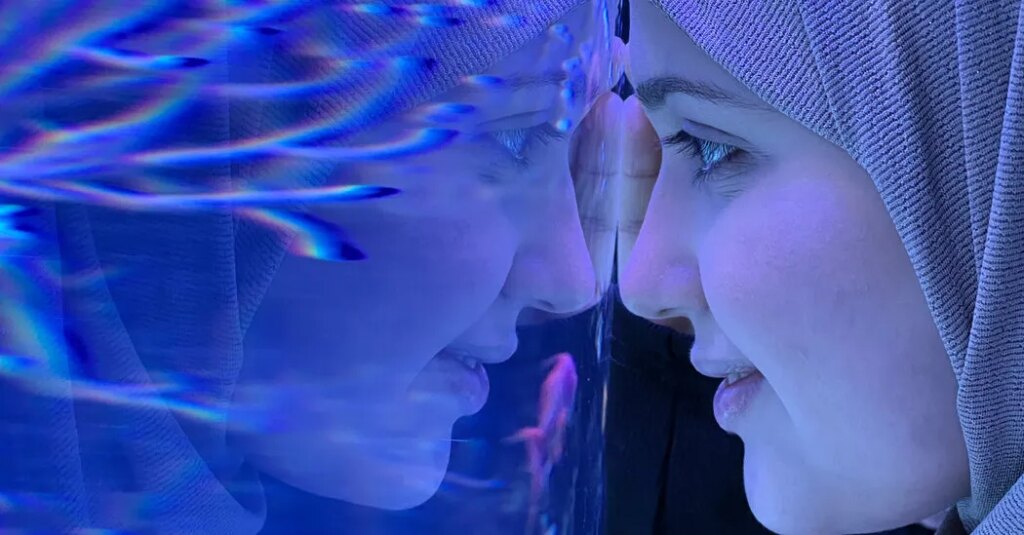
But the question of adapting to a new culture emerges as the central conflict in the film. Tarek eventually comes to believe that his new home country is also full of people who “use freedom in the wrong way,” because “there is something called right and there is something called wrong,” while Israa begins to chafe against her father’s strict religious rules. She refuses to wear a hijab. She takes up the pop culture obsessions of her classmates. And her father is not pleased.
The filmmakers continued to return to the family for 10 years: We see Israa grow up and grapple with her family, her religion and most of all, her father, though not always in ways we might expect. Slowly we realize that we haven’t seen everything about Tarek, in particular his relationship to his wife, Nisreen, who has mostly been in the background. In 2017, Nisreen begins to discuss her life with the filmmakers, too, and her evolution is extraordinary.
Complex and perceptive, “One in a Million” never lets its subjects be stereotypes: the stern father, the rebellious daughter, the awakening mother. The decade-long relationship between the subjects and filmmakers builds trust that allows each person both vulnerability and dignity on camera. By the end, when the woman in the van — Israa, now grown, with a child of her own — is considering whether to return to Aleppo, we understand just what’s at stake for her, and the emotions she’s experiencing as she contemplates where home really is.
The post In ‘One in a Million,’ the Extraordinary Story of a Family in Flux appeared first on New York Times.