Welcome to The Backstory, a new weekly newsletter that takes you behind the scenes of Times journalism. Today, Nikole Hannah-Jones discusses why she wrote about her schooling choices for her daughter, an essay that drew some heated responses. Our National editor explains how we’re covering battleground states in the election. And in our “Sound Off” segment, I talk with a law professor who believes The Times is inconsistent in labeling people “conservative” and “liberal.”
But let’s start with the documentary that it seems like everyone is talking about, and the disgraced Theranos founder at the center who says The Times misquoted her three years ago.
Elizabeth Holmes and a contested quote
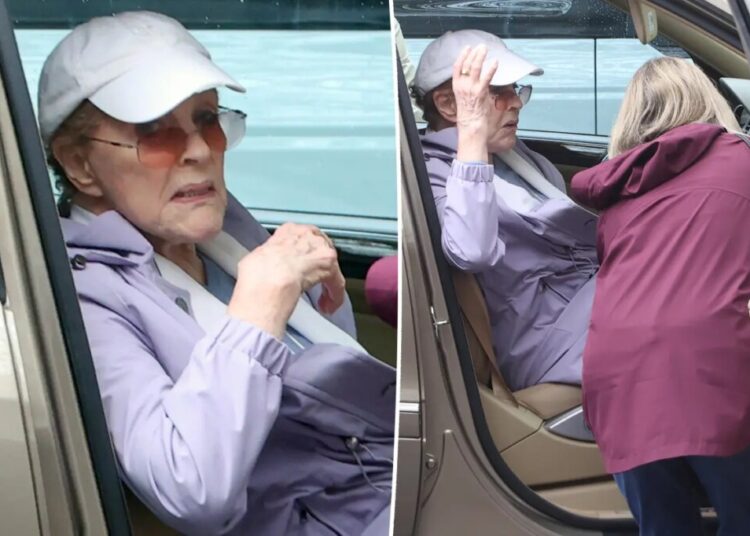
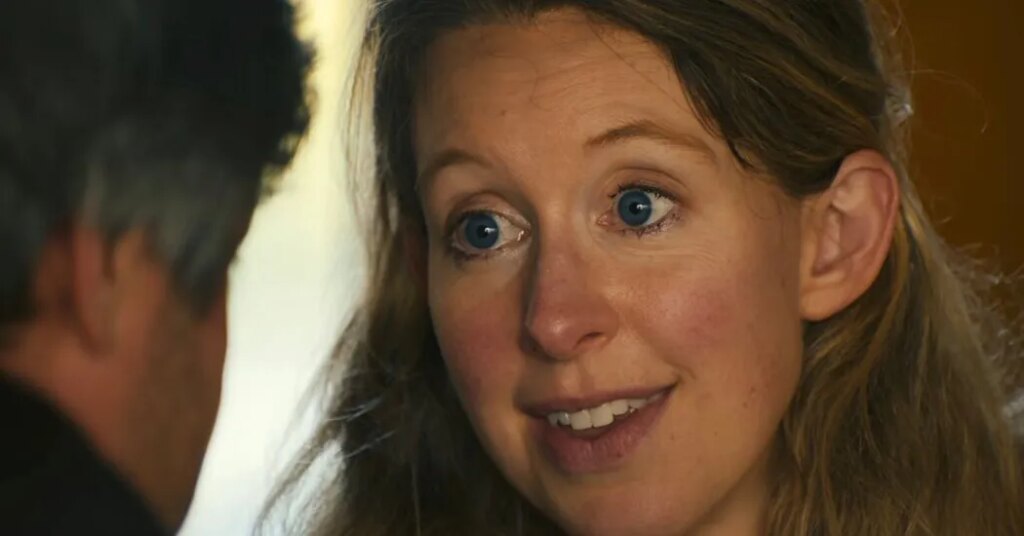
There’s a moment in “You Can See Everything,” the new documentary about Elizabeth Holmes, that grabbed my attention last weekend. Holmes claims we misquoted her in our 2023 profile when we reported her saying, about actors portraying her in movies and TV: “They’re not playing me. They’re playing a character I created.”
Holmes disputed the quote back when the profile came out, saying what she’d actually said was, “They’re playing a character they created.” The article’s reporter, Amy Chozick, went over her interview notes with her editors at the time and they confirmed that the story’s quote was accurate. We relayed this to Holmes and considered it settled.
Until now.
The documentary brings up the quote several times as a kind of means of assessing Holmes’s honesty or deceptiveness. Holmes’s partner, Billy Evans, says in the film that they had recorded all the interviews with Chozick. He provided an 80-second audio clip to The Times in 2023, but that recording did not include the disputed exchange. The documentary does not confirm or refute the quote either; we stand by the reporting.
Some readers who saw the documentary asked us about the quote. Chozick wrote it down in her notebook during one of her interviews with Holmes but did not record it and no longer has the notebook, she has told her editors. I wanted to learn more, so I emailed some questions to Chozick, a former Times staff reporter who is now an author and screenwriter.
What’s the backstory on the quote?
It was six weeks before Holmes went to prison for fraud. Evans had gone to the gym, and Holmes and I walked their dog, Teddy, on the beach outside their Del Mar, Calif., rental home. I was taking notes in my reporter’s notebook. At that point, we’d already spent several days together and talked extensively about the persona she’d adopted as the chief executive of Theranos. We talked about why she made her voice deeper and wore black turtlenecks and red lipstick, so it was an extension of that conversation.
As we walked, I told Holmes that I heard Jennifer Lawrence had recently pulled out of portraying her in a movie. She looked over at me, and said: “They’re not playing me. They’re playing a character I created.” As she walked a couple of steps ahead, I wrote down her exact words in my notebook.
Every night when I’ve been out reporting, I go through my notebook and put a star next to anything I think is a particularly important moment or quote and I highlight it and flag that page with a Post-it note. This quote was highlighted and the page had a Post-it.
You didn’t record that specific conversation. Many journalists don’t record every interview while taking notes, but you no longer have your notebook either. Why?
A lot of people’s most honest, on-the-record reflections come when I turn off my recorder and just take notes. I wasn’t going to put a recorder in Holmes’s face as we walked on the beach. I take notes constantly, to jot down important quotes and details and to incorporate my impressions in real time. I generally keep my reporter’s notebooks for a couple of years before getting rid of them. My editors confirmed the quote with me in 2023, and I thought the matter was resolved. I didn’t anticipate that the quote would become a part of a documentary years later. Of course, now I really wish I’d kept that notebook.
In “You Can See Everything,” Evans says he recorded all of our conversations, but this is not accurate. I spent several days with Holmes and Evans, always on the record. We did several formal interviews at the kitchen table and on the couch when we both recorded the conversations. But a lot of the most revealing moments came when the recorders were turned off. For example, when they were loading the babies into the Tesla or when we went to the San Diego Zoo and got tacos at the Lucha Libre Taco Shop in Mission Hills. I wrote down quotes and details as the conversations unfolded.
Why should readers trust the accuracy of the quote when we can’t prove it now?
It’s a fair question. Holmes and I talked extensively about the character she created at Theranos, which she says her romantic and business partner, Sunny Balwani, pressured her to adopt. In the profile, this is what follows “They’re not playing me. They’re playing a character I created”:
So, why did she create that public persona? “I believed it would be how I would be good at business and taken seriously and not taken as a little girl or a girl who didn’t have good technical ideas,” said Ms. Holmes, who founded Theranos at 19. “Maybe people picked up on that not being authentic, since it wasn’t.”
Those additional quotes and context were never disputed. Holmes told me repeatedly how Balwani encouraged her to “kill Elizabeth” — to wear black turtlenecks, to not talk like a “little girl,” to drink green juice, go vegan, not sleep for more than five hours, etc. (Balwani’s lawyer denied this, when we spoke.) Hollywood screenwriters didn’t invent the black turtlenecks, the deep voice or the red lipstick.
My late mentor, David Carr, used to say writing a profile is like holding a mirror up to a person. They don’t always like what they see. I’ve profiled some of the most controversial figures of our time, and I am always surprised by which details or quotes strike a nerve with them. But this one stood out to me because Holmes spoke openly, over several days, about the persona she created at Theranos. This was the first interview she had given since the blood-testing company imploded, and she looked and sounded like a completely different person from the public figure people remembered. How and why she’d created that persona was a topic that we returned to repeatedly.
Nikole Hannah-Jones unpacks her deeply personal essay
Nikole Hannah-Jones’s recent essay examined a decision she made a decade ago to send her daughter to low-income, predominantly Black public schools in New York City in hopes of challenging the system. Her daughter came to disagree with that decision. Reader praise and criticism for the essay were swift. In an interview, I asked: Do you think you made the right educational choice for your daughter? Here’s what Nikole said:
I love that you’re asking that because I actually think, no offense, that’s the wrong question. And that’s a question that has been so much of the focus since the piece came out, whether this one family’s choice for their one child was right or wrong. To me, the question is, why do we abide a system that forces this choice? And that’s really what I wanted us to question, to say, even a parent who has all of these resources was getting crushed by the system of inequality. So if it can crush me, what do you think it’s doing to our most marginalized children? That is really the question.
You can watch the full video.
Sound Off
You have thoughts. Let’s discuss.
Josh Blackman, a professor at South Texas College of Law Houston, reached out after he was described as “conservative” in two Times articles within 24 hours. He said the label was accurate, but argued that The Times applied such labels inconsistently to academics and analysts — using “conservative” far more. He did his own digging into our usage; so did we, and he had a good point. I asked him to talk it through. Click the play button below to listen to our conversation, or read an edited and condensed excerpt below.
Sound Off: A Double Standard for ‘Conservative’ and ‘Liberal’ Labels?14 MIN LISTEN
Josh: I’ll frequently talk to a reporter, and they’ll say, How would you identify yourself? And they’re not asking for my pronouns. They’re trying to get at my politics. Eventually I just say, Fine, if you want to call me conservative, you can. I suspect the reason they do this is to give their readers a grounding of where I’m coming from. If this was a neutral policy that’s applied across the board, I wouldn’t have much ground to object, but I find that it’s not.
I searched and found it was far more likely that you were identifying “conservative” than “liberal.” This reinforces a perception that both the academy and, frankly, the media views a liberal position as a neutral position; the conservative position is the other, the outlier.
Patrick: I think there’s real truth to your critique, and it’s something we need to do a better job on. We’re trying to give readers more factual context about who’s speaking or why their views rise to the level of a story. Sometimes it’s notable that it’s a conservative legal scholar criticizing President Trump’s politics. In the academy, there are a lot of liberals, but that doesn’t justify it.
Josh: Your reporters seem to have good Rolodexes. But they need to have a stable of legal scholars on both sides of the issue. I could give you another list of stories where they only give one side of the story.
Patrick: Josh, I’d push back on this one. When I started as a journalist, people would joke about the “dial a quote” professor — the go-to professor who’s going to give you that great quote. If you’re just quoting a bunch of liberal professors criticizing the Roberts court, it’s boring journalism. I think it’s night and day compared to how it used to be.
Josh: I think you’ve gotten better. I think there’s a conscious effort to give the other perspective and not dismiss it.
Your questions about our midterms coverage
Jay Marcus of Los Angeles asks:
How are we to look at these polls now and feel any confidence that they are accurately capturing the national environment and the reality of where the vote will be?
Nestor Ramos, our National editor, answers:
Polling is an incredibly useful tool to help understand the state of a race, and you can read about how our polling team does much of that work here. But while it can tell you how people say they would vote, it’s just as important to understand the factors that are driving their decisions.
To help answer some of the questions that polls often can’t, we rely on on-the-ground reporting from all over the country. We have reporters in battleground states talking to voters every day to try to gain insight into how they are feeling about politics, policy and everything else that is motivating them to vote (or, as is the case for so many Americans, to stay home).
In just the last few weeks, Sabrina Tavernise has visited the key battleground state of Michigan to talk to voters and found person after person who had lost faith in President Trump. And in Pennsylvania and elsewhere, she found a bipartisan swath of voters who had lost trust in not just particular politicians but the entire system.
What you find when you talk to enough voters is often pretty nuanced. Sometimes opinions break cleanly along political lines. But often you find people who are earnestly wrestling with how big political questions affect their own lives. What will make their communities safer? Which candidate or party do they think will help them afford the life they want?
Have a question about Times journalism? Submit it here.
Pop quiz
The bold words below both reflect widely accepted usage. But which one is correct according to Times style?
-
Hunters on some public lands in Alaska will be allowed to bait bears with donuts soaked in bacon grease before shooting them at close range, under a rule the Trump administration released Friday.
-
Hunters on some public lands in Alaska will be allowed to bait bears with doughnuts soaked in bacon grease before shooting them at close range, under a rule the Trump administration released Friday.
We welcome your feedback. Email us at [email protected]. And see you next week. — Patrick
The post Elizabeth Holmes Quote Drama appeared first on New York Times.