Photographs by Lynsey Addario
I.
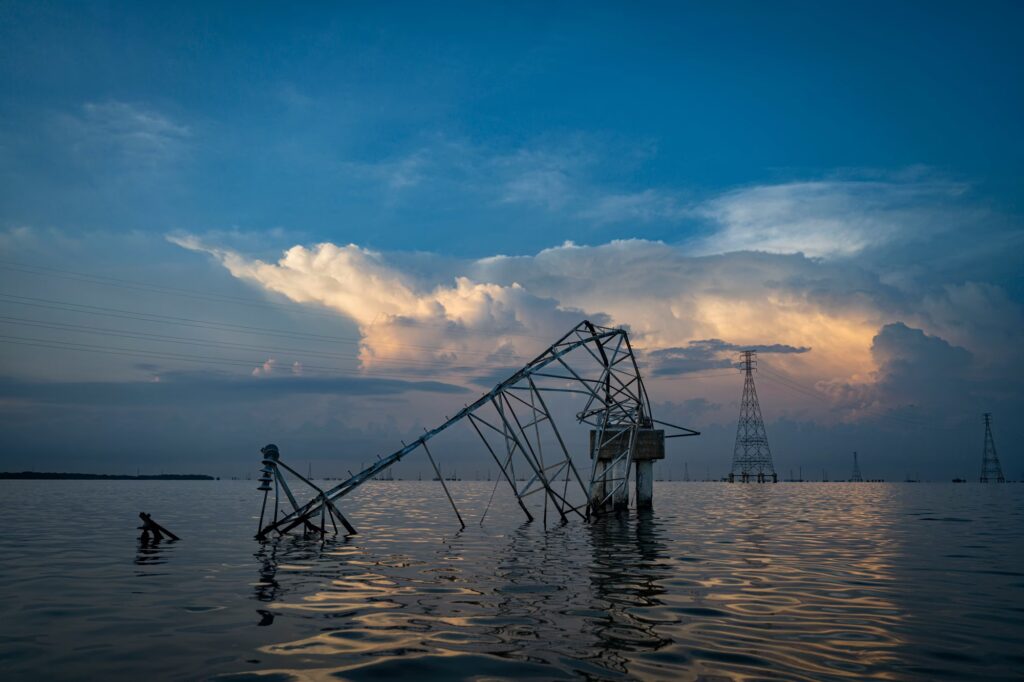
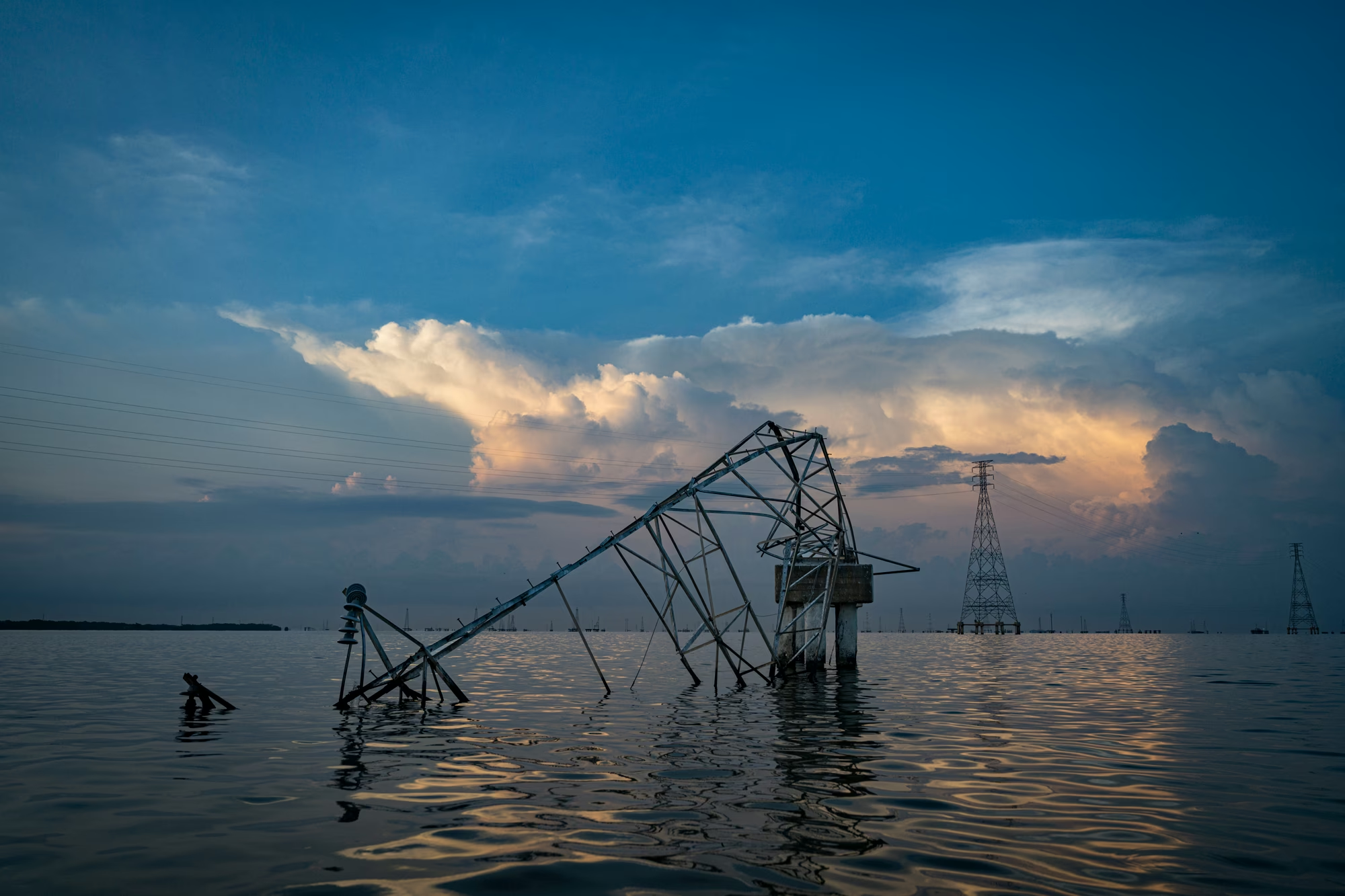
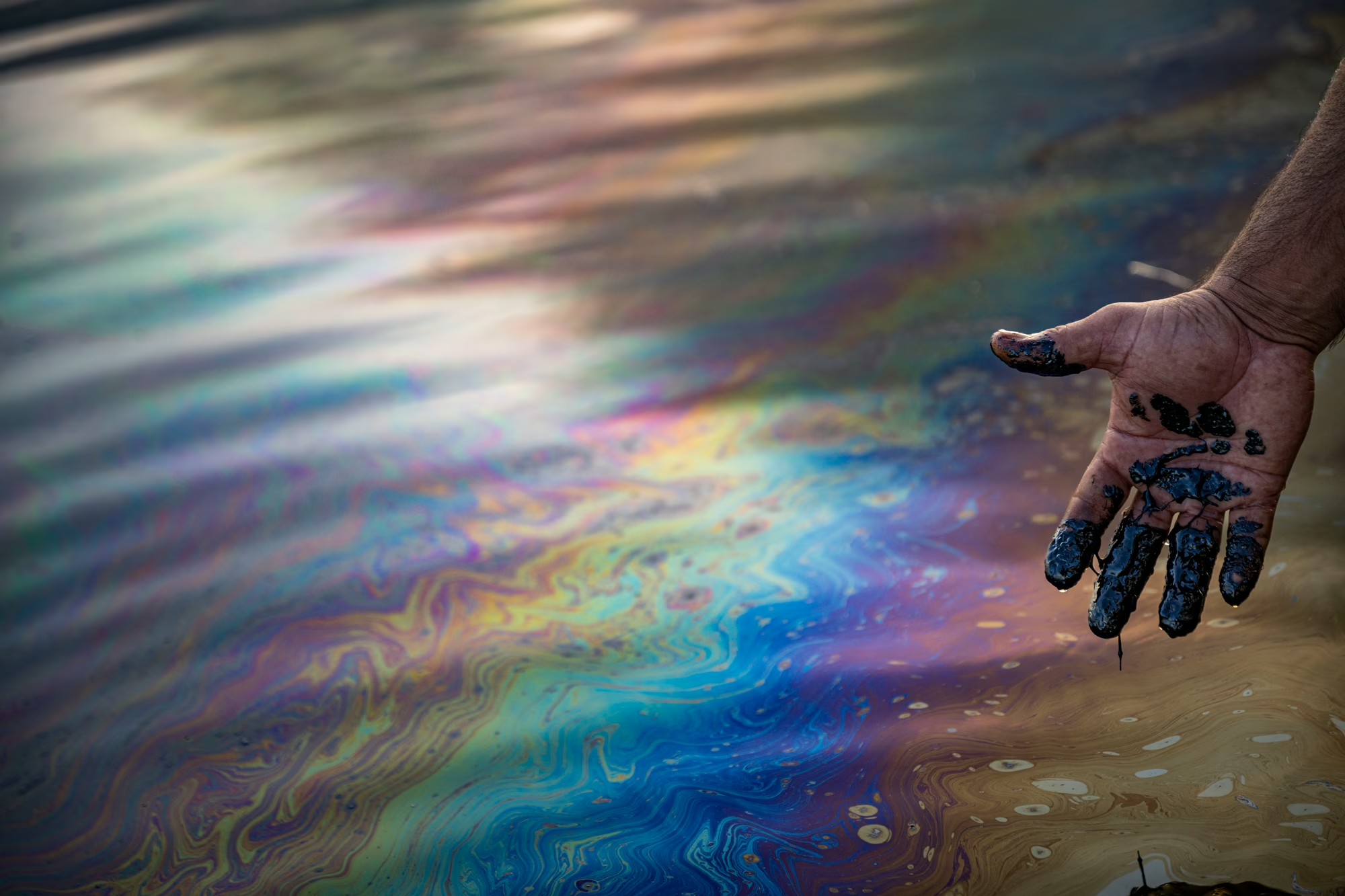
We drifted past abandoned drilling platforms, ghostly remnants of better days. Cormorants perched on the metal bars of broken oil rigs, drying their wings in the sun. When we reached a swirling, brown-green oil slick, Carlos slowed his motor. Raw oil could damage the engine, he said, and we’d already had to return to shore once that day to swap boats. We floated for a bit. Carlos, who makes his living as a fisherman on Lake Maracaibo, pointed out some surface bubbles, evidence of a leaky pipeline beneath the water. There was a strong smell of gas. He lit a cigarette anyway and laughed.
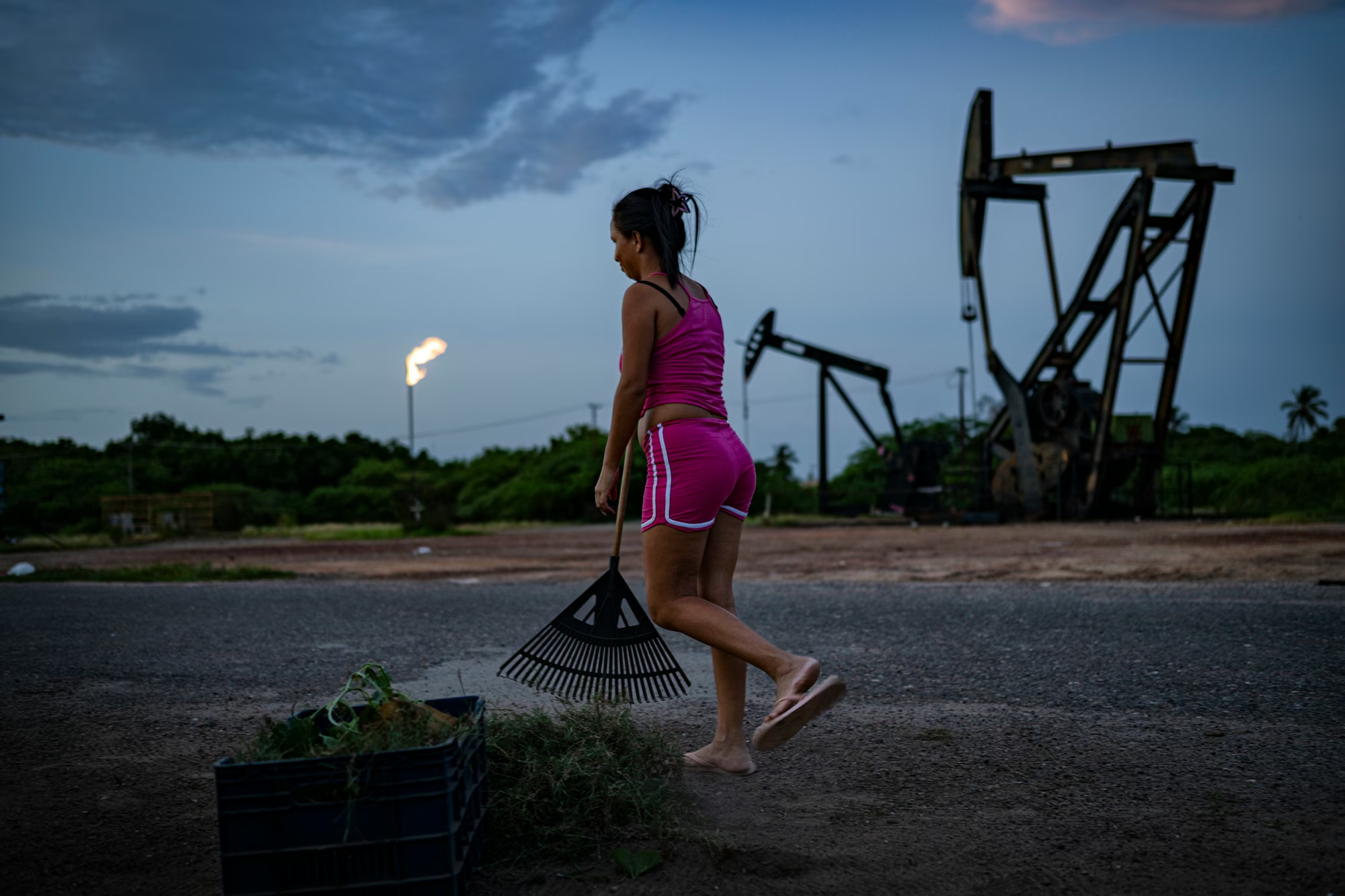
That morning, Carlos and his team had caught about 30 pounds of fish in the lake, a brackish estuary where oil was discovered more than a century ago. The subsequent boom built the cities of Caracas and Maracaibo, three generations of wealth, and four decades of democracy. A century later, tens of billions of barrels’ worth of reserves remain beneath the water. Some of them might now be controlled by the American government.
They will not be easy to extract. After the boom came the bust, at first slowly and then very fast. Hugo Chávez, who ruled the country as a leftist authoritarian from 1999 to 2013, and then Nicolás Maduro, the autocrat who succeeded Chávez and ran the country until he was removed by an American military operation early this year, undermined the industry, chasing away engineers and impoverishing workers. Even as they said they were building “Bolivarian socialism,” they removed benefits, lowered salaries, and created a capricious, repressive regime. Millions of people left the country.
Most American and European companies left too. The Russian and Chinese companies that arrived to replace them invested very little. Lake Maracaibo, the largest body of water in South America, also became one of the largest environmental disasters in South America. Two decades of neglect produced leaks, spills, poisoned water, and the ghostly drilling platforms I saw from the fishing boat. Fishermen sometimes rinse their crabs and shrimp with gasoline to remove the crude oil. All of their nets turn brown.
Billions of dollars of investment will be needed to remediate the site and recover more oil. In the meantime, people who live around the lake, like millions of other Venezuelans, work hard and earn very little. Their fish have to be sold immediately, because electricity is unpredictable and freezers are thus unreliable. Rapid inflation—20 percent in July, an annualized rate of 783 percent—has made everything unaffordable. In a Caracas market, I found prices and exchange rates written on whiteboards, because they change every day.
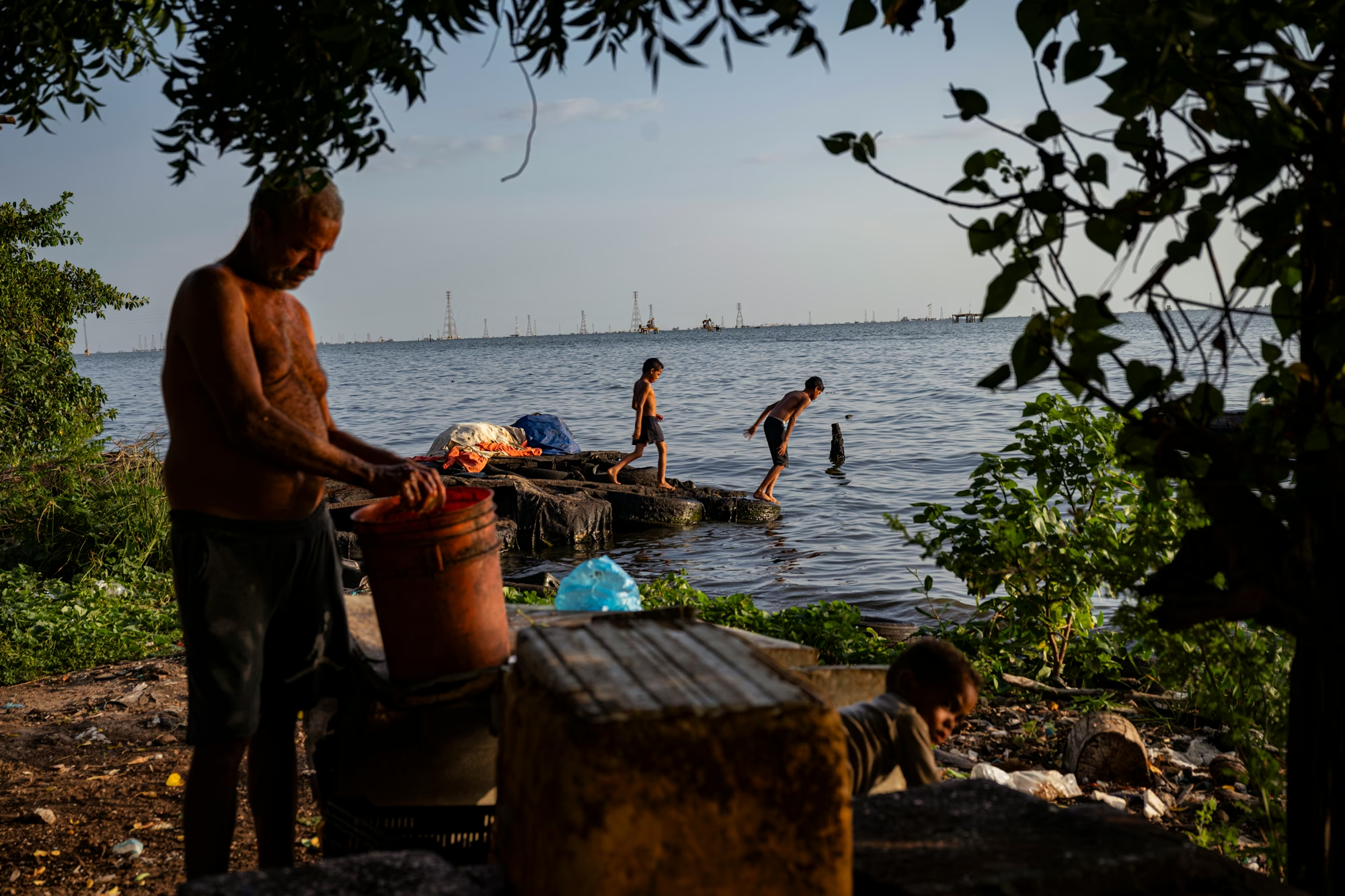
The state is absent, or indifferent. Carlos pointed to a scar on his leg that he said was an old gunshot wound, the souvenir of an assault by one of the pirates who control the lake: “If you don’t pay them, they kill you and take your boat.” The coast guard is supposed to patrol the lake, he said, but it is rarely there.
The oil industry offers few well-paying jobs. At a lakeside town, its beaches blackened by oil, Francisco, a former boat mechanic at the state oil company—Petróleos de Venezuela, or PDVSA—told me he had quit because he got tired of not having the right tools and spare parts. One of Francisco’s neighbors, Iliana, told me her husband had quit PDVSA too, after his salary plummeted from $50 a day to just a few cents a day. He now works for a Russian company that pays about $35 a day, but he has to spend most nights sleeping on the drilling platform.
From a great distance—Washington, say, or Mar-a-Lago—Venezuela is sometimes described as a bonanza for America, a trove of riches. On January 3, the day that the U.S. military captured Maduro, Donald Trump promised that it would be. “We’ll run it properly; we’ll run it professionally,” he said at a press conference that day. “We’ll have the greatest oil companies in the world going and invest billions and billions of dollars, and take out money, use that money in Venezuela, and the biggest beneficiary are gonna be the people of Venezuela.” But at that same press conference, he also announced that he would be working with a new president: Delcy Rodríguez, Maduro’s deputy and a leading member of the regime that had caused the destruction in the first place. He dismissed the country’s opposition leader, María Corina Machado—who was the true winner of Venezuela’s 2024 presidential election—as a “nice woman” who “doesn’t have the respect within the country.”
In Venezuela, this language sounded jarring. Since then, it has become even more confusing, because it is so at odds with reality. When I asked people living right next to some of Venezuela’s largest oil fields whether Rodríguez had made any difference to the industry or the country, they laughed or sneered. Iliana told me, “People thought that things would change, but in reality nothing changed.” José, another fisherman who used to work for PDVSA, had a darker view: “The gringos came to rob everything—the oil, the minerals. We are rich in everything, but here, we don’t have anything.” Later, a local oil engineer told me that none of the American agreements matters anyway, because the Venezuelan government is illegitimate and so “nothing is legal.”
These opinions are widely shared. Perhaps surprisingly, given the disparate worlds they inhabit, the views of Maracaibo fishermen are not far from those of Ricardo Hausmann, a Harvard economist who served decades ago in a very different Venezuelan government, one that opened the country’s natural resources to foreign investment through a transparent process. In the 1990s, PDVSA explained to legislators, foreign companies, and the public what it was doing. Contracts were made public. Money produced by oil investments long funded social programs, including scholarships to study at American universities. These produced warm feelings toward America among educated Venezuelans that outlasted years of Chavista anti-gringo propaganda.
The political and business relationship now being forged between America and Venezuela is completely different. It’s not a relationship of two equals, obviously. But nor is it exactly an occupation. Some have compared it to the Anglo-Persian oil deal of the early 20th century, or the 1905 treaty that gave the U.S. government control over the customs service of the Dominican Republic, but neither of those analogies is quite apt. Searching for a model or a reference point, I asked Hausmann how he would describe it. “A coalition of two kleptocracies,” he said.
II.
What happens to Venezuelan oil when it is pumped out of the ground? Where does the money go afterward? And how did that change following Trump’s announcement, on August 28, of “THE BIGGEST OIL DEAL IN WORLD HISTORY”? None of these questions has a simple answer. Over several days in Caracas and Madrid (where much of the Venezuelan opposition currently resides), and in telephone calls to Boston and Houston, I asked six people—two formerly in the oil industry, two still in the industry, and two in academia—to explain the details. All of them struggled to do so. One of them, an industry executive in Caracas who would speak only off the record, covered four pages of my notebook in diagrams and drawings, taking more than an hour and a half to explain how the previous legal system had worked, how a hydrocarbon law had been rewritten, how the new deals were unfolding and the old deals were being revised.
Perhaps the complexity is the point: Maybe the situation is hard to understand because neither the Rodríguez regime nor the Trump administration really wants anyone to understand it. Hausmann told me the Venezuelan constitution says that “anything of national interest should be approved by parliament, by the National Assembly. They haven’t done that, and so right now they are protecting themselves through obscurity.”
Despite the obfuscation, some of what Trump says is true: The U.S. really is controlling the sale of “millions and millions of barrels of oil” in Venezuela, as well as the sale of gold and other minerals. As a condition of lifting the economic sanctions that the U.S. had previously imposed on the country, all royalties and taxes from licensed companies are deposited into a special account originally set up in Qatar and later moved to Citibank. Industry analysts believe that more than $13 billion worth of oil has been sold since January, but that number is speculative. At a congressional hearing on September 15, Treasury Secretary Scott Bessent refused to confirm it. Repeated requests from congressional Democrats for more information have also received inadequate responses.
Some of the funds have been returned to the Venezuelan government. At another congressional hearing, a State Department official told legislators that money was being provided to pay “the salaries of government workers in Venezuela,” among other things. Hard currency is also made available to Venezuelan banks. But although there is no evidence that money is being stolen or siphoned off to pay for other Trump-administration projects, there is also no evidence that it is not being stolen or siphoned off. Ostensibly, the accounting firm KPMG is auditing the process, but despite requests from Democrats in Congress, an audit was not released by the October 8 deadline. In his congressional appearance, Bessent did not say if or when it would be.
Opacity has consequences. Partly thanks to this system, the major new investments necessary for a real recovery have been slow in coming. The old oil fields I saw near Maracaibo, as well as the untouched reserves in the Orinoco River belt, will require billions of dollars and very long time horizons to develop or redevelop. Any company planning such a project needs to believe that its contracts, and the political and social stability required to preserve them, will last for a decade or more. Francisco Monaldi, an oil-industry analyst at Rice University, told me that although the new hydrocarbon law, passed on January 29 under American pressure, is an improvement, it still affords Venezuela’s Ministry of Oil the flexibility “to give you the best deal in Latin America, or the worst”—and then to change the terms of that deal later if it chooses. No wonder the current situation—an unpopular, illegitimate Venezuelan president propped up by an unpredictable and term-limited U.S. president—makes big companies nervous.
If the oil companies would prefer an elected Venezuelan president and a stable political system, this is not a matter of benign, high-minded principle. Oil executives “are not in the business of charity; these are not nuns,” Monaldi said. “But these guys know when things are being done in a way that will eventually create trouble for them.” With the exception of Chevron, which remained in Venezuela throughout the Chávez-Maduro era and is still reinvesting the revenues it earns in the country (although nothing more), most large companies have merely sent envoys to Caracas, signed memorandums of understanding, and returned home. Gold refiners are equally ambivalent about processing the Venezuelan gold bars that a Trump-friendly company removed from the country, according to The New York Times, because the gold was likely mined by criminal organizations and the industry has strict rules about proof of origin.
Trump’s “biggest oil deal in world history” seems to have been designed to encourage American companies to start drilling faster and, more important for him, to distract from the oil crisis created by his war in Iran. But the announcement may have had the opposite effect because the deal, at least as it has been described in public, is even more opaque than the existing arrangement, and is even more unpopular. After the announcement, thousands of people left angry messages on the U.S. embassy’s social-media pages, reflecting both fury and surprise. And no wonder: The U.S. administration’s main business partner is a company called North American Blue Energy Partners (NABEP), whose notorious CEO, Alejandro Betancourt, is a household name in Venezuela. Betancourt has been investigated for money laundering in multiple countries, including the United States, Switzerland, and Spain. (He has previously denied wrongdoing and has never been charged with a crime.) After being arrested at London’s Charing Cross Station on a Swiss warrant in November 2025, he was stuck in England for more than six months while the extradition case proceeded. Spanish police searched his estate outside Madrid as recently as August 28. The Washington Post reported that the Trump administration pressured Swiss officials to halt an investigation and lift an extradition request, seemingly in order to allow Betancourt to travel to the U.S. and Venezuela and close the deal.
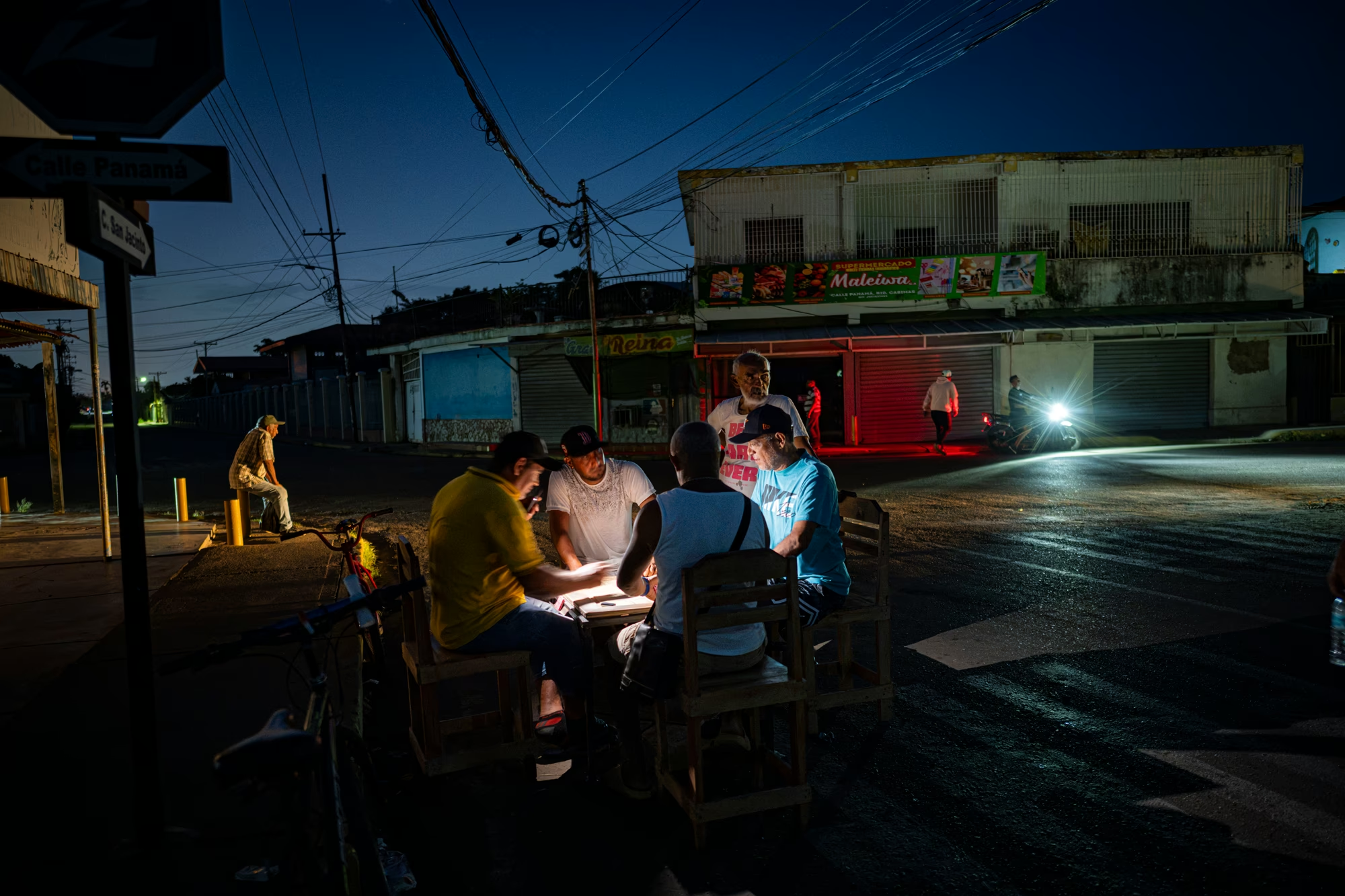
Inside the country, Betancourt is infamous for bungling an upgrade of the electricity grid, overcharging for used, poor-quality equipment and enriching himself in the process. People openly blame him for blackouts and power cuts that continue to this day. An opposition leader told me that he’d been hearing Betancourt’s name cited as an example of regime corruption since he was a teenager. The fishermen in Lake Maracaibo knew exactly who he was, and everyone else I met did too. An analyst in Madrid told me that everything he thought he understood about U.S. intentions in Venezuela had been upended by the deal with Betancourt.
Like the system of oil payments, the deal with Betancourt is also suspiciously difficult to describe. In essence, the Venezuelan government has allocated 17 oil fields to NABEP, a company originally created with an American businessman, Harry Sargeant. According to the White House, the Pentagon’s Office of Strategic Capital has acquired not ownership but “a 35% equity stake in its corporate parent”; others explained that the acquisition is a share in a contract, but this is again uncertain. The State Department seems to get the right to buy 20 percent of NABEP’s oil at production cost—whatever that means—as well as the first right of refusal on the other 80 percent. Some analysts told me they fear that the Rodríguez regime, to stay in power, will sell its oil below market prices.
No money was exchanged, and none has been invested. The Pentagon and NABEP are now responsible for attracting people who actually know how to drill oil to Venezuela—including to places without roads or infrastructure of any kind. I asked several oil analysts and economists, inside and outside the country, if the Trump administration and Betancourt could simply give drilling contracts to their respective friend groups in America and Venezuela. They all said yes.
A few people did try to see a glass half full. If more oil is pumped, then at least some money will eventually reach people, for example, which is better than no money. “It’s a process,” said Enrique Novoa, the former president of the Venezuelan Petroleum Chamber. “Tomorrow we hope to work a little bit better than today.” But even among those trying to look favorably on the deal, everyone I met was either surprised or confused that the United States—a longtime critic of the Marxist language and statist practices of the Chávez and Maduro regimes—had so quickly and enthusiastically embraced the corrupt habits, and the corrupt personnel, of the Chavista elite.
At the end of the day I spent floating through the postapocalyptic landscape of Lake Maracaibo, I met Juan Pablo Guanipa, one of the best-known opposition leaders in Venezuela. Guanipa, who lives in Maracaibo, was released in February after eight months in prison. He was detained on the street the next day, placed under house arrest, and then released again. He is still followed by the Venezuelan security service wherever he goes. Sitting in a room filled with books, we talked about the oil deal, the poor economy, the rising frustrations of Venezuelans.
I asked him whether he found the new union between Americans and Chavistas peculiar. Of course he did, he told me. Most perplexing to him, it seemed, was the absence of Yankee pragmatism, the most basic thing Venezuelans expected of Americans. At the very least, American capitalists should know about the rule of law. “I never thought we would reach a moment when we would have to convince the United States of the obvious—that Venezuela needs a legitimate government, that we need elections, and that we need change.”
III.
There is a straightforward way for Venezuela to acquire a legitimate government, one that would reassure both oil companies and ordinary people that a stable political and social order will endure: The regime could hold an election or a referendum, and let people choose the next president.
The U.S. administration, which not only controls Venezuela’s most important sources of income but also holds the threat of further U.S. military action over the heads of Maduro’s former henchmen, could help make this happen. Indeed, Secretary of State Marco Rubio has repeatedly said that it will. He has described a three-stage process: stabilization, recovery, and transition. With American encouragement, the regime and a part of the opposition—members of the last legislature recognized as legitimate, elected in 2015—have begun transition negotiations. Several people involved told me that although slow, the negotiations have been productive. In the first round, in August, discussions focused on reforming the supreme court, which slavishly followed the demands of the Maduro government, and which must be independent to ensure that the regime does not refuse to recognize an election result, as it has done in the past.
Unfortunately, many still aren’t convinced that the transition is real. In large part, this is because Trump’s description of Venezuela—a country where he says people are “really happy” and “dancing in the streets”—differs so dramatically from the reality they can see. But it’s also because Trump seems so enthusiastic about a status quo that includes Betancourt, Rodríguez, and a host of other figures from the past. A few days after meeting with Rodríguez on the sidelines of the United Nations General Assembly, he described her as “very nice, very terrific,” without naming a date for elections. On September 2, when a reporter asked him about Venezuelan elections, Trump said, “I just don’t think they’re ready yet. You know, it’s very new.”
Is democracy in Venezuela “new”? Are Venezuelans “not ready”? This language sounds just as strange and discordant to Venezuelans as the talk of great wealth supposedly flowing in their direction. After all, they did have a presidential election, and not that long ago. In July 2024, when Rodríguez was the vice president, Maduro was the regime’s candidate. He lost decisively, even after stacking the cards in his favor. In the run-up to the vote, his regime disqualified María Corina Machado, who had been selected in a national primary, a decision she called “judicial criminality.” They also nixed her first-choice substitute before finally allowing Edmundo González, a retired diplomat, to run as her surrogate. Then they harassed his supporters, used state media to insult and demean them, and even arrested them for fake crimes.
González won a landslide victory anyway, and the opposition could prove it. Anticipating that the regime might try to falsify the results, Machado and her team mobilized more than 600,000 volunteers to monitor polling stations and report irregularities using secure messaging apps. They collected and scanned the tally sheets produced by each voting machine, and uploaded them to a secure website, sometimes at great personal risk. In Antímano and La Vega, two barrios in western Caracas, I met community activists who regaled me with stories of that campaign. I was told of women who hid tally sheets in their underwear, of a man who stashed one underneath his toupee, of others who dressed as Maduro supporters to avoid being searched at the doors of polling stations. One local community leader told me that his 8-year-old son had gone around to polling stations on his bicycle and collected the printouts, knowing no one would suspect a child. Maybe Trump is “not ready” for democracy, but I met people in Antímano and La Vega who have fought for it longer and harder than most Americans.
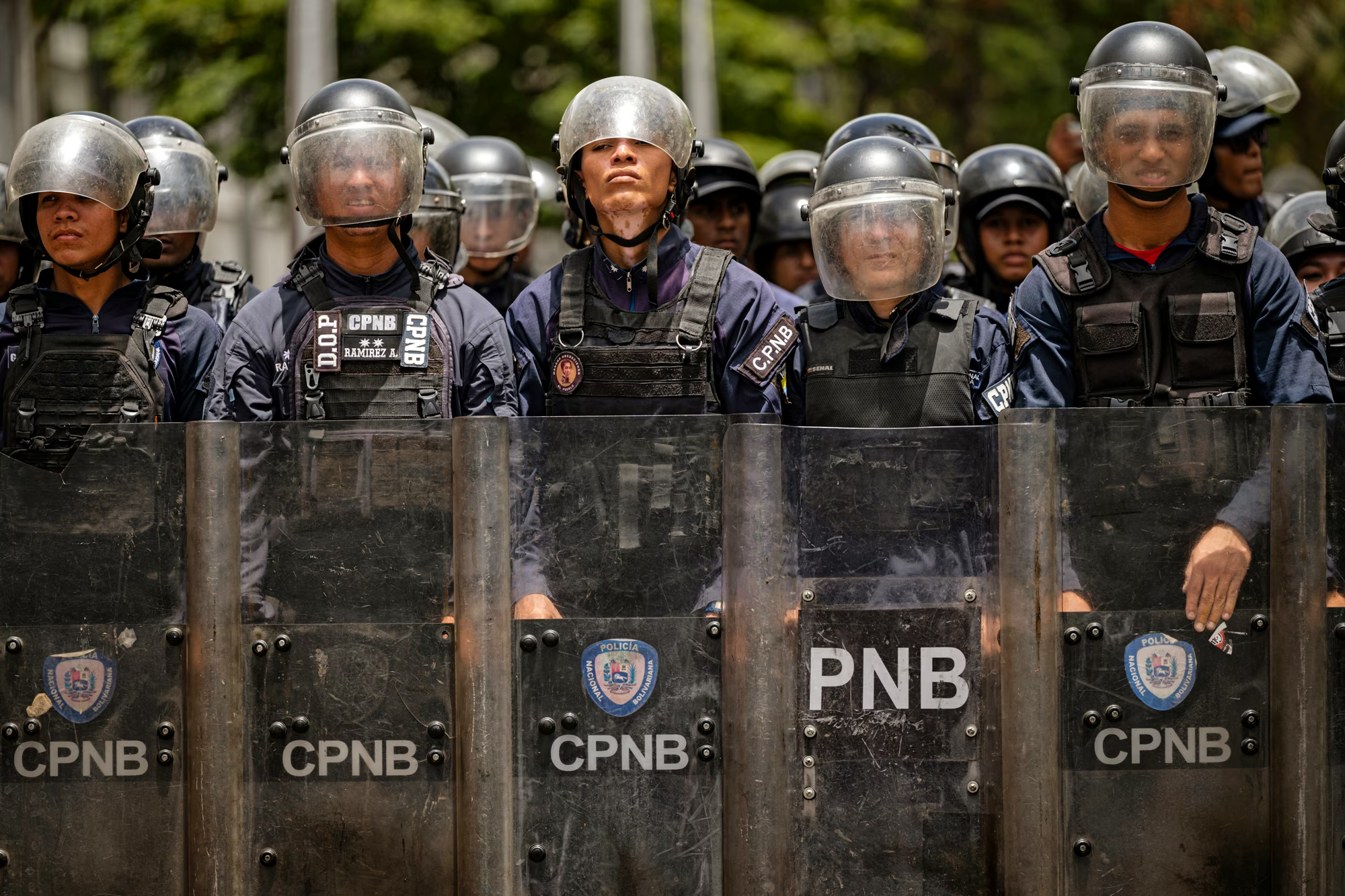
The regime never published its own evidence. Instead, it declared victory and launched one of the most brutal repression campaigns in the country’s history. Security and paramilitary forces fanned out across the country, arresting thousands of people and killing dozens. Independent organizations, including humanitarian groups, were effectively banned.
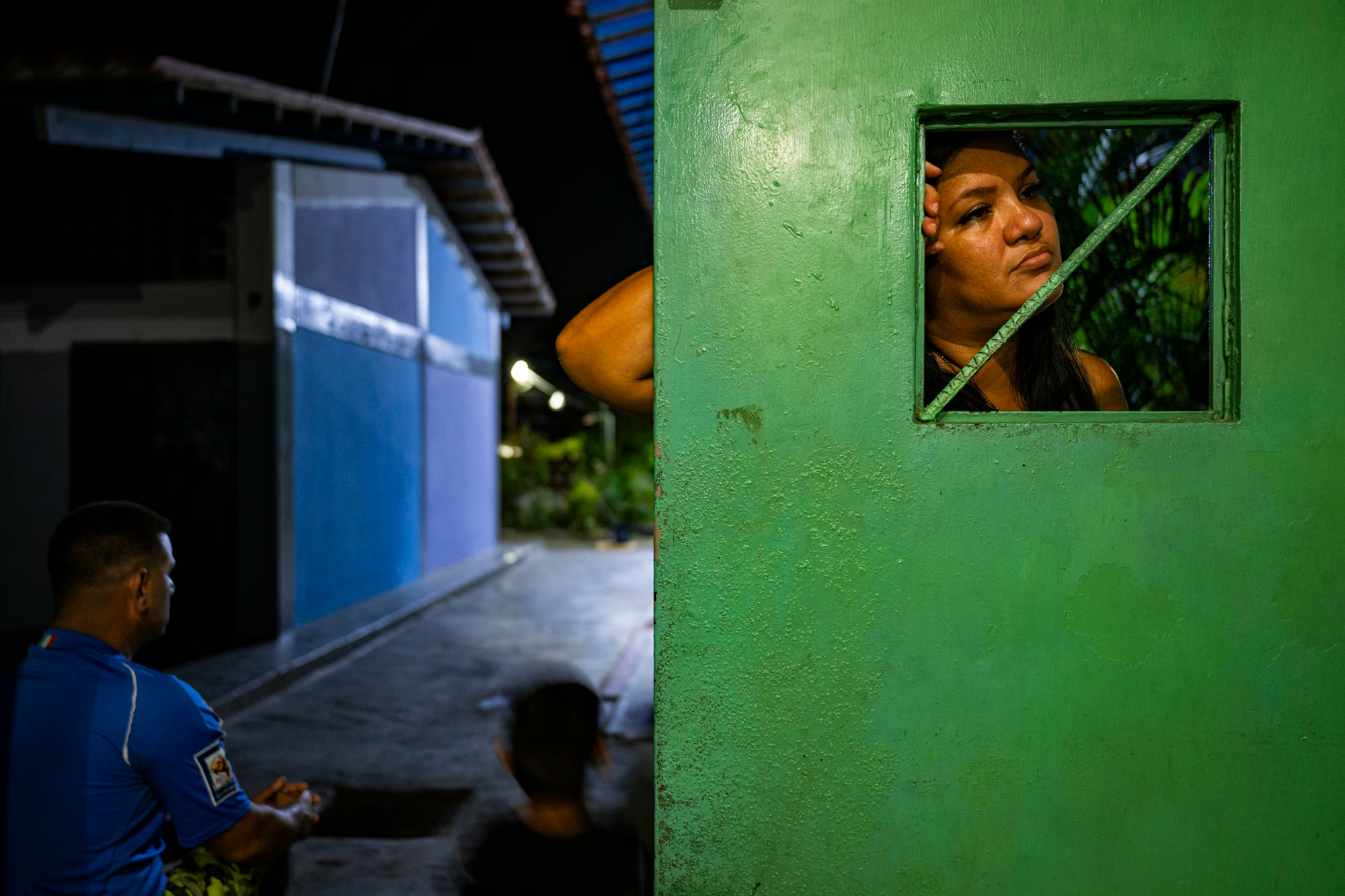
If Venezuelans aren’t convinced that their country is making progress toward democracy, it’s also because the apparatus that carried out this wave of repression is still in place. Numbers differ, depending on who counts as a political prisoner, but as of early October, 920 to 1,110 of them have been released since January, while more than 320 remain incarcerated. I met some of their relatives, camped outside the U.S. embassy because they had given up on their own government and hoped that the Americans would help them. “Marco Rubio says there are no political prisoners,” one of them told me. “But the political prisoners are still behind bars.” As of early September, no one from the U.S. delegation had acknowledged or interacted with the families. These kinds of protesters still face risks too: In the second week of September, a man who had joined a march organized by the prisoners’ families was arrested, in public view, by men without uniforms.
Even among the political prisoners who have been released, hundreds are still, like Juan Pablo Guanipa, constantly followed, or else forced to report regularly at a courthouse, as if the regime were reminding them that they are only temporarily free. Perkins Rocha, a lawyer who was one of the opposition campaign’s representatives before the electoral council in 2024, is still under house arrest. Seized off the street a month after the election, Rocha, a bespectacled scholar of constitutional law, was charged with terrorism, treason, criminal association, incitement to hatred, and conspiracy. He was taken to the country’s most notorious prison, El Helicoide, where he spent two weeks in handcuffs, his head sometimes covered by a hood. After that, he spent many months in concrete rooms with no windows, sometimes shared by up to 20 people. Since his release in February, he has remained at home with an ankle bracelet, which he jokes is like “prison but with sunlight.” To visit him in his Caracas apartment, I had to check in with the policemen who stand in the lobby of his building and beside the elevator outside his front door. One of them took my name and wrote it on his hand.
But the most important reason Venezuelans doubt the prospects of a democratic transition is the long absence of Machado, the opposition leader. Machado went into hiding after the election, at an unknown location inside Venezuela. In December 2025, she finally escaped the country, taking a fishing boat to Curaçao, the Dutch island territory off the coast of Venezuela, before flying to Norway to receive the Nobel Peace Prize.
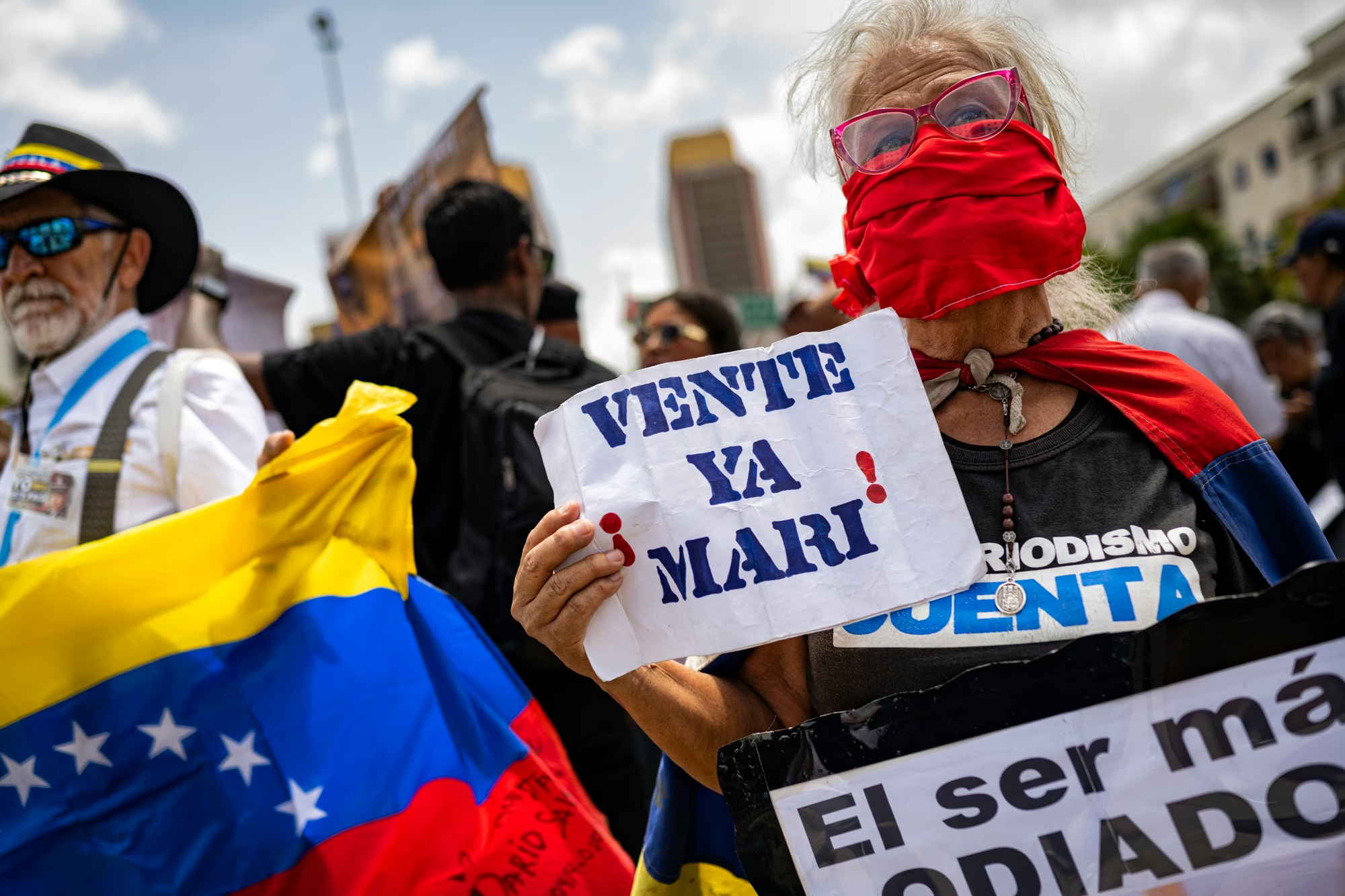
In January of this year, Machado visited Trump at the White House, and she made what seemed to be a bid to win his favor, presenting him with her Nobel medal in appreciation of his “unique commitment” to Venezuelan freedom. But if she hoped that this would persuade him to throw American power behind her and the country’s democratic opposition, that doesn’t seem to have worked: Nearly a year later, Trump has not proposed a date for an election and Machado has remained stuck abroad, first in Washington, D.C., then in Panama.
Initially, the U.S. administration advised her not to go back: Her safety could not be guaranteed. Later, her attempts to return were blocked, and not only by the Rodríguez regime. Rubio did explicitly say—albeit in a Spanish-language interview, which Venezuelans would understand but his boss would not—that Machado has “every right to enter her country whenever she wants to return.” But private planes she has chartered have been refused landing rights, even by Curaçao and Aruba, another Dutch territory. A boat she hired mysteriously developed “engine trouble.” A commercial airline would not let her board.
Multiple people in Caracas told me that U.S. diplomats in the city describe Machado as a “problem.” Indeed, if the Trump administration’s most important goal is to cement oil deals with corrupt figures linked to Rodríguez, then perhaps she is. Machado has been clearer than others about the need to hold the regime accountable for past crimes. She has long argued that private companies should play a bigger role in the Venezuelan economy, a position that, ironically, puts her at odds with those in the U.S. administration who want to work with the Venezuelan state to extract resources.
I spoke with her while she was in Panama in early September, and she told me that her main concern, other than returning home, is that too many people, Americans included, do not “understand at all what is going on in Venezuela. Everything I hear is about conventional formulas for transition that take into account everyone’s interests and opinions except the people’s, as if the people did not matter.”
Both in Caracas and in Washington, there are clearly actors who aren’t that interested in “the people” or what they want. But if the U.S. government wants to carry out a transition without Machado, the attempt will backfire. If Betancourt is the country’s most famous symbol of past misrule and corruption, Machado remains the most famous symbol of a democratic future. Without her, no election will be legitimate, and legitimacy is a necessary part of ending the Venezuelan crisis. “There are 1.1 million Venezuelans living in the United States, and 65 percent are willing to come back,” Machado told me. “But they are not going to do it while the same regime that expelled them in the first place is still in power.” Legitimacy is required for the construction of a Venezuelan military that can cooperate with the U.S. in the fight against criminal networks in the region, instead of being part of them. And again, legitimacy is the missing ingredient in oil-market reform, the insurance that companies need before they will make long-term investments.
Even if Machado returns (as perhaps she will have done by the time you are reading this article), nobody imagines that the country’s path will be straightforward. In a busy open-plan office, crowded with people talking over small plastic cups of black coffee, I met Henry Alviárez, the national coordinator of Vente, Machado’s political party. Alviárez told me that after he was released from prison in February, Vente had to “rebuild everything—regroup, recover the organization, and recover our direction.” Vente started with 55,000 people, Alviárez said, and was up to 150,000 in September: “We now have structures throughout the country and in all municipalities, and according to the polls, we are the leading party in Venezuela.” It is planning to launch a national debate—using online platforms, social media, and town halls—about what Machado calls a “grand national agreement” to amend the constitution, the educational system, the health-care system, and more. Vente isn’t asking for an immediate election. But the party’s leaders at least want to know when one will take place so that they can plan.
Some do believe they should wait: wait for the influence of the Rodríguez regime to wane further; wait for the Trump administration to lose power; wait for the congressional Democrats and the Republicans who support Venezuelan democracy to take action; wait for more oil to start flowing. There are risks to a transition, after all. No one can be sure when the economy will start growing again, and a new government could be blamed if it doesn’t. But if waiting seemed like a good strategy six months ago, the risks are increasing quickly. Everything here looks normal, Alviárez said, gesturing at the people drinking coffee. But appearances of normality are deceptive: “There is a feeling of exhaustion and a desire for change that can only be channeled through a clear leadership and a clear objective. It can only be resolved if people finally have a date for elections. That could prevent a social explosion.”
Some people, he told me, without naming names, “have said that María Corina is coming to destabilize the country. No. She is coming to channel that anger and conduct it toward a civic, peaceful process: an election.” After fighting Chavistas and their Russian, Iranian, and Cuban allies for so long, nobody in Venezuela’s historically pro-American democratic opposition ever expected a U.S. administration to stand in their way. But if it does, they are preparing to fight that obstacle too.
IV.
On June 24, two earthquakes shook Caracas, the seaside city of La Guaira, and several smaller towns along the coast. Suddenly, the risks of waiting became clear.
Within minutes of the quakes, several large apartment buildings collapsed, including a public-housing complex built by the Chávez regime for victims of a 1999 mudslide. Tens of thousands of other buildings were damaged. At least 6,500 people died (the full number is still unknown), more than 16,800 were injured, and about 17,000 became homeless.
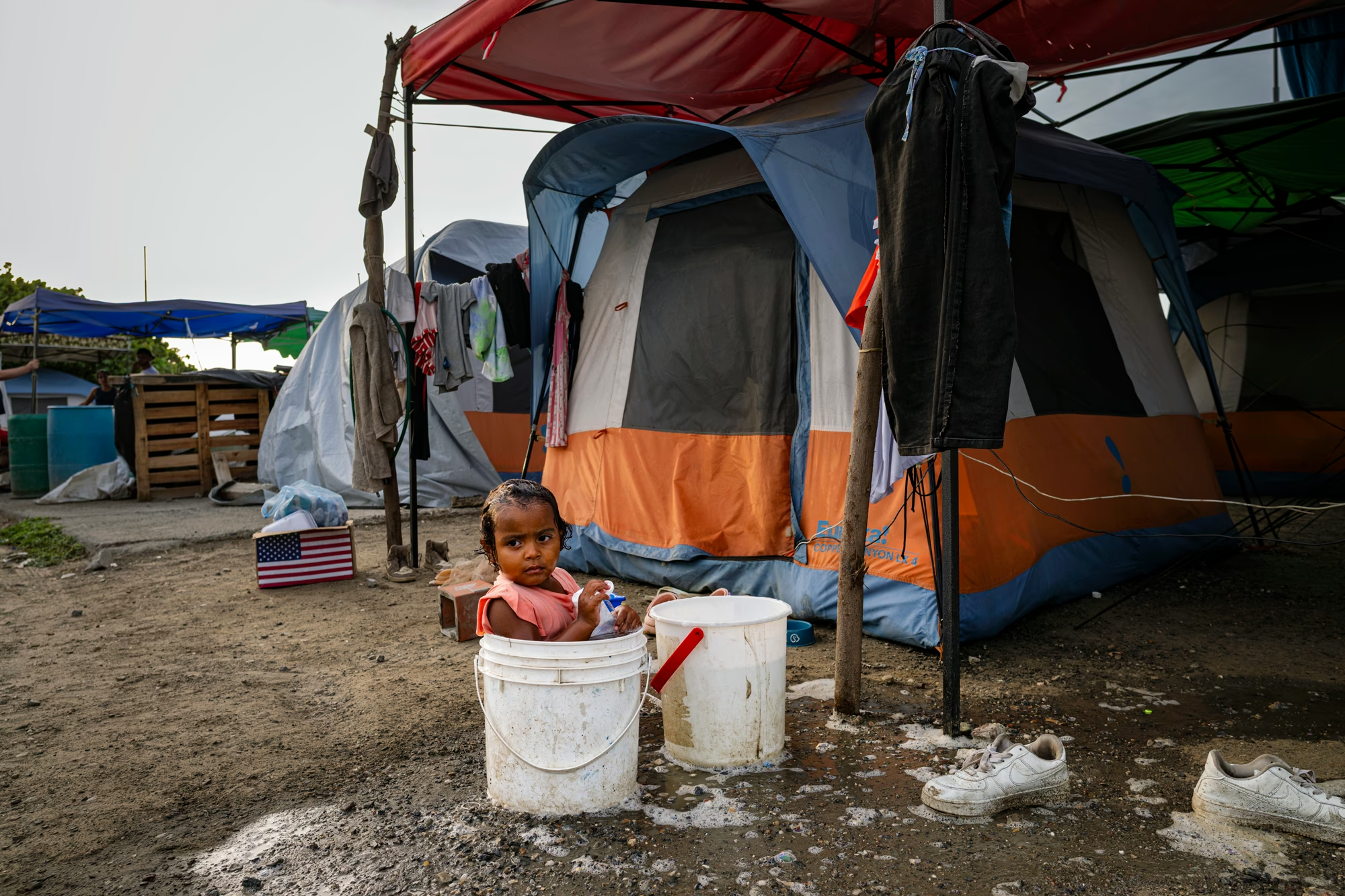
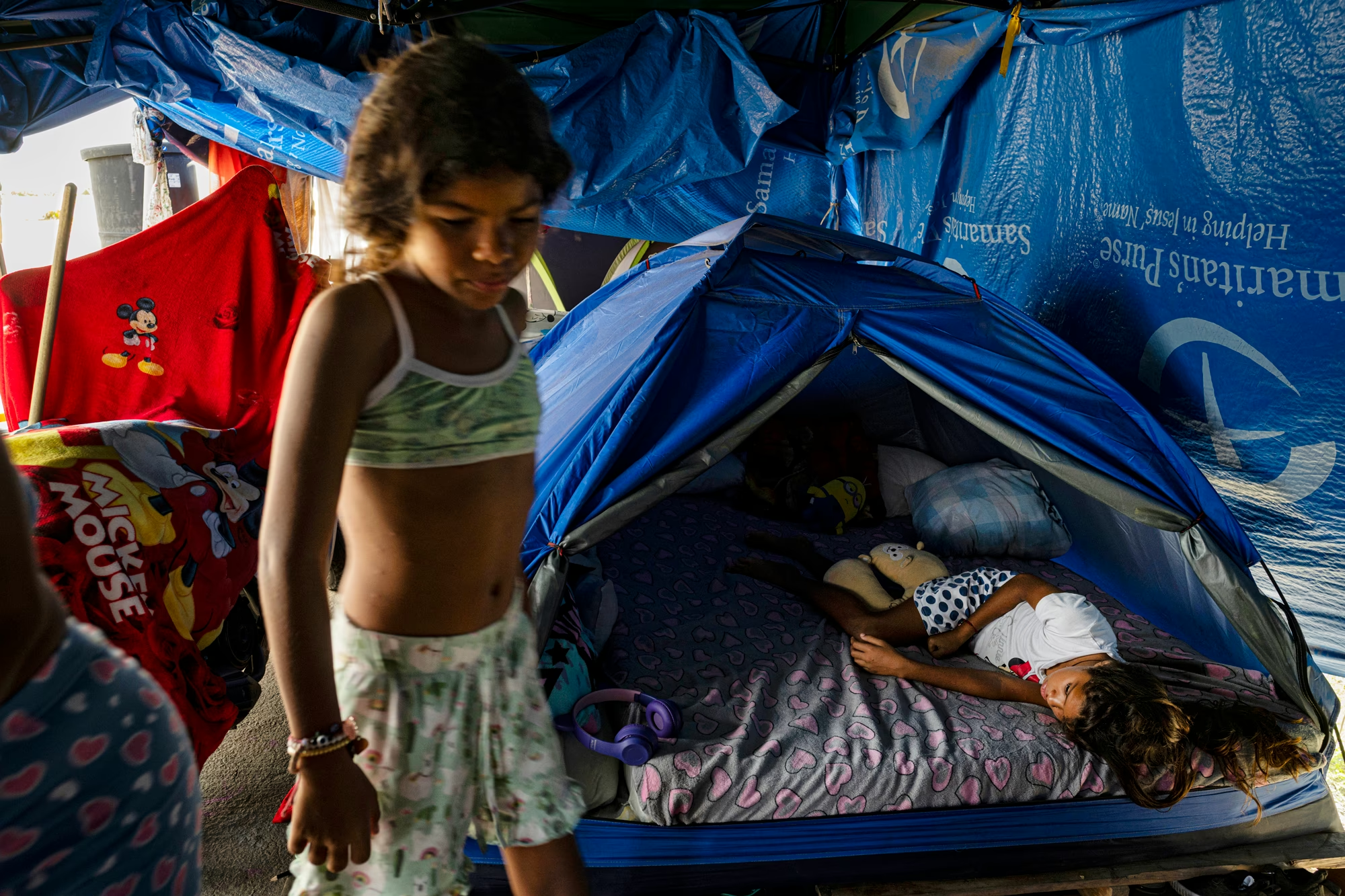
Some governments, even some authoritarian governments, rally during a crisis. In the face of this tragedy, the Venezuelan regime froze. Rodríguez has enough police officers to guard Perkins Rocha’s elevator. But she did not have enough soldiers, police, or rescue workers to dig Venezuelans out of the rubble, to offer people medical help and food, or to find homes for them in the days that followed.
I visited La Guaira, the city most badly affected, the week before school was scheduled to begin. No one I met in the refugee camps knew where their children were supposed to go, or whether studies would resume at all this year. One local school had been taken over by refugees who had no intention of relinquishing it, because they still had nowhere else to live. On the site of the collapsed public-housing complex, where bulldozers had finally arrived to take away the rubble, I met Ellie Solano, a bereaved mother who asked the men with machines to leave one part of the debris untouched, because she knew it lay on top of a sports field where her son had been playing. Two months after the disaster, she was searching for his corpse, digging in the early mornings and in the evenings, when it wasn’t too hot.
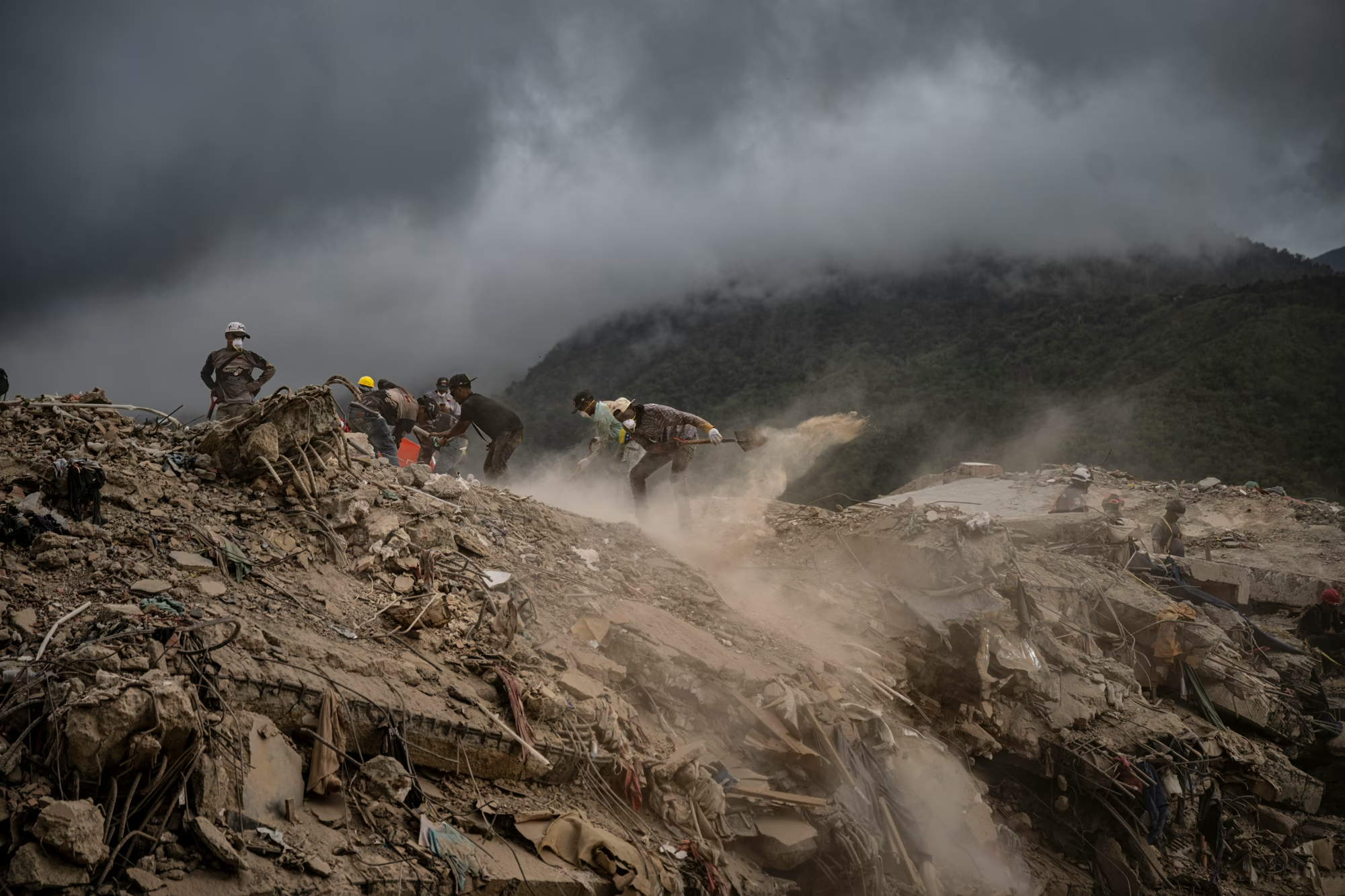
Over the course of a day in La Guaira, I asked everyone I met how long it had taken for a government official to offer help after the earthquake. Some said four days. Some said five. Some thought it had been more. “We didn’t see policemen. No army, no nothing,” one woman told me. “It was people helping people, neighbors helping neighbors, and like that, many, many days.”
It still is. Just as grassroots movements emerged in Ukraine to support the army after the 2022 Russian invasion, many different kinds of voluntary organizations suddenly appeared in La Guaira after the earthquakes. Some, like Alimenta la Solidaridad, a charity founded a decade ago, had deep roots in the community already. Before 2024, Alimenta had more than 200 soup kitchens around the country. After the election, the regime restricted the activity of independent organizations and Alimenta had to shut down the kitchens. But the group revived itself after the earthquakes, reasoning that the situation had changed and, as Juan Andrés Saavedra, one of the group’s leaders, told me, “the government didn’t exist.” Saavedra now organizes teams of volunteers who bring food every day to several sites, including the refugee camp inside the school.
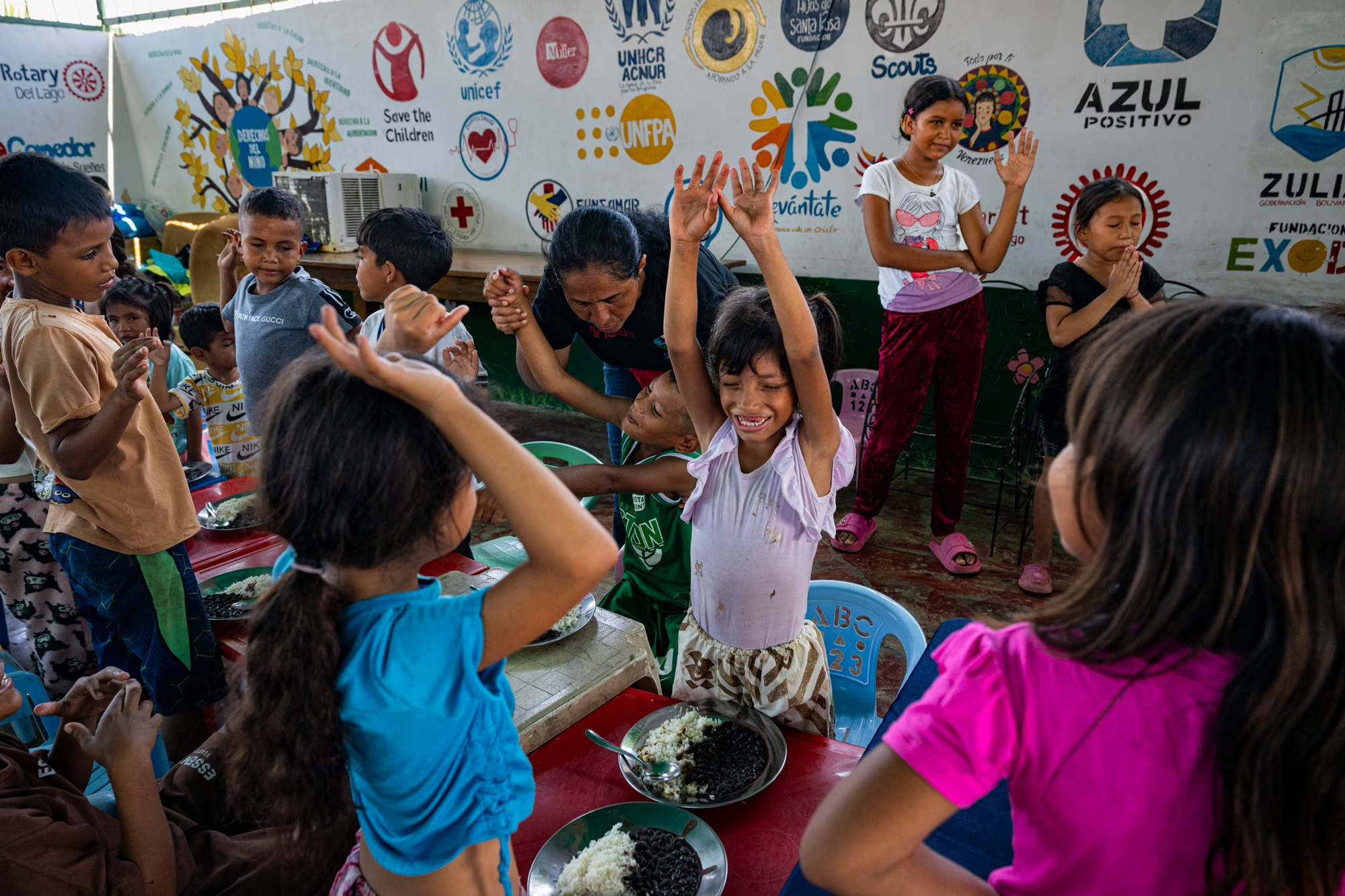
In some societies, the absence of the state leads to anarchy. In others, people organize themselves instead. Venezuela is one of those countries, as Machado herself told me in an interview in December 2024. Even when she was in hiding, even when the political situation was at its most dire, Machado was certain that the experience of election organization had brought about “anthropological change,” forging connections among people from different parts of society, inspiring them to want to reform their country from the bottom up.
Nearly two years later, Venezuelans kept telling me the same thing. One young woman, a political activist who had left the country and only recently returned, told me that the earthquakes and the chaos that followed were a sobering reminder of the lessons learned during the 2024 election campaign: The government won’t save us; the Americans won’t save us; we have to work together.
“We are on our own,” she said.
This article appears in the December 2026 print edition with the headline “After the Apocalypse.”
The post After the Apocalypse appeared first on The Atlantic.