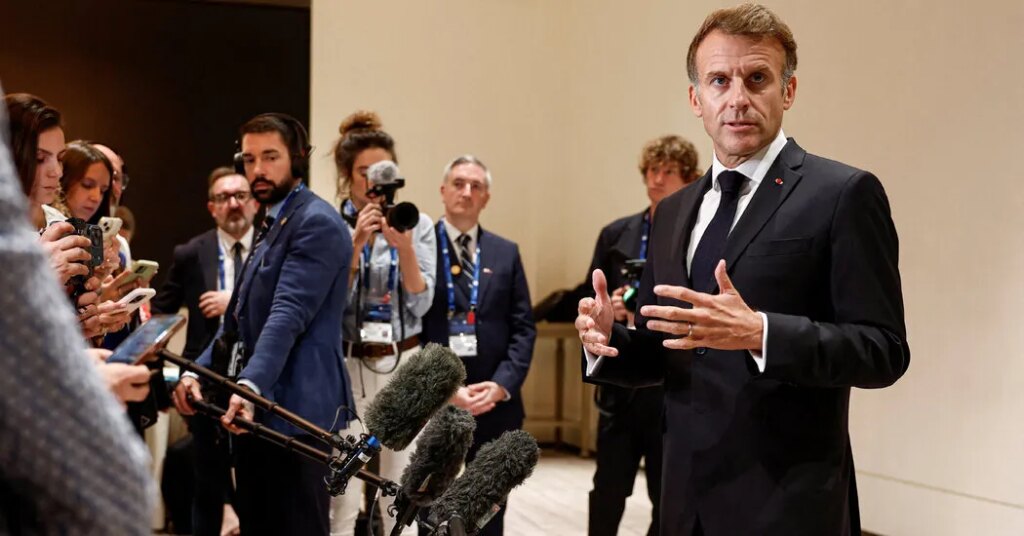
President Emmanuel Macron of France said on Wednesday that President Trump does not like France and that he was among the leaders who had made false claims about unrest there to advance their own political interests at France’s expense.
When asked whether Mr. Trump does not like France, Mr. Macron, addressing a group of reporters, said: “Well, one has to admit it. All the people who are speaking ill of our country right now are people who don’t like our country.”
Political leaders on both sides of the Atlantic “who echo what certain circles obviously want people to believe about what happened in France, they’re campaigning at our expense,” he said.
The worst rioting in years shook France over the weekend, spinning off from demonstrations about public education and the rising cost of living. Several government buildings were attacked and some were set on fire, nearly 1,000 police officers and gendarmes were injured, and more than 3,000 shops were looted or damaged, leading to the arrest of more than 2,500 people across France, officials said.
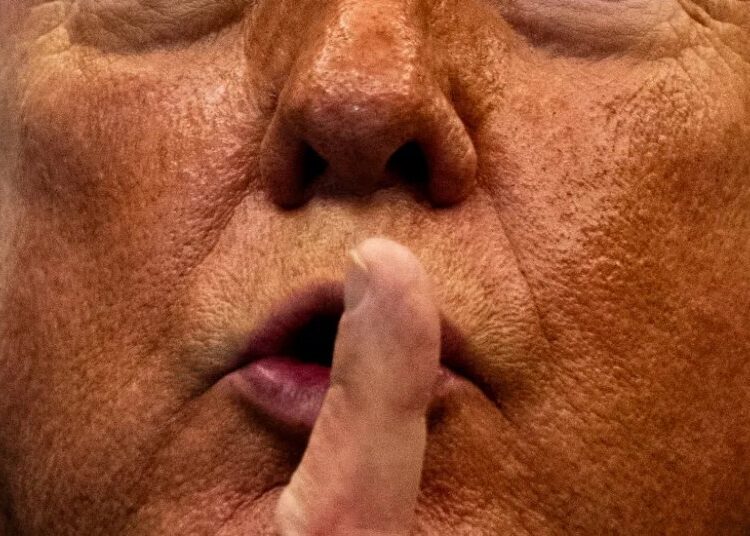
At a campaign rally in Kansas on Monday, two weeks before midterm U.S. elections, Mr. Trump said, “If you want to see what is at stake in this election, just look at what’s happening in France, a once great nation that is being conquered, looted and burned to the ground by migrants, jihadists and communists who hate Christianity.”
France’s government has accused “ultraleft militants” and opportunistic looters of causing the violence. The far-right, anti-immigration party, the National Rally, has also accused the far left, which it said formed an alliance with “predators from the suburbs.” In France, “the suburbs” usually refers to working-class areas with large numbers of immigrants, primarily from Africa, and their descendants.
Several foreign leaders and politicians, including President Trump and Vice President JD Vance — both of whom have expressed support for the National Rally — amplified its critiques, saying the unrest was caused by immigrants.
The identities of the black-clad and masked rioters captured on footage is unknown. Of the more than 2,500 people arrested, 95 percent were men and 70 percent were adults, according to Gérald Darmanin, France’s justice minister. They included “people from immigrant backgrounds, people who are foreigners, but there are also people who are fully integrated and who are French,” Mr. Darmanin added, without providing further details.
Mr. Macron made his comments on Mr. Trump in Qatar, on a three-day diplomatic trip to the Middle East aimed at securing a steady supply of fuel to lower prices at home. He has been trying to address one of the demonstrators’ main complaints, high living expenses, as the government seeks to reassert its authority after the rioting.
“There are people who claimed that we had been overrun by hordes of migrants and Islamists, which is completely false,” Mr. Macron said. When reporters asked if this included Mr. Trump, he replied, “among others.”
“You know, at times like these, you can see who likes France and who doesn’t,” he said.
With just seven months until his decade in office ends, Mr. Macron, who is term-limited, has failed to solve problems afflicting France’s economy and welfare system.
He now faces a systemic crisis, with a rising far right, a looming financial crisis and nationwide protests. Combined with a deadlocked Parliament, the government, which failed to pass the national budget on time for two years running, does not seem poised to overcome the crisis.
Mr. Macron said on Wednesday that the government was following a “clear road map” to restore order and address the demands of protesters, particularly high school students. On Thursday, he said, he would attend a meeting with intelligence agencies, the prime minister and some cabinet ministers to receive a detailed briefing on how the unrest was handled.
Prime Minister Sébastien Lecornu met Wednesday with labor union leaders who have encouraged the protests. The discussion was inconclusive, according to Sophie Binet, the leader of a major union, who said nothing concrete was put on the table.
“The time has come to take the mobilization to the next level: The strike must take over,” she told journalists after the meeting.
Though France’s main unions are focusing on a day of protests and strikes scheduled for Nov. 5, some protesters and student leaders have called for more demonstrations this weekend. Fabien Roussel, the head of France’s Communist Party, said his supporters would join authorized demonstrations on Saturday. Jean-Luc Mélenchon, the head of the far-left party France Unbowed, called on his followers to join protests to “help the young people march peacefully.”
The Interior Ministry said the police and gendarmerie staff would be bolstered on Saturday, with elite units of each deployed as well as military troops.
Curfews and restrictions on gatherings have been imposed in parts of several French cities most affected by the unrest this week. In Paris, a curfew and a ban on unauthorized gathering in parts of the city was extended to Thursday morning, the police said on Wednesday. Other cities, like Marseille, have decided that restrictions will remain in place until Friday.
The post Macron Says Trump Does Not Like France and Distorts Its Troubles appeared first on New York Times.