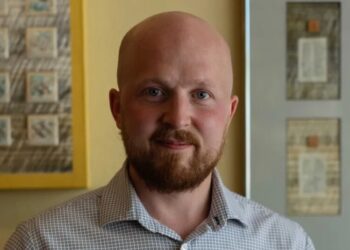
A former director of Florida’s problem gambling hotline was sentenced last week to nearly 10 years in prison after prosecutors said he stole nearly $1.5 million from a previous employer to feed his gambling habit.
The man, Philip L. Sullivan, 43, of Panama City, Fla., took the job in March 2025, a year after he was arrested on grand larceny charges. He said he wanted to help others who struggle with compulsive gambling.
He “quickly became an invaluable asset to the organization,” Jennifer Kruse, the executive director of the Florida Council on Compulsive Gambling, which runs the hotline, wrote in July in a letter to the judge overseeing Mr. Sullivan’s criminal case.
By his own count, Mr. Sullivan said he had counseled more than 460 people who had called the 24-hour hotline while his case was playing out in state court.
“If they feel like they’ve gotten something out of a conversation with me, it has given me greater purpose than I feel like I’ve ever had in my life,” Mr. Sullivan said two weeks ago, as he was awaiting sentencing, in an emotional interview on “The Addicted Recovery Show,” a podcast about gambling addiction.
On the podcast, Mr. Sullivan said he started betting on football and “March Madness” college basketball when he was in his 20s, and then expanded into gambling on hockey, baseball and tennis.
Eventually, he took out loans, including one in his wife’s name, to feed his habit. He also started taking high doses of the stimulant medication Adderall, which he had been prescribed for attention deficit hyperactivity disorder. That led to “a very compulsive routine,” where he would wake up, take Adderall and start placing sports bets, he said.
Prosecutors said that, beginning in April 2023, Mr. Sullivan took $1.47 million from Royal American Companies, a Florida company that builds and manages housing, where he was the vice president of accounting.
He used his Royal American credit card to buy thousands of gift cards, prosecutors said, and then sold the cards online for a percentage of their value in cryptocurrency. He then took the cryptocurrency and gambled with it online, where he lost a majority of it, prosecutors said.
Mr. Sullivan said that at one point he was placing single bets of up to $50,000.
His theft wasn’t discovered until March 2024, when the credit cards at Royal American started to be declined because of outstanding balances, prosecutors said. When Mr. Sullivan was confronted by his boss, he started deleting files from his computer and told colleagues and superiors that he had taken the money because someone online was extorting him, prosecutors said.
It wasn’t until after Mr. Sullivan was arrested in March 2024 that he fully explained his theft, prosecutors said.
“It winds up being $1.4 million, but 1.2 of that happened in a four-month period, as I tried to win enough to cover things up to get the money put back in place,” Mr. Sullivan said on the podcast. “There was never any capacity to get it under control,” he added, “but when I realized the enormity of the situation, that just made my gambling more compulsive.”
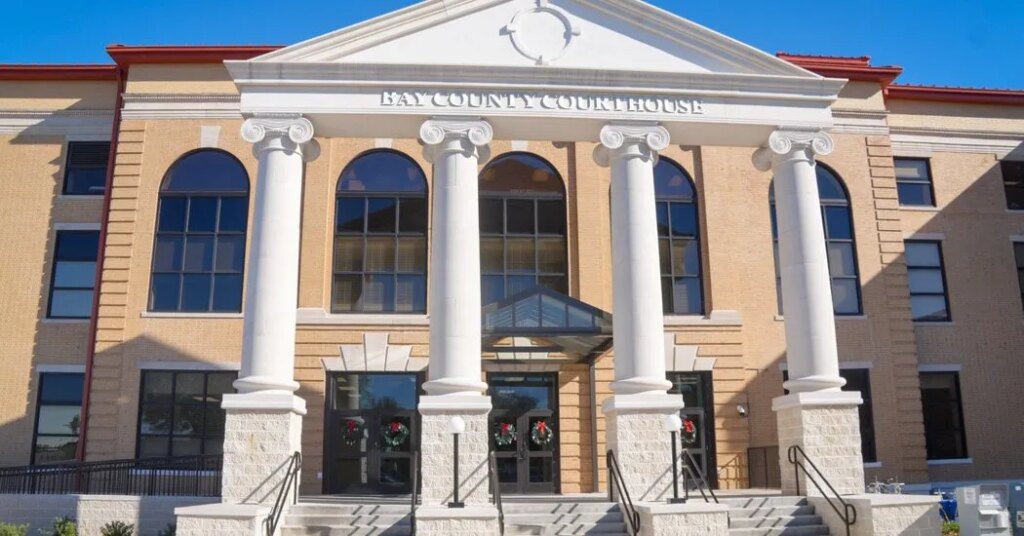
On Friday, Mr. Sullivan pleaded no contest to six counts of grand larceny. Judge Timothy Register of the 14th Judicial Circuit Court of Florida sentenced him to just over nine years and 10 months in prison. Mr. Sullivan was immediately taken into custody.
Prosecutors had asked for a 12-year sentence.
“Any sentence that doesn’t involve incarceration would almost pre-bless the next thief, and would say, ‘Hey, it’s OK to steal more than $1 million from your employer because if you do, there are no consequences,’” prosecutors wrote in a court filing.
Mr. Sullivan’s wife, Mallory Sullivan, said in an interview on Wednesday that the family had hoped that Mr. Sullivan would be sentenced to probation. The couple have two sons, who are 6 and 12, and Mr. Sullivan had no prior criminal record, she said.
“It was definitely a shock to us; we thought they would be reasonable,” she said of the nearly 10-year sentence. “What justice are we doing in society to put a man in prison who is actively engaged with recovery efforts?”
After he was arrested, Mr. Sullivan contacted the nonprofit Florida Council on Compulsive Gambling and asked if he could volunteer.
“You want there to be something positive that you can derive from this experience that you’ve gone through, and the hurt you’ve caused other people,” Mr. Sullivan said on the podcast.
The council told him that, because of the high rate of relapse associated with compulsive gambling, he would need to go a full year without gambling before he could be considered as a volunteer.
But he impressed Ms. Kruse, the council’s executive director, enough that she hired him as the hotline director when he made it to that one-year milestone.
Ms. Kruse, who did not respond to messages on Wednesday, said in her letter that she hoped Judge Register would consider the progress Mr. Sullivan had made when deciding on his sentence.
“His journey reflects not just recovery but meaningful transformation, from someone impacted by addiction to someone deeply invested in helping others avoid similar harm,” she wrote.
Kitty Bennett contributed research.
The post Gambling Hotline Ex-Director Stole $1.5M to Feed Betting Habit, Prosecutors Say appeared first on New York Times.