Current and former U.S. military leaders are bracing for the Trump administration to release its review of the 2021 withdrawal from Afghanistan as soon as this month, people familiar with the matter said, a move that would revive public discourse of the 20-year war’s traumatic end days ahead of the midterm elections.
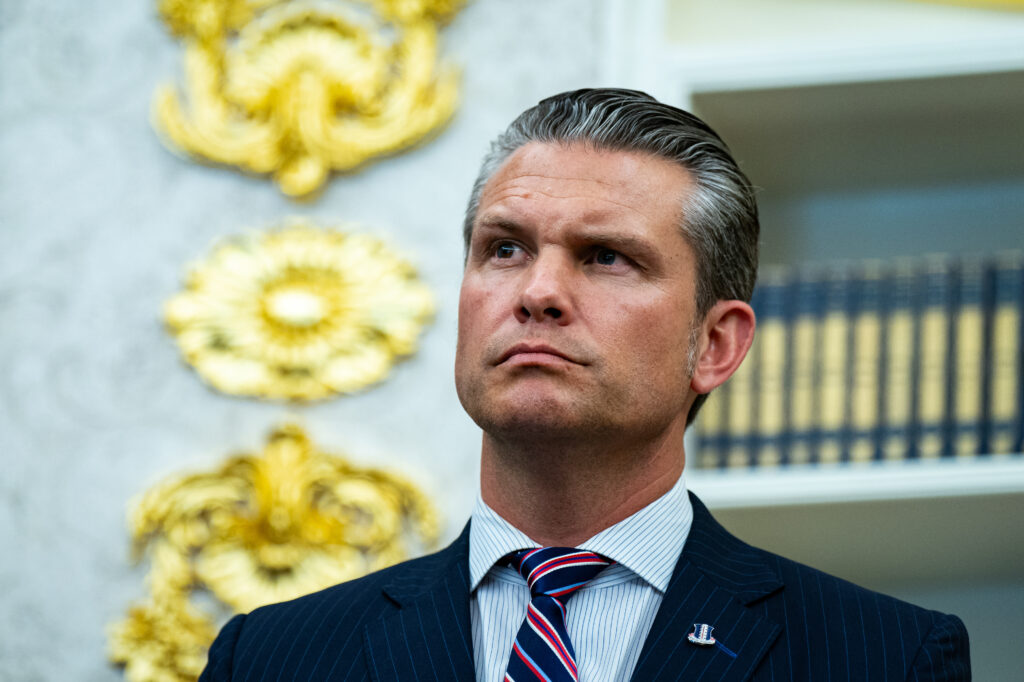
The review, directed by Defense Secretary Pete Hegseth, includes interviews with numerous top officers who oversaw aspects of the military’s departure and the chaotic evacuation operation launched upon the Afghan government’s collapse five years ago.
Donald Trump made the issue a component of his presidential campaign in 2024, vowing to hold people accountable for decisions that were made under the Biden administration as the war came to a close. Hegseth has said he is committed to fulfilling that promise, highlighting an Islamic State suicide bombing at Kabul’s international airport that killed 13 U.S. troops and about 170 Afghans in the final days of the evacuation.
Several people familiar with the matter, speaking on the condition of anonymity citing fear of reprisal, said they increasingly believe the findings could be released before the midterm elections on Nov. 3 and that the report could recommend disciplinary action for generals involved at the time. Others said that while preparations to publicize the findings are being made, the timeline for doing so remains murky.
Should the report be released before the election, several people assessed, political opportunism is almost certainly at play.
The Trump administration, meanwhile, continues to withhold details about more recent military operations in Iran, including a Feb. 28 attack on a school that killed an estimated 120 children and an Iranian attack in Kuwait that killed six U.S. soldiers and wounded several others the following day. The school attack has been under review by U.S. military officials for months, while survivors of the fatal attack in Kuwait have raised questions about the judgment of more senior military officers and said they fear no one will be held accountable.
In a written statement on Monday, Hegseth’s team said that “practically every statement on this review” has stressed that “there will be accountability” for those involved. Officials did not respond to questions about whether its release will be timed for political advantage or come before the midterm election.
Hegseth, speaking at a ceremony in August for Marines involved in the Afghanistan evacuation, said that “by the end of this calendar year, we’ll have a full report to provide” from the review. He has appointed his top spokesman, Sean Parnell, who also served in Afghanistan in the Army, to oversee the effort.
Parnell did not respond to questions on Monday. In April, he said in a statement that his team’s goal is to produce “the most thorough, transparent, and honest accounting the American people have received of what happened in August 2021” and to “identify failures in decision-making so that we may prevent the United States from ever repeating this tragedy.”
Parnell identified two individuals then who would join him in the review: former Marine Corps officer Stuart Scheller and journalist Jerry Dunleavy.
Scheller was court-martialed in October 2021 after repeatedly criticizing top generals for the fall of Afghanistan and at one point saying that he wanted to bring criminal charges against Gen. Kenneth “Frank” McKenzie, then the top commander overseeing operations in the Middle East, “for his bad assumptions.”
Dunleavy held an investigative position with the Republican-led House Foreign Affairs Committee when it scrutinized the Afghanistan withdrawal, but he resigned in 2024 while questioning why its review had not been tougher on top military leaders.
It’s unclear how Hegseth’s team may hold generals accountable now. Potential options could range from Hegseth recalling retired officers to active duty for disciplinary action, such as a demotion in rank, to a censure of some kind, people familiar with the matter said. Several other generals interviewed as part of the review remain on active duty and in prominent roles.
Previous scrutiny of the evacuation, including the House Foreign Affairs Committee’s review, found that the generals involved on numerous occasions urged the Biden administration not to remove all U.S. troops from Afghanistan, citing the risk of that the Western-backed government there would collapse.
They include McKenzie and retired generals Mark A. Milley and Austin “Scott” Miller. Milley was chairman of the Joint Chiefs of Staff and President Joe Biden’s principal military adviser during the crisis, while Miller was the top U.S. general in Afghanistan for nearly three years, until the month before the evacuation.
Milley and McKenzie have both become routine political targets for Hegseth, with the secretary last year citing them as examples of the kinds of generals he wanted “out” of the military.
McKenzie, in testimony to the House Foreign Affairs Committee in 2024, said that the Pentagon had developed a plan to withdraw all U.S. troops, diplomats, citizens and at-risk Afghans months before the Taliban seized power in August 2021, but that Biden elected to leave open the U.S. embassy in Kabul and withdraw all but a few hundred military personnel, setting the stage for the Afghan government’s collapse.
Milley and McKenzie also have told Congress that Trump’s agreement with the Taliban, made in 2020 during his first presidency, to remove all U.S. troops by spring 2021 played a significant role in the Afghan government’s eventual collapse.
Miller did not testify alongside them, but told lawmakers in a closed, transcribed interview first reported on by The Washington Post that he repeatedly warned officials in Washington that security would get “very bad, very fast” after troops departed. Miller saw Afghanistan “as being on fire” as early as March 2020, shortly after the Trump administration made the deal with the Taliban.
Milley, McKenzie and Miller declined to comment Monday.
Other senior military leaders voiced frustration with the Biden administration as part of a review initiated by McKenzie after the bombing a Kabul’s airport that killed 13 U.S. troops on Aug. 26, 2021. Among those to criticize civilian leaders were Rear Adm. Peter Vasely, a Navy SEAL officer who oversaw ground forces during the evacuation.
Military leaders, Vasely said in that review, would have been “much better prepared to conduct a more orderly” evacuation “if policymakers had paid attention to the indicators of what was happening on the ground.”
Biden administration officials defended their actions, saying they were boxed in with few options after Trump made the deal with the Taliban to remove U.S. forces. Biden also said he did not want another generation of Americans involved in the war.
Biden administration officials did not participate in interviews for Hegseth’s review, people familiar with the effort said. That includes former Defense secretary Lloyd Austin, former Secretary of State Antony Blinken, and former White House national security adviser Jake Sullivan, Hegseth’s team said.
The post Military leaders brace for release of Hegseth’s Afghanistan review appeared first on Washington Post.