A Republican candidate for Congress runs a family-owned business in Chehalis, Washington, whose labor record is under new scrutiny as he competes in one of the most competitive House races this November.
John Braun’s company, Braun Northwest, received three state citations for child labor violations in 2025 involving two teenagers who worked at the company, an ambulance manufacturer, through an apprenticeship program, according to public records. One of the teenagers was injured. The company’s safety practices concerned some workers, according to interviews with seven former employees.
Some of the business issues have been aired on the campaign trail, as the opponent he is trying to unseat, Rep. Marie Gluesenkamp Perez (D-Washington), has challenged his business record in campaign commercials that highlighted one worker death and another injury. The child labor violations have not been previously reported.
The race between Gluesenkamp Perez and Braun in Washington’s red-leaning 3rd Congressional District presents one of the best opportunities for Republicans to pick up a seat in the House as their fight to maintain control of the chamber grows more challenging.
Braun, who is the president of the company, said in an interview with The Washington Post that the business is not political and should not be brought up in the campaign other than as part of his biography. He described the citations as an anomaly for a business that prioritizes safety and had not received similar fines before.
“I got nothing to be ashamed of in terms of our business record or our safety record,” Braun, who is also a state senator, said in an Oct. 7 debate.
Braun’s parents founded the company 40 years ago to build ambulances, prisoner transport vans, hazmat trucks and other emergency vehicles. Braun and a brother later took over the company, which now employs over 300 people and is one of the largest private employers in Lewis County, which is in the 3rd District. Earlier this year, Braun Northwest was named as a finalist by the Association of Washington Business for the Washington Workforce Award and for Employer of the Year.
The teenager who was injured remains employed with the company and defends it. Some of the workers who raised concerns said they appreciated employee camaraderie.
“We do a good job of keeping them happy and compensating them for the good work they do,” Braun said.
Child labor violations
In 2025, the Washington State Department of Labor and Industries fined Braun Northwest more than $2,000 for three child labor law violations, state records show, in line with the required penalties for first-time offenders.
The state agency found the company improperly allowed a minor to work more than eight hours per day during a nonschool week on seven occasions and improperly allowed two minors to operate machinery, according to citation records.
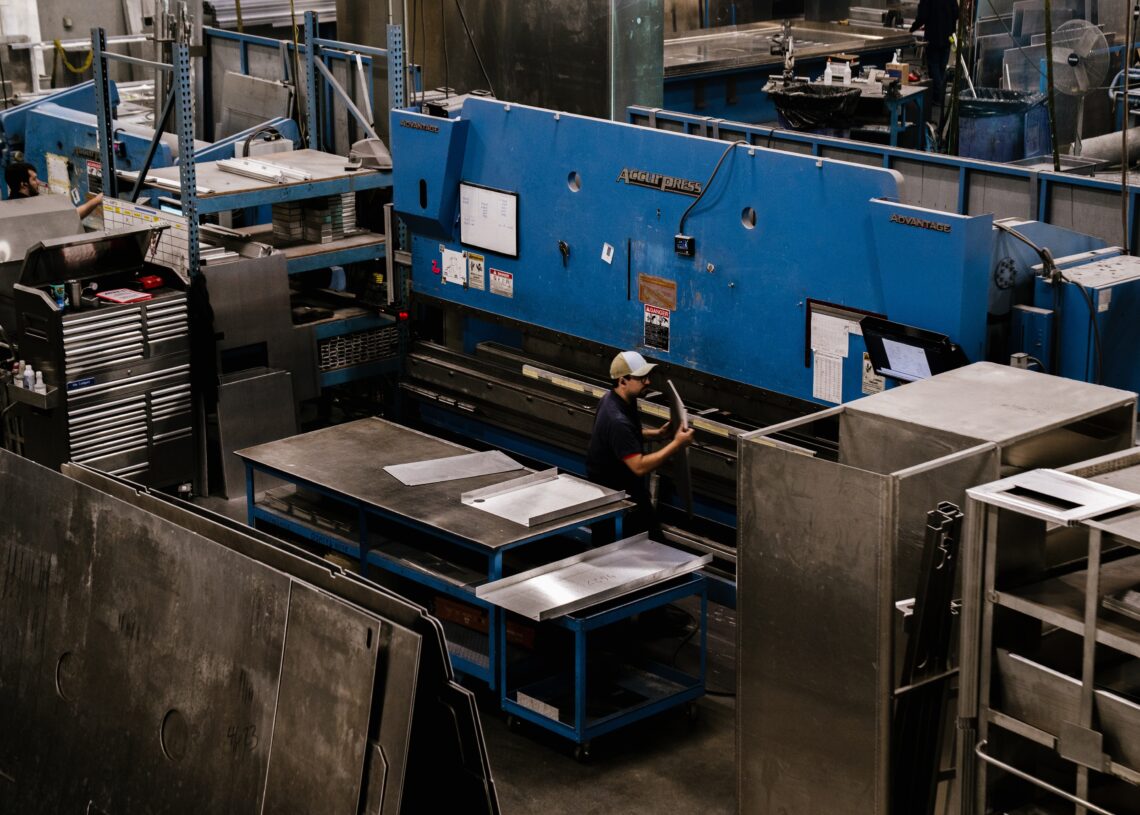
A 17-year-old operated a drill press, which the agency says is prohibited for minors to use without a barrier guard, and was injured when her glove was caught in the drill bit, the records say.
That minor, Patience Dour, worked at Braun Northwest through a statewide apprenticeship program. Dour, now 19, told The Post that “the accident was nothing but my own fault.” She said she was trained to use the drill press without gloves, but she later decided to use it while wearing them, which the machine’s manual warns increases the risk of a person’s hand getting caught.
Dour said she is frustrated that her injury was “brought up for political reasons” in campaign commercials.
“It definitely was made out to be a very big deal, and it was nothing that stopped me from working,” Dour told The Post. She was hired full-time by the company after graduating high school and spoke to The Post after a reporter directly contacted her. Braun released a video Sunday where Dour defended him.
Asked about Dour’s injury, Braun said that the company was “acting in good faith” and that her resulting finger fracture “was not a particularly serious accident.”
Both Dour and Braun Northwest were unaware that the drill press needed a guard, and the company agreed to immediately correct the hazard, according to the records.
Eric Edmonds, a professor of economics at Dartmouth College who researches child and forced labor, said injuries in manufacturing environments are expected, and that’s why there are restrictions on what minors can do in the workplace.
“We typically don’t allow minors to work in hazardous occupations because minors’ processing of risks is often hard to predict and not as consistent and thoroughly reasoned through as an adult worker,” Edmonds said.
The other teenager hired through the apprenticeship program operated a “hammer drill/impact driver to install outlets in new ambulances,” according to the records, which led to another violation. That individual declined to be interviewed.
Braun Northwest did not have an approved student learner variance, a temporary exception to normal work restrictions, for the minors to operate the drill press or the hammer drill, according to the records.
Braun told The Post that the company takes these fines and violations seriously and stopped participating in the apprenticeship program as a result.
“We felt like the heavy-handed regulatory approach made it virtually just too high risk for us to offer these types of educational opportunities we still believe are very important,” Braun said.
A worker death
Karl Keller II, a 61-year-old vehicle assembler at Braun Northwest, died on the job in August 2024.
He was underneath a newly built ambulance when a co-worker started it and moved it, striking and killing Keller, according to Occupational Safety and Health Administration records. Workplace safety inspectors ruled his death accidental, and Braun told The Post it was a “tragic accident.”
Colten Keller, Karl Keller’s son who also worked for the company, said he doesn’t fault the company for his father’s death. But he said that he worried about Braun Northwest’s safety culture before the accident, including the drill press injury.
The younger Keller, who worked at Braun Northwest in project coordination roles between 2023 and 2025, was working on the day his father died.
He said his father was a huge proponent of safety and previously worked as a safety manager at another company for about a decade. Keller helped his father, who was previously homeless, turn his life around and get the job at Braun Northwest.
Keller, 33, said the company leaders focused primarily on safety within their own departments rather than across the entire company. When issues came up elsewhere, he said managers took a “not my monkey, not my circus” approach.
Braun said that the company has monthly safety meetings and that he reviews all notes to ensure a quick response to any concerns. He added that safety incidents don’t “happen very often” but if they do occur, the company offers additional training and, if necessary, counseling. “If it was egregious, we would say you can no longer work with us if you can’t follow the safety rules,” Braun said.
Keller said it was difficult to work at the company after his father died. He quit in May 2025 after asking multiple times to not be around the employee who ran over his father.
“I was told by my management that he was an employee too, and that at some point I’m just going to have to deal with it,” Keller said. Braun’s campaign did not respond to a request for comment on this account.
When The Post first interviewed Keller in late September, Keller said he had not spoken publicly about his father’s death and did not know the death was featured in a campaign ad. After that interview, a friend of Keller’s connected him to Gluesenkamp Perez’s campaign. Keller spoke to the Democrat and agreed to appear in one of her campaign ads in mid-October, in which he said “Braun never called” after his father died and “didn’t care about us.”
In a statement responding to the ad, Braun said he offered Keller paid time off, personally delivered him a homemade meal and spoke to him twice on the day of his father’s death.
Safety culture
Two former Braun Northwest employees who worked at the company more than a decade ago raised concerns about the company’s safety practices and how it protected workers.
A former welder of Braun Northwest, who left in 2013, said safety was “pretty lax” and the company “had redneck ways of doing things.”
The welder, who spoke on the condition of anonymity because he feared retaliation in a small community where the company has major influence, said machinery was not consistently used in compliance with OSHA standards. For example, he said employees sometimes stood on a pallet on top of forklifts to reach high shelves instead of using a scissor lift, which has railings to prevent falls. According to an OSHA fact sheet, “Pallets are not designed for sitting or standing, nor should they be used for lifting workers with a forklift.”
Richard Howard, a former vehicle assembler for the company who was employed between 2012 and 2015, said he remembers that happening once while workers were loading an air conditioning unit onto a truck under construction.
Braun said workers moving on pallets hoisted on forklifts “simply doesn’t happen.” There is no record of penalties against the company for such practices, according to workplace safety regulator databases.
Keller said he hasn’t seen workers lifted on pallets but described an incident during his employment where an employee used a railing as a stepladder and spanned their legs across a walkway near machinery. Braun’s campaign did not respond to a comment on this account.
Dour, the teenager who was injured, said safety incidents have been blown out of proportion to unfairly tar the company’s president.
“Accidents are going to happen,” Dour said. “It’s not at all Braun’s fault when things do happen.”
Worker safety record scrutiny
In the closing weeks of the campaign, Braun’s business safety record has become a major point of contention.
Gluesenkamp Perez, a two-term lawmaker who has repeatedly broken with her party, is one of the few vulnerable Democrats in November because she represents a district that has voted for President Donald Trump in his three elections. Braun is her toughest opponent yet as an influential state Senate minority leader who is more moderate than the Republican associated with far-right extremists whom Gluesenkamp Perez defeated twice.
Gluesenkamp Perez has criticized Braun’s voting record on workplace safety as a state senator.
“It’s important that people have a clear picture of the candidates,” she said in an interview. “We deserve to be represented by people who respect us and who don’t view us as interchangeable or disposable labor.”
One ad claimed that Braun “voted against workplace safety every time,” citing bills from 2019, 2021 and 2023.
But Braun said it’s unfair to cast him as opposed to worker safety because he votes on the merits of each individual bill as a “policy choice.” He noted he has supported other safety legislation, including firefighter safety legislation in 2019 and 2024.
“Political campaigns are tough, and I expect Marie Perez to attack my record,” Braun said in a statement. “But using the injuries and death of workers to score political points — and then distorting the facts about what happened — crosses a line.”
Aaron Schaffer contributed to this report
The post Inside a Republican’s business safety record, under scrutiny in key House race appeared first on Washington Post.