A key element in the Trump administration’s broad plan for securing peace in Ukraine is a proposal that would turn years of American energy policy upside-down.
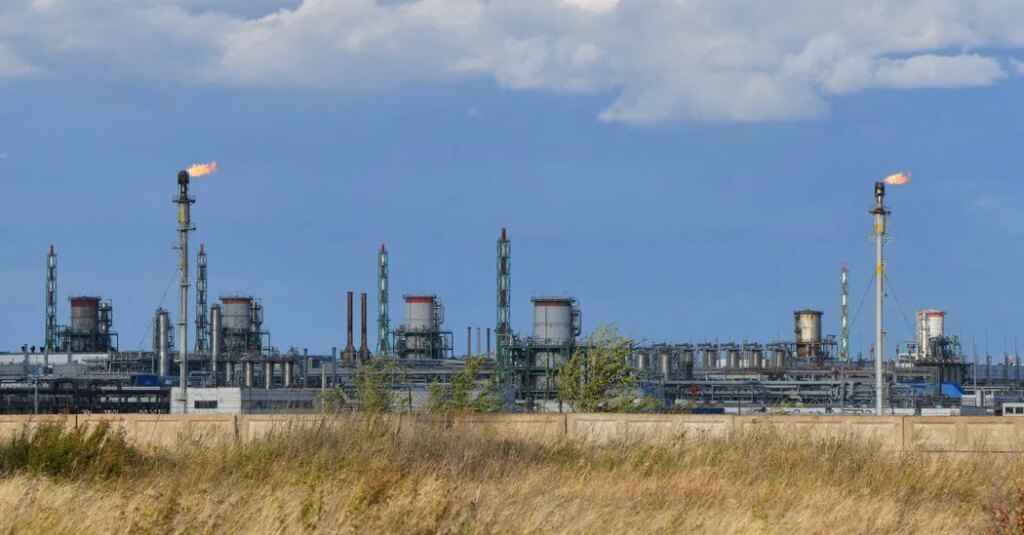
Europe, the U.S. pitch goes, should resume buying more Russian gas — a move that would be an economic boon for Moscow and give it renewed influence in the region.
President Trump’s peace envoys, Jared Kushner and Steve Witkoff, have brought up the idea in talks with Ukrainian and European officials, including with President Volodymyr Zelensky in Kyiv last month, according to people familiar with the talks. To help entice Russia to end the war in Ukraine, the Americans have argued, Ukraine should consider restarting pipelines that used to carry Russian natural gas to Europe.
European officials in the talks have recoiled at the idea, which would undo the European Union’s years of efforts, backed by Washington, to rid itself of Russian gas. But Trump officials see Russian gas exports as a potential part of a peace settlement, given the revenues that would flow to Ukraine and what they see as the inevitable desire for cheaper energy by European voters, the people said, discussing sensitive diplomacy on the condition of anonymity.
The disconnect underscores the unusual — and, critics say, fatally flawed — nature of Mr. Trump’s renewed diplomatic effort to end Russia’s invasion of Ukraine. Rather than pressure President Vladimir V. Putin or try to strengthen Ukraine’s war effort, the administration has spent significant time exploring economic incentives for Russia and raising them in talks with Europe and Ukraine.
U.S. and Russian officials have been talking about potential business deals since last year, but their prospect has not appeared to do anything to get Mr. Putin to budge from his core demands. And given how much European and Ukrainian leaders oppose returning to a reliance on Russian gas, the proposal may end up further complicating the Trump administration’s efforts to end the war.
In a statement, the White House said that the war was “driving up energy prices across Europe and creating significant economic hardship in both Russia and Ukraine.”
“The United States has been working closely with Ukraine and our European partners on a comprehensive peace proposal that includes economic incentives for both Russia and Ukraine as part of a final settlement,” the statement said. “Our objective is not simply to end the fighting, but to create the conditions for lasting peace, economic recovery and greater stability across the region.”
Mr. Trump on Friday exempted Russia from new sanctions passed by Congress, a week after lifting sanctions on Russian diesel, his most significant steps yet in easing economic pressure on Russia. Mr. Putin’s economic envoy, Kirill Dmitriev, described the diesel deal as just the beginning of what could result from his talks with Mr. Kushner and Mr. Witkoff.
“I think we will be announcing some important initiatives in the near future,” Mr. Dmitriev said at an energy conference in Moscow on Friday. “The ice has finally broken, after all.”
Mr. Dmitriev said Russia and the United States were discussing a wide range of projects, including data centers running on Russian nuclear power. The sale of the international assets of the Russian energy giant Lukoil to an investor group that includes the U.S. government is also part of the talks, The New York Times reported this month.
But the proposal to bring back Russian gas exports to Europe, which Mr. Kushner and Mr. Witkoff see as a potential part of a final peace package, may be the most audacious and divisive part of the plan. For American companies, it could reduce demand for U.S. liquefied natural gas in Europe. For European governments, it could boost populist politicians already urging an end to aid to Ukraine and a renewal of ties with Russia.
“We want natural gas and crude oil from Russia to relieve German consumers and German businesses,” Alice Weidel, a leader of the far-right Alternative for Germany, said in Parliament in Berlin this week. As Washington and Moscow negotiated deals “to their mutual advantage,” she said, sanctions on Russia were “ruining our own economy.”
Mr. Zelensky, who has attacked Mr. Trump in recent days for pulling back support for Ukraine and doing deals with Mr. Putin, alluded to the negotiations in an interview with The Financial Times this week.
“The question will be when will the next deal be?” Mr. Zelensky said. “Maybe it will be gas. Definitely it will be gas.”
Shunning Russian Energy
Ukraine stopped transporting Russian gas in January 2025, losing around $1 billion in annual transit fees. The European Union has pledged to end all Russian gas imports by next year. Last year, 13 percent of the E.U.’s gas imports came from Russia, compared to 45 percent in 2021.
But as the White House has grasped for new ideas to end the war in Ukraine, and as Mr. Trump frets over high energy prices ahead of the midterm elections, the administration has been increasingly considering deals that would ease Russia’s ability to export its fossil fuels.
Enabling Russia to restart gas exports to Europe, the people involved said, is a longer-term plan being discussed by Mr. Kushner and Mr. Witkoff. The envoys see such exports as among the economic incentives in a broader settlement that would involve negotiations over the future Russia-NATO relationship, security guarantees for Ukraine and an agreement over territorial control.
Some European and Ukrainian officials expect the United States to seek a stake in Russian gas exports, giving American companies or the government a cut of the profits, according to people familiar with the talks.
An American investor, Stephen P. Lynch, has sought to buy a sabotaged Russian undersea gas pipeline to Germany, Nord Stream 2, starting in the Biden administration. U.S. control of the pipeline, he argued, would benefit American interests and European security when, sooner or later, Russian gas flows through it are restored.
Mr. Lynch said he was not currently part of any Nord Stream negotiations and did not have a Treasury Department license to be involved. But Nord Stream has also come up in the discussions between the United States and Russia, people familiar with the talks said. Reuters reported this month that U.S. and Russian officials had discussed bringing a U.S. investor into Nord Stream.
The White House, in its statement, said that Nord Stream had not been “a subject of recent discussions.” It added that “any arrangement involving it would require close coordination with our European partners as part of a comprehensive peace agreement.”
One of the people familiar with the talks said the Trump administration sees restarting the undersea pipeline as “low-hanging fruit” in the event of a peace deal. European officials may have forsworn Russian gas publicly, the person said, but European voters, like American voters, will eventually want cheaper energy.
It is an echo of the Kremlin’s position. Mr. Putin’s spokesman, Dmitri S. Peskov, said in a voice message in response to questions about the gas talks: “Resuming energy cooperation in whatever form is in our interest, but right now, it may even more be in the interest of the Europeans themselves.”
German Opposition
The German government has been at the forefront of pushing back against restarting Russian gas pipelines, even though Germany had been the biggest buyer of Russian gas before Mr. Putin’s 2022 invasion. When the idea came up again in Ukraine talks hosted by Mr. Witkoff and Mr. Kushner in Florida last week, Günter Sautter, the top security adviser to Chancellor Friedrich Merz of Germany, was particularly forceful in his opposition, according to two people familiar with the meeting.
A European official familiar with the Germans’ stance said this week that the German government views Russian gas sold through an intermediary as indistinguishable from gas straight from Russia — and thus, off-limits as part of peace negotiations.
Germany’s energy costs have soared since 2022, and current and former German officials acknowledge that buying Russian gas again would bring those prices down. But they say doing so would cost Germany and Europe dearly in security terms, including by making it vulnerable to a future gas cutoff by Moscow.
“Europe, and especially Germany, should never again be dependent on Russian gas,” Robert Habeck, who was the German economy minister when the war began and managed the transition off Russian gas, said in an interview. “Because we have seen how unreliable Russia was.”
But German leaders are under pressure at home over the war — and over gas imports in particular. The Alternative for Germany, or AfD, which leads national polls with close to 30 percent support, has pitched a renewal of Russian gas imports as a way to fight inflation and boost the German economy.
In the state of Saxony-Anhalt, where the AfD this month elected the first far-right speaker in a German statehouse since 1945, lawmakers passed a largely symbolic measure this week that calls on the federal government to end sanctions against Russia and cease military aid to Ukraine. AfD representatives voted for the bill, along with lawmakers from a Russia-friendly party founded by a former leftist, the Sahra Wagenknecht Alliance.
European leaders are increasingly worried about the similar messages coming from their countries’ populist parties, Mr. Trump and the Kremlin. Mr. Merz and other European leaders have publicly criticized Mr. Trump’s lifting of sanctions on Russian diesel, saying the move broke the West’s economic pressure campaign against Moscow.
Mr. Habeck, the former economy minister, said it was possible Germany could live with the resumption of a relatively small amount of gas imports from Russia. But he said that it was crucial for Europe to own and operate its own energy infrastructure in the years to come, and that it would not matter — in security terms — if an American intermediary transported Russian gas.
“In the old days, I would be glad if an American company would be part of the ownership,” Mr. Habeck said. “Now I’m afraid, because we see that Trump seems to have more sympathies with Vladimir Putin than he has with the Ukrainians.”
The post U.S. Floats Another Lifeline to Russia: Allowing It to Sell More Gas to Europe appeared first on New York Times.