The Japanese government on Wednesday protested Russia’s detention of a Japanese journalist accused of spying, calling on Moscow to provide “humane, fair, and impartial” treatment to the reporter.
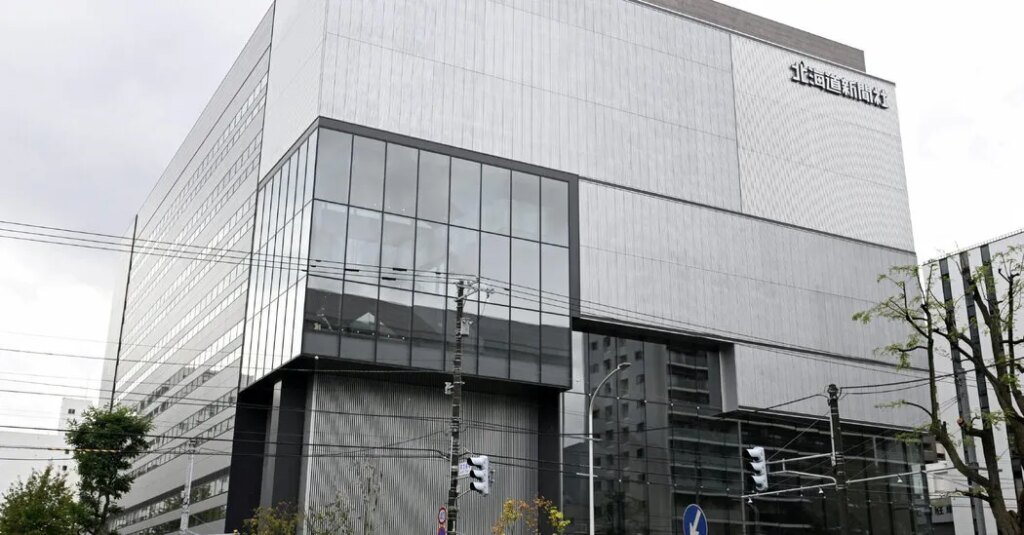
The protest came after Russia’s main security agency said on Tuesday that the authorities had detained a Japanese journalist, accusing him of collecting intelligence on Russia’s military capabilities. The journalist, whose name has not been released, worked as a foreign correspondent for the Hokkaido Shimbun, a newspaper based on Japan’s northernmost island.
Japan’s Foreign Ministry said it had summoned Russia’s ambassador to Japan, Nikolay Stanislavovich Nozdrev, to lodge a “strong protest.” The ministry said in a statement that Japan had received “no explanation whatsoever regarding the detained national.”
Russia’s Federal Security Service, or F.S.B., said in a statement on Tuesday that the journalist was arrested in Yuzhno-Sakhalinsk, on the Pacific island of Sakhalin in eastern Russia. It said the journalist had been transported to Moscow, where he was remanded into pretrial custody by the Lefortovo District Court.
The F.S.B. accused the journalist of collecting data on the number of local recruits taking part in the war in Ukraine, according to the Russian news agency Tass.
The incident was the latest flare-up in tensions between Russia and Japan. In August, President Vladimir V. Putin made his first ever visit to islands claimed by both Moscow and Tokyo, prompting an angry rebuke from Japan’s prime minister, Sanae Takaichi.
Russia has been engaged in a long-running dispute with Japan over the islands, which are part of an archipelago stretching from the southern tip of the Kamchatka Peninsula in eastern Russia to Hokkaido in northern Japan.
Moscow administers the disputed islands from Yuzhno-Sakhalinsk, where the journalist was arrested.
The fight over the archipelago, known in Japan as the Northern Territories and in Russia as the southern Kuril Islands, has festered since 1945, when Moscow seized the territory from Japan in the final weeks of World War II.
Ms. Takaichi called Mr. Putin’s visit in August “absolutely unacceptable” and said he “hurt the feelings of the Japanese people.”
In September, Mr. Putin said that “everything that is happening now, the deterioration in our relationship, is entirely down to the Japanese government.”
Russia has accused Japan of seeking to revive World War II era militarism by embarking on an effort to strengthen its defense forces. Japanese officials say the changes are necessary to counter rising threats from China, Russia and North Korea.
Mr. Putin has been angered by Japan’s decision to join Western allies in punishing Russia over its invasion of Ukraine in 2022. Ms. Takaichi’s government this month imposed new sanctions, taking aim at shadow vessels linked to Moscow’s illicit oil trade.
The Hokkaido Shimbun did not disclose details about the journalist on Wednesday but said in a statement that it was aware of the detention.
“We are currently verifying the details,” the newspaper said. “Our top priority is ensuring the reporter’s safety.”
James D.J. Brown, a professor of political science at Temple University in Tokyo, said the charges against the journalist appeared to be political, noting that Japan does not even have a dedicated foreign intelligence service.
“Rather than thinking of it as a real espionage case,” he said, “it’s better to think of it as a political case and essentially hostage diplomacy.”
Still, Professor Brown said it was unclear if Japan would take forceful action against Russia over the detention. Japanese leaders have historically sought stable relations with Moscow; Japan depends on Russia for about 10 percent of its liquefied natural gas imports.
“I fear instead that they’re going to try and deal with it behind the scenes,” he said. “They will continue their sort of softly softly approach. There will be voices in Japan saying, ‘Don’t poke the bear, don’t provoke Russia, and everything will be fine.’”
In March 2023, a Wall Street Journal reporter, Evan Gershkovich, was arrested in the city of Yekaterinburg and accused of spying for the United States, which he and The Journal denied. He was sentenced to 16 years in prison before being released in August 2024 as part of the largest prisoner swap since the fall of the Soviet Union.
Hisako Ueno contributed reporting.
The post Japan Protests Russia’s Detention of Journalist Accused of Spying appeared first on New York Times.