Even though much of the world sees them as aggressors, Israeli citizens are struggling after years of war, loss and trauma. Many are simply furious at their own government. The source of that sentiment can be summed up in one word: “hafkara” — abandonment.
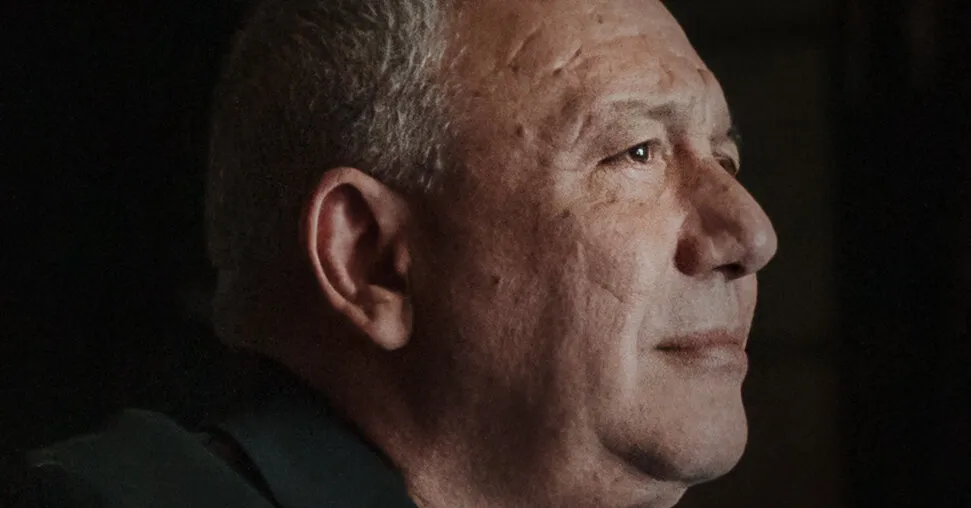
This is one of the reasons Gadi Eisenkot, a retired lieutenant general, former Israeli army chief of staff and bereaved father, is a serious challenger to Prime Minister Benjamin Netanyahu in elections on Oct. 27. Mr. Netanyahu is the man many believe is responsible for that abandonment.
Mr. Eisenkot is a relatively new face in politics, having entered Israel’s Parliament only in 2022. His appeal is not immediately obvious — he is not known for charisma or eloquence. His party, Yashar, meaning “straight” or “honest,” was founded only a year ago, and his campaign, considered centrist or center-right, has, until recently, been light on policy and vision. It remains unclear, for example, how he might go about ending Israel’s wars.
And yet, for weeks now, Yashar has been either in the lead or tied with Mr. Netanyahu’s Likud in most polls. Only surveys commissioned from two openly right-leaning pollsters have found his party trailing.
Where many Israelis view Mr. Netanyahu and his government as callous and self-serving, retaining power at the expense of the people rather than for the people, Mr. Eisenkot is relatable in part because he — quite literally — feels the same pain.
On the morning of Hamas’s Oct. 7, 2023, attack on Israel, Mr. Eisenkot awakened his youngest son, Gal Meir Eisenkot, a computer science student, and helped him organize his gear and join the reserves. Mr. Eisenkot himself joined Mr. Netanyahu’s emergency war cabinet overseeing the retaliatory offensive in Gaza. Two months into the war, Gal was killed during an operation to recover the bodies of Israelis taken during the Hamas attacks. He was 25. The next day, Mr. Eisenkot’s nephew Maor Cohen Eisenkot, 19, was also killed in Gaza. Nearly a year later, another nephew, Yogev Pazy, 22, lost his life there, too.
Bereavement places Mr. Eisenkot in the same emotional world as other Israelis who have suffered loss or injury, and the many more who suffer with them collectively. Mr. Eisenkot symbolizes someone who understands.
By contrast, Israelis are filled with anger and despair over the perception that Mr. Netanyahu spent months avoiding cease-fire deals, which would have released more hostages, because his coalition partners preferred to continue the war. This despair propelled thousands of Israelis into weekly demonstrations as they watched family members of the hostages plead with short-tempered coalition lawmakers again and again to prioritize the lives of their loved ones.
The hostage crisis was just one example of what many Israelis experienced as government indifference to the suffering of its people. Mr. Netanyahu’s government was roundly criticized for largely avoiding enforcing the draft for a vast majority of ultra-Orthodox Israeli men who were eligible. At the same time, reservists served for hundreds of days, and more than 1,150 soldiers died. Further enraging much of the public, the government worked tirelessly to pass a law that would have continued that mass exemption despite court rulings. For his part, Mr. Eisenkot has vocally opposed what he called a “conscription law that is a law of evasion.” Mandatory military or civic service has been one of the core promises of his platform.
Mr. Eisenkot’s positions are thus more aligned with a majority of Israelis. He called for a cease-fire hostage release deal just three months into the war, a position most Israelis supported. Mr. Eisenkot relayed in several interviews that he left the war cabinet in June 2024 largely over frustration that Mr. Netanyahu avoided reaching hostage release deals. Yashar’s slate now includes an honorary place for Ohad Ben Ami, a hostage held for 491 days, and the parents of two more hostages, Liri Albag and Naama Levy, both soldiers released in January 2025 after 477 days in captivity.
Mr. Eisenkot’s signature policies include calling for an independent state commission of inquiry over the failures of Oct. 7, which the majority of Israelis favor. He has also promised to fight crime and lower costs — and to favor the emerging idea of term limits for future prime ministers.
In February, Mr. Eisenkot gave a lengthy interview with Channel 11, Israel’s public broadcaster. His sorrow was palpable, though before then he had rarely talked publicly about his personal grief. The host, Roni Kuban, held up images and asked for responses. One photo was that of Yair Netanyahu, the prime minister’s son, who lived in Miami for much of the war. Mr. Eisenkot offered tersely that the younger Mr. Netanyahu was “not a patriot.” He elaborated, “If he was a patriot, he would be in the country, contributing, serving. People his age are serving.” Mr. Kuban responded, “Serving and dying.” “That, too,” Mr. Eisenkot said.
The exchange hinted at what some Israelis have been saying all along: That Mr. Netanyahu cares only for his own, while the country is sacrificing and suffering. That attitude was reinforced in July, when Mr. Netanyahu’s campaign released an artificial intelligence-generated video that appeared to exploit a likeness of Mr. Eisenkot’s dead son for a political attack. (A Likud spokesman later denied that the young man in the video was meant to resemble the son.)
Mr. Eisenkot was born in Tiberias, in the north of the country, to Moroccan immigrant parents, and raised in Israel’s southernmost city, Eilat, on the Red Sea. Both of those biographical details boost his appeal: Mizrahi Jews of North African and Middle Eastern descent have long experienced discrimination from Ashkenazi, or Western, Central and Eastern European Jews. Further, his childhood in a peripheral town is a nod to the more remote parts of the country that often feel overlooked.
As a child, Mr. Eisenkot attended school in Tze’elim in the northern Negev, near the area hit hardest on Oct. 7. He was drafted into the vaunted Golani Brigade in 1978 and climbed through key posts, including commander of the Judea and Samaria (West Bank) division, commander of the Northern Command and deputy chief of staff. He served as chief of staff of the Israeli Army from 2015 until 2019 and is closely associated with the doctrines that have defined Israeli regional military strategy in recent years.
He advanced what is known as the “campaign between wars” — ongoing low-level warfare engaged against Iranian assets largely in Syria. He also is credited with what he called the “Dahiya Doctrine,” named for the suburb of Beirut of the same name. That strategy advised using overwhelming destructive force on any villages sheltering Hezbollah in Lebanon. It is a method he himself called “disproportionate” when it was introduced in 2008.
Still, retired generals like Mr. Eisenkot are common in Israeli politics but usually make poor politicians. The former prime ministers Ariel Sharon and Yitzhak Rabin were prominent exceptions.
And even if his party receives the most votes, Mr. Eisenkot will face formidable political obstacles the day after the election. The Zionist parties that are expected to support him look unlikely to win a 61-seat majority in Parliament. They could invite an Arab party into the coalition, but Mr. Eisenkot has indicated that he would not create a coalition with one, a position in line with his likely allied parties, which also reject the idea. That leaves the opposition bloc in a bind.
This month, in a wide-ranging conversation with The Times of Israel, one of a series of interviews he gave to Israeli media outlets, Mr. Eisenkot offered more specifics of his policy vision, including a crackdown on West Bank violence by Jewish Israelis against Palestinians and a robust return to the Trump peace plan for Gaza, assuming total Hamas disarmament. He said he opposed Israel’s extending “full sovereignty” over the occupied West Bank.
While such statements may sound vaguely moderate in Israel’s hard-line environment, it remains unclear what sort of solution he wants regarding the Palestinians. He rejects annexation but supports settlements that Israel considers legal. He told The Times of Israel, cryptically: “We need to create the conditions for a permanent-status arrangement in the future. Will it be autonomy or a state-minus? That is the geopolitical space I am talking about. But it certainly will not have an army, and will be under overriding Israeli security control.”
On the domestic front, he rejected the Netanyahu government’s attacks on the independent judiciary, without giving firm details of what he would do in practice.
A poll by the Israel Democracy Institute in early October found that a majority of Israelis are pessimistic about security, democratic governance, the economy and social solidarity. The retired general’s public, if understated, grief seems to speak more powerfully to many than Mr. Netanyahu’s oft-used narratives about triumph that the country does not feel.
As a bereaved father, Mr. Eisenkot “really understands the depth of pain that all of us here have experienced,” Shirley Segal, a campaign volunteer, told me at a Yashar party event in September.
Shirel Hogeg, a member of Yashar, said in a speech at a party event in September: “A vision isn’t enough. You need the leaders and the team that know how to implement it.”
As Shai Yaron, a campaign activist who was a friend of Mr. Eisenkot’s son Gal told me, Mr. Eisenkot’s tragedies “give him the ability to understand the reality of a great many families today in the state of Israel.”
This month, Israelis marked three years since Oct. 7. On that day, Mr. Eisenkot seemed to be everywhere: He began the day at 6:29 a.m., the exact moment the rockets began three years earlier, by visiting many of the hardest-hit spots in Israel’s south. He ended the evening at a citizen-led mass memorial ceremony in Tel Aviv.
By contrast, Mr. Netanyahu was largely absent from public events, outside of a terse statement of memorial, and a speech two days earlier, both filled with calls for revenge.
Dahlia Scheindlin is a public opinion expert and a political strategist who has consulted on nine Israeli campaigns. She is a senior analyst at Haaretz and a non-resident senior fellow at the Center for International Policy.
The Times is committed to publishing a diversity of letters to the editor. We’d like to hear what you think about this or any of our articles. Here are some tips. And here’s our email: [email protected].
Follow the New York Times Opinion section on Facebook, Instagram, TikTok, Bluesky, WhatsApp and Threads.
The post Israelis Feel Abandoned. That’s Why They Might Turn to This Bereaved General appeared first on New York Times.