Regarding George F. Will’s Oct. 12 column, “Live-streaming government barbarism,” and the Oct. 9 front-page article “Killer to be shot on live stream”:
I have lived with the question of how to punish terrorism since my daughter, Alisa, was murdered in an Iranian-sponsored Palestinian terrorist attack in 1995.
When Timothy McVeigh was sentenced to death for the Oklahoma City bombing, I argued against executing him. My concern was not sympathy for McVeigh. It was that execution could transform a murderer into a martyr. That concern is even greater with Nidal Hasan. He said himself that if he were executed, he would consider himself a martyr.
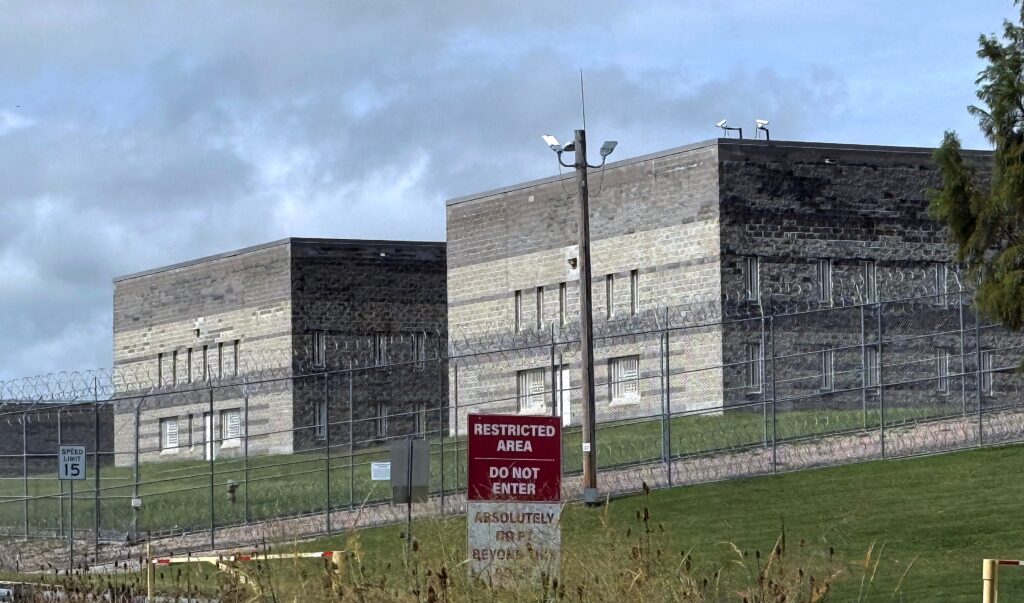
If his lawful death sentence is to be carried out, it should not become theater. No live stream. No cheering audience. No carefully staged national spectacle. A basement would be good enough.
Justice requires punishment. It does not require giving Hasan the public death scene he may want or creating images that extremists can replay for generations.
Kill the spectacle, not merely the killer.
Stephen M. Flatow, Long Branch, New Jersey
The writer is the chair of the Religious Zionists of America.
Just what kind of barbarism is our government promoting with the decision to live-stream the Fort Hood shooter’s execution? I worked in a jail for almost 30 years, and I got to know some despicable criminals. But I still maintain that a life sentence without parole (which I saw a couple of times in my career) is a much more humane alternative to the death penalty. Executions are serious business, not entertainment for the masses.
Joseph Kustritz Sr., St. Cloud, Minnesota
I’m a psychologist, and I have conducted hundreds of evaluations in state and county prisons. I read of the Pentagon’s plan to live stream Nidal Hasan’s execution with alarm. My concern is what this display asks of the rest of us. It will ask soldiers to fire on a man in a wheelchair while potentially millions of people watch — a recipe for lasting moral injury.
Pennsylvania moved executions behind prison walls in 1834 because reformers saw that watching a public death resulted in hardening crowds rather than warning them. A live stream will not stay a live stream. Hasan’s victims and their families may be unable to escape clips of the video as it circulates on the internet in perpetuity.
If Hasan’s victims and their families wish to bear witness to the execution, they can do so without Hasan’s death being turned into a widely viewed broadcast. Survivors of the Oklahoma City bombing watched Timothy McVeigh’s execution on closed-circuit TV.
Robert E. Griffin, Forty Fort, Pennsylvania
It may be legal to execute a criminal by firing squad or other means, but it will be difficult to prevent young children from watching it if it is live-streamed. The sight of the execution could have devastating effects on their mental health. Let’s put our children’s welfare before everything else.
Rose D. Padlan, Kensington
On Nov. 14, 1849, after witnessing a public execution in London, Charles Dickenspublished the following in a letter to the editor to The Times: “I am solemnly convinced that nothing that ingenuity could devise to be done in this city, in the same compass of time, could work such ruin as one public execution, and I stand astounded and appalled by the wickedness it exhibits.”
Now, 177 years later, Americans must heed his warning. Live-streaming an execution would turn state-sanctioned death into a vile spectacle, inviting moral ruin and broadcasting a level of wickedness that would be a stain on our nation for years to come.
T. Michael Spencer, Washington
Where is RFK’s bust?
Regarding the Oct. 9 Metro article “‘After 60 years, who would do this?’”:
I care for Gideon’s Garden, located behind the now-stolen bust of Robert F. Kennedy. I have been doing this as a volunteer since May 2018, after discovering the garden in horrendous condition.
I was at the garden on Sept. 14, and the bust was fully intact. I returned on Sept. 30 to find that the bust, pedestal and base were gone. I was devastated. I immediately contacted Events DC, D.C.’s convention and sports authority, and was told they were aware and that an investigation was being conducted. I asked if the bust had been stolen and was told, “Some of the bust is in Events DC’s possession.”
This theft brings attention to the inadequate care of the garden, prior to my intervention, and to the lack of security to safeguard it, the sculpture and RFK’s revered memory. The bust should have been put in storage while the old stadium was deconstructed.
The stadium site may have been the scene of many sports activities and other events, but it was also devoted to a great American icon. There should be a permanent interactive memorial to him on campus. It makes sense that if you have an entire campus and a former stadium named after RFK, there should be a place to learn about him and the beloved stadium that bore his name.
Skip Strobel, Washington
Why app prices change
Michelle Singletary’s Sept. 30 column, “In era of pricing tricks and hidden fees, some push for new consumer protections,” called for pricing transparency. It should be made clear that pricing that responds to changes in weather or demand is not the same thing as “surveillance pricing.”
App-based platforms are digital marketplaces that match consumers with workers and local businesses in real time. To accomplish this, prices must be low enough to attract consumers, high enough to incentivize drivers and couriers to work, and steady enough to keep local businesses on board. Prices reflect factors such as distance, estimated duration, real-time demand and driver availability. Platforms are constantly competing on price, service and transparency. And these apps are popular. My organization, the Flex Association, represents companies in the app-based ride-hailing and delivery industry. Our 2025 impact report showed that in the previous year, 61 percent of U.S. adults used a ride-hailing app, 67 percent ordered a meal through a delivery app and 61 percent ordered groceries.
App-based platforms don’t base their prices on individual demographic information. They price the ride, not the rider, and the cart, not the customer.
Kristin Sharp, Washington
The writer is CEO of the Flex Association.
Letter submissions
Send letters to [email protected].
Submissions must be exclusive to The Post and should include the writer’s address and day and evening telephone numbers. Letters are subject to editing and abridgment. Please do not send letters as attachments. Because of the volume of material we receive, we are unable to acknowledge submissions; writers whose letters are under consideration for publication will be contacted.
The post What my daughter’s killing tells me about live-streaming an execution appeared first on Washington Post.