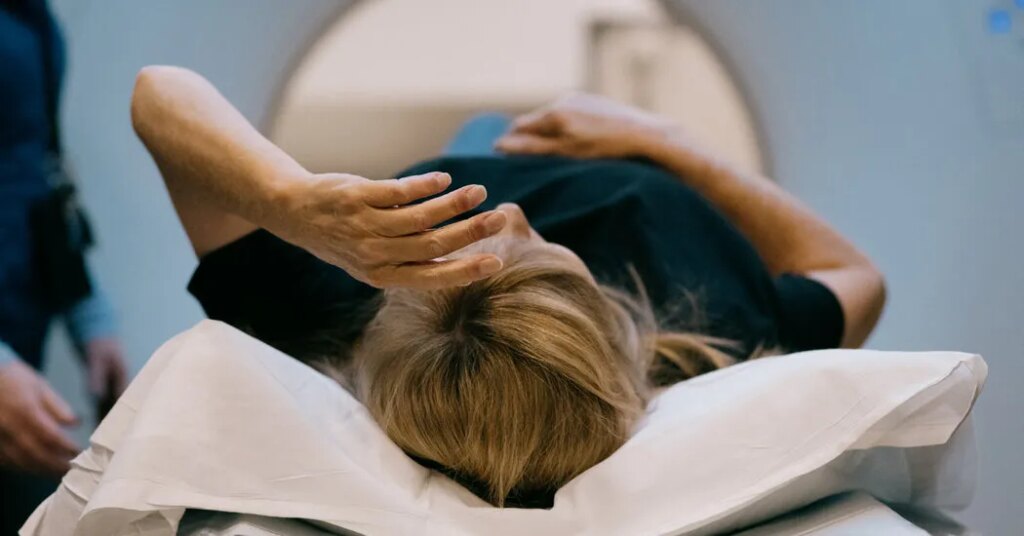
Doctors have an excellent tool for catching lung cancer in the early stages, when it’s most treatable: low-dose CT scans. But only about one in five people who are eligible for lung cancer screening in the United States receives it, meaning thousands of deaths each year could be prevented.
And many people who go on to develop lung cancer — which kills nearly two million people worldwide each year — don’t qualify for the screening, including people who have never smoked. Pope Leo, who was diagnosed with lung adenocarcinoma on Tuesday and is not known to have a smoking history, would most likely have been in that group.
The gaps in lung cancer screening have raised questions in the medical community about how to identify the people most likely to benefit from it, while avoiding the pitfalls of screening too broadly, which can lead to unnecessary tests, patient anxiety and extra radiation exposure.
“Once we know who’s at risk, we have a really great test that can see very, very small cancers in the lung,” said Dr. Lecia Sequist, a thoracic medical oncologist at Mass General Brigham Cancer Institute. “The real question mark is who to deploy that in. What’s the population that should be screened?”
The United States Preventive Services Task Force, which issues guidelines about preventive care that determine insurance coverage, currently recommends annual screening with a low-dose chest CT scan for people 50 to 80 years old who have smoked the equivalent of a pack of cigarettes a day for 20 years and either still smoke or have quit within the past 15 years.
That guideline was based largely on randomized, controlled trials in the United States and Europe in thousands of people who had such heavy smoking histories. Those trials showed that screening with a low-dose CT scan reduced lung cancer deaths.
But about half — and by some estimates, more — of people who get lung cancer in the United States do not meet those criteria.
For example, one study found that only about 63 percent of Black men and 50 percent of Black women diagnosed with lung cancer would have met the screening criteria.
“People in this cohort that are getting lung cancer, they tend to smoke fewer cigarettes a day but for many years,” said Dr. Chi-Fu Jeffrey Yang, a thoracic surgeon at Mass General Brigham who is running a trial to study screening in older Black men and women with any history of smoking.
And an estimated one in seven people in the United States who develop lung cancer has never smoked at all.
Although that seems like a lot of people, said Dr. Daniel Boffa, chief of thoracic surgery at Yale, “if you took all of the neversmokers and said, What is their chance of getting lung cancer, it’s incredibly small.”
The challenge for the field is to find, among those who have never smoked, the people who are at higher-than-average risk, said Dr. Boffa, who is also the chair of the American College of Surgeons Commission on Cancer, which issues standards for cancer care.
Research has suggested that group includes nonsmokers who are women, are of Asian descent or have a family history of lung cancer. For this reason, demographics and family history are likely to be “the things that drive the next chapter of screening,” Dr. Boffa said.
In some Asian countries, there is a push to screen more people who have never smoked, who represent an especially large share of lung cancer cases, said Scarlett Gomez, a professor of epidemiology and biostatistics at the University of California, San Francisco. For example, lung cancers in Taiwan now occur predominantly in nonsmokers. A national study there screened people who didn’t smoke and had a family history of lung cancer or another risk factor, like exposure to secondhand smoke, and detected lung cancer at a rate comparable to that among the heavy smokers in the national U.S. trial. Based on the results, Taiwan has broadened its national screening program.
No such national screening program for never smokers exists in the United States, Dr. Gomez said, but there are some smaller-scale efforts to study it in select populations, like those with a strong family history or younger Asian American women.
Ultimately, said Dr. Yang, it will be important to conduct a randomized controlled trial of screening in a broader, nonsmoking population. “There’s always going to be questions of what is the risk-benefit analysis” between false positives — which can lead to anxiety, additional imaging and, rarely, unnecessary biopsies — and preventing deaths.
Researchers are also looking at biological factors that may help them better predict who is most likely to develop lung cancer. These include specific genetic mutations, proteins in the blood and visual signs of developing cancer on scans.
For example, researchers in Britain published a paper this year showing that patients whose blood samples showed a 14-protein “signature” related to higher inflammation were at increased risk of developing lung cancer.
Dr. Sequist has also worked on an algorithm that has been shown to accurately predict future lung cancer risk in diverse populations based on a single CT scan. Such a scan could theoretically be used as a base line screen, Dr. Yang said, the way a first colonoscopy is, and then to determine when a repeat test is needed.
Combining these newer technologies with traditional markers of risk is likely the best bet for future lung cancer screening, Dr. Yang said. “That’s probably how we’re going to get to a thoughtful way of screening people who have never smoked,” he said.
The post Why So Many People Still Are Not Screened for Lung Cancer appeared first on New York Times.