For weeks, Saudi Arabia has touted the presence of boldface-name business leaders, from JPMorgan Chase CEO Jamie Dimon to Blackrock’s Larry Fink, at lavish investment conferences in Riyadh that showcase Saudi Arabia’s economic potential, even amid regional war.
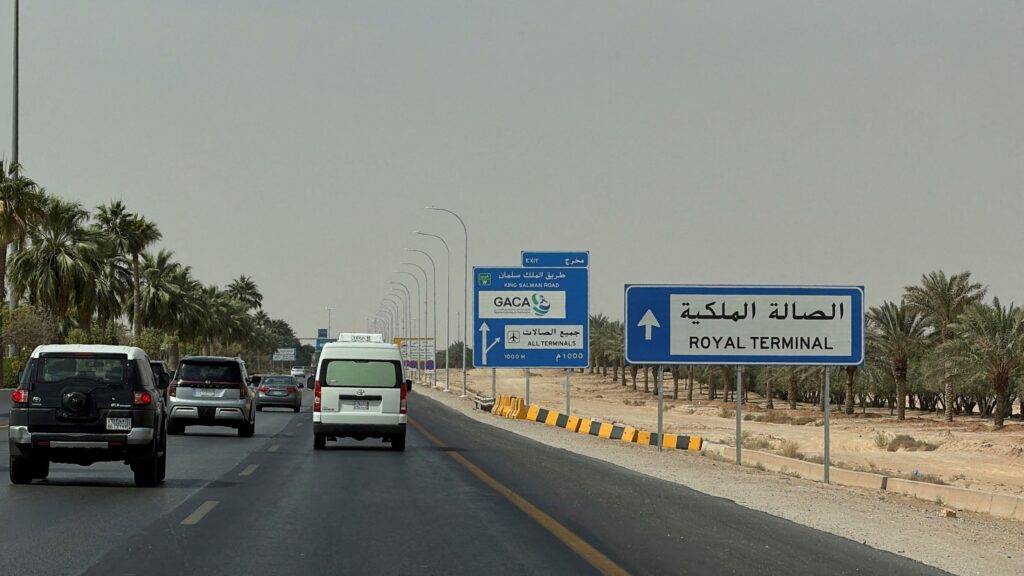
But Houthi missile strikes at a passenger terminal at Riyadh’s international airport — which killed at least a dozen people, injured more than 300 and froze all flights — have cast a shadow over the business events later this month and raised broader questions about whether the country’s immediate security and economic interests are in conflict with Washington’s war aims in Iran and with Israel’s goals in a redrawn Middle East.
The threat from Houthi strikes, now being felt directly by residents of the Saudi capital, is unlikely to dissipate until the U.S.-led war ends — a prospect that seems remote as Tehran refuses to bow to the Trump administration’s demands and Israeli Prime Minister Benjamin Netanyahu warns that Iran could mount attacks ahead of his country’s elections on Oct. 27.
Particularly with President Donald Trump appearing reluctant to come to Saudi Arabia’s aid with U.S. air power, Riyadh could be forced to negotiate with the Iranian-backed Houthi militia in Yemen, which has only grown more powerful and resilient in 12 years of fighting.
In striking a key airport used last year by 40 million passengers — including Saudi royals, business titans and Trump — the Houthis are using the same tactic as its allies in Tehran: targeting the economic pain points of a wealthier, more conventionally powerful adversary.
“The Houthis’ ability to retaliate asymmetrically, in a way that hurts, puts the Saudi leadership in a quandary,” said Michael Ratney, a former U.S. ambassador to Saudi Arabia who served in the Biden administration. “On the one hand, they are trying to degrade the Houthis’ ability to strike Saudi infrastructure and even kill civilians with relative ease. On the other hand, they have this imperative to de-escalate and get society back to normal, so this conflict doesn’t become defining.”
The question is, “can they degrade the Houthis, or do they need to find an exit ramp?” asked Ratney, who added that Saudi Arabia might eventually seek a truce with the Houthis, using a combination of diplomatic negotiations and financial incentives.
On Sunday, Iranian Foreign Minister Abbas Araghchi offered to mediate between the Saudis and Houthis, his office said in a statement. But Saudi Arabia will likely forgo the Iranian offer, Saudi analysts say, because Iran is seen as the primary backer of the Houthis in the conflict in Yemen, tying a resolution there to the wider dispute in the region.
“Look at the [Houthi] ballistic missiles, look at the cruise missiles, these are all upgraded and manufactured in Iran,” said Salman al-Ansari, a political commentator and founder of the Saudi American Public Relation Affairs Committee, a pro-Saudi lobbying firm in Washington. “It’s clearer than ever that when it comes to the big decisions and the regional dynamics, the Houthis are taking instructions from the Iranians.”
After striking oil wells and refineries crucial to the Saudi economy in response to Saudi airstrikes in recent weeks, the Houthis are threatening the very image of the kingdom — assiduously cultivated by its de facto leader, Crown Prince Mohammed bin Salman, known as MBS — as a stable investment destination for tomorrow’s industries: artificial intelligence, biotechnology, entertainment, real estate and beyond.
The events of this weekend, analysts say, highlight the profound dilemma facing MBS, who must juggle immediate security imperatives and long-term economic interests.
Even before the airport strikes, the Houthis, who have long fought Saudi Arabia and the Saudi-backed, internationally recognized Yemeni government at varied levels of intensity, began to inflict economic pain.
Last month, fully abandoning a 2022 truce, the group seized the Yemeni coast along the Bab al-Mandab strait, effectively choking a key seaborne outlet for Saudi oil exports. Iranian-backed militias in Iraq launched concurrent drones that knocked Saudi Arabia’s East-West pipeline offline.
At the time, Trump, who has been contending with high fuel prices ahead of November’s midterm elections, along with depleted munitions stocks, declined to intervene militarily to support MBS, saying the Houthis had promised to keep the Bab al-Mandab open to most sea traffic and would refrain from striking U.S. targets.
Even after the Houthis hit Saudi refineries and airports in response to Saudi airstrikes, Trump appeared noncommittal. Speaking to reporters after the Riyadh airport bombing on Saturday, the president said he was weighing joining Saudi airstrikes against Houthi targets but the U.S. remained in “communication” with the militia.
Trump carried out Operation Rough Rider, a campaign of strikes against targeting the Houthis, last year. But that was before the United States went to war with Iran.
Ali Shihabi, a Saudi political analyst, said Saudi Arabia was aware of Trump’s reluctance to get involved in another front and described the Saudi requests for aid as limited. U.S. military radar and jets could identify and bomb launch sites used by the Houthis far faster than the Saudi Air Force, which has to receive U.S. intelligence before it can strike, Shihabi said.
“American help would be very useful, but President Trump has domestic political considerations, which we understand,” Shihabi said. “The help Saudi would like to have in Yemen is very, very specific against missile launchers. It’s not an open air campaign.”
Shihabi, who also serves as an advisory board member on Saudi Arabia’s NEOM megacity project, downplayed the economic repercussions of the Houthi strike on Saudi airports, arguing that Saudi air defenses can be redeployed to better defend civilian infrastructure.
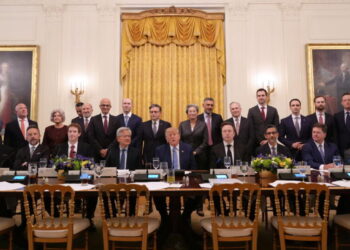
The most high-profile investment summit in Riyadh this month, the Future Investment Initiative, marketed as “Davos in the Desert,” said it would proceed on Oct. 26 as planned, with executives including Dimon of JPMorgan Chase still on the attendee list. Maha al-Saud, the forum’s chief executive, said in a statement that “comprehensive” security measures were being set up for Riyadh’s airports, hotels and conference venues.
A splashy 10-week sports and entertainment festival called Riyadh Season will also begin next week as planned, with tennis matches featuring Novak Djokovic and concerts by Palestinian Lebanese singer Fadel Chaker, organizers say.
But Italian Energy Minister Gilberto Pichetto Fratin said he would not attend another major conference, the World Petroleum Congress, which began Sunday, but participate by video instead. The chief executives of ExxonMobil, TotalEnergies, Shell and BP pulled out , the Financial Times reported.
For Saudi Arabia’s economic transformation to succeed, it needs to welcome global talent, investment and tourists, but “you can’t do that when people can’t land in your country safely,” said Kristen Smith Diwan, a senior resident scholar at the Arab Gulf States Institute, a think tank in Washington.
On the other hand, Saudi leaders may choose to put their economic project — their top priority — on hold to push the Houthi back in Yemen, particularly away from the Bab al-Mandab strait, before seeking a negotiated truce, Diwan said.
“The Saudis are willing to take a short-term pain to remedy what they see as a long-term permanent threat,” she said.
“But certainly this puts the entire project on hold,” she said. “It’s a dilemma.”
The post As Houthis strike Riyadh, Saudi Arabia confronts the costs of U.S. war on Iran appeared first on Washington Post.