BRUSSELS — The top U.S. and NATO military commander in Europe vowed wide-scale measures to thwart any Russian attack on the continent, in an address Monday meant to signal reassurance to Europe and strength to Moscow.
At the same time, he and other U.S. officials have delivered a different kind of message behind the scenes, warning Ukraine to stop attacking Russian refineries or risk getting cut off from critical U.S. weapons and intelligence.
The mixed signals expose a deep split in the U.S. approach to Russia, with President Donald Trump seeking election-season help from Moscow in lowering energy prices even as U.S. military officials cast Russia as a growing threat to Europe.
Gen. Alex Grynkewich, the commander of U.S. and NATO forces in Europe, was among the U.S. officials to convey an ask from Washington for Ukraine to hold off on attacking Russian oil refineries, according to a Ukrainian security adviser and a Western official familiar with the matter, both of whom spoke on the condition of anonymity to share sensitive information.
They said Kyiv saw the messages from U.S. officials, accompanied with reminders that Washington supplies key weaponry and intelligence, as a threat.
“Support to Ukraine through PURL continues to flow,” NATO said in a statement in response to a request for comment from Grynkewich. PURL refers to the Prioritized Ukraine Requirements List, a U.S.-NATO procurement mechanism.
Ukraine’s strategy of destroying Russian energy infrastructure has sparked the worst fuel crisis in Russia since the Soviet Union’s collapse. The requests from Washington highlight the increasing overlap of two grinding wars, in Iran and in Ukraine, as the fallout from one appears to sway the U.S. position in another.
A few months ago, at a NATO summit in July, Trump hailed Ukraine’s strikes on Russia, describing them as “an escalation that can help lead to an end” of the war. But gasoline and diesel prices have since soared, driven by military strikes that are damaging energy infrastructure, including by the United States and Iran in the Middle East, and by Ukraine and Russia in their war.
With less than a month until the midterm elections, the Trump administration is trying to bring down prices. On Friday, Trump said he had spoken with Russian President Vladimir Putin, who agreed to release 300,000 tons of diesel fuel this month to U.S. and global markets, with more to follow.
The deal, along with the temporary easing of U.S. sanctions on Russian diesel, provoked consternation in Ukraine and its European allies, which have increasingly accused Russia of staging plots to test NATO’s resolve.
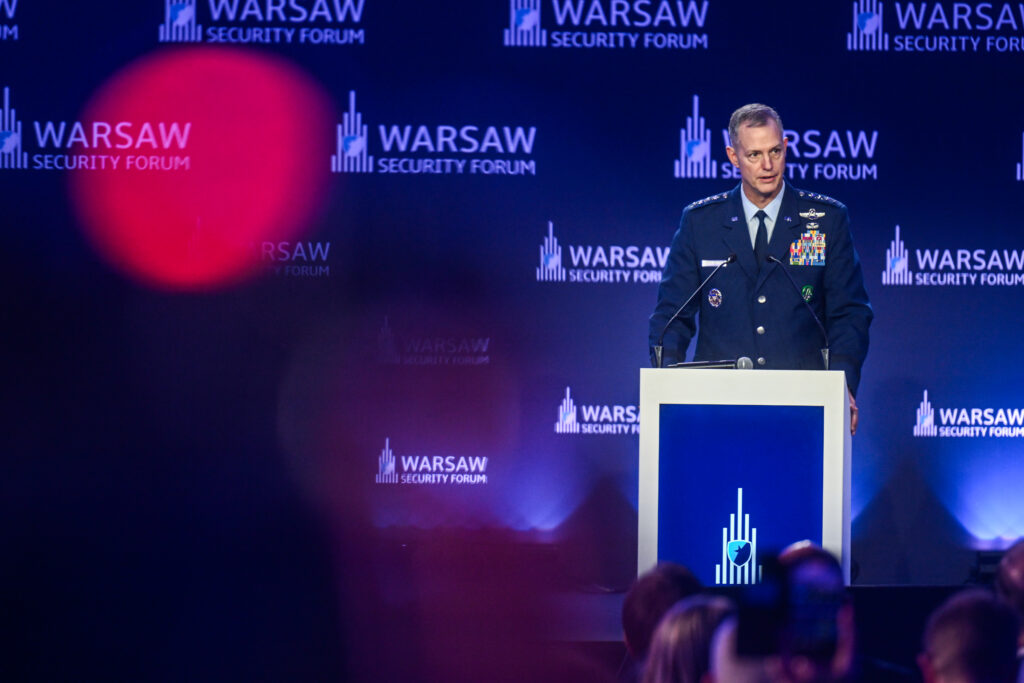
Seeking to reassure a jittery Europe and warn Moscow, Grynkewich on Monday outlined a strategy to confront any assault in the alliance’s east with firepower, precision munitions, autonomous systems and drones — citing examples from the battlefield in Ukraine.
“We will ensure any attack against any ally proves utterly futile,” he said.
Grynkewich said at a security conference in Warsaw that he did not believe a conflict with NATO is “imminent or inevitable” but that the alliance’s forces will be ready for one. “Let there be no doubt, should war come, we will block and blunt any attack, and then if it does not cease, we will break the forces conducting aggression against us,” he said.
Grynkewich praised Ukraine’s capabilities in fending off Russian forces, “despite the differences in manpower.” And he called on European nations to give more funds to PURL.
Grynkewich’s message to Europe and his private message to Ukraine follow Trump’s urging to Ukrainian President Volodymyr Zelensky to halt attacks on Russian energy sites.
In a Truth Social post on Sunday, Trump announced an “energy ceasefire” between Russia and Ukraine, of which neither side appeared aware. He said it was “effective immediately.” Zelensky said Monday that he was ready to sign an “energy ceasefire” but would respond to Russia if it continued to attack Ukrainian power grids.
The Ukrainian security adviser said Kyiv had interpreted requests from U.S. officials as a warning that Washington “could cut intel and everything going under PURL if you don’t stop.”
“The Americans are saying that they are not threatening, just saying that we are partners in this, and we should help them by stopping our attacks on the refineries,” the adviser said. “Maybe it’s this administration’s way to threaten, maybe it’s just how we read it. … I hope the temperature in the room goes down.”
While European governments have become Ukraine’s chief financial and military backers, the U.S. has continued to deliver some of its weapons through the PURL program, with the Europeans footing the bill.
Over the weekend, Trump lambasted Zelensky and said he should be replaced, after the Ukrainian leader described the diesel arrangement with Russia as “a weak decision.”
Zelensky responded, saying it was up to the Ukrainian people to decide on their president. He said the U.S. was trying to shift blame for rising prices away from its standoff with Iran and disruptions in the Strait of Hormuz, a vital corridor for global oil supplies.
Asked why Trump blames Kyiv for stalled Russia-Ukraine peace efforts, Zelensky told ABC News: “because it’s more simple to speak about the prices and connect it with Ukraine when everybody in the world understands … prices are rising … because of the war in Middle East.”
Rising energy prices have squeezed U.S. farmers and truckers — industries that are key to Republican support — ahead of the November elections.
Kremlin special envoy Kirill Dmitriev celebrated on social media a win for “diesel diplomacy” after Trump’s announcement on Friday. The deal, Dmitriev wrote, “showcases the power of economic cooperation between Russia and the US and its benefits to people and the world.”
Miller reported from London and Ebel from Kyiv. Beatriz Ríos in Brussels and Catherine Belton in London contributed to this report.
The post U.S. and NATO commander vows to thwart Moscow, warns Kyiv over refinery strikes appeared first on Washington Post.