In the fall of 1976, a plastic blue flask holding two glass vials arrived at the Institute of Tropical Medicine in Antwerp, Belgium.
One vial had broken en route, spilling its bloody contents into the half-melted ice in the container. The other still held blood from a Flemish nun who had died of a mysterious disease in Yambuku, Zaire, now the Democratic Republic of Congo. A small handwritten note accompanying the vials, the writing half bled into the icy water, read: “Fièvre jaune?” (“Yellow fever?”)
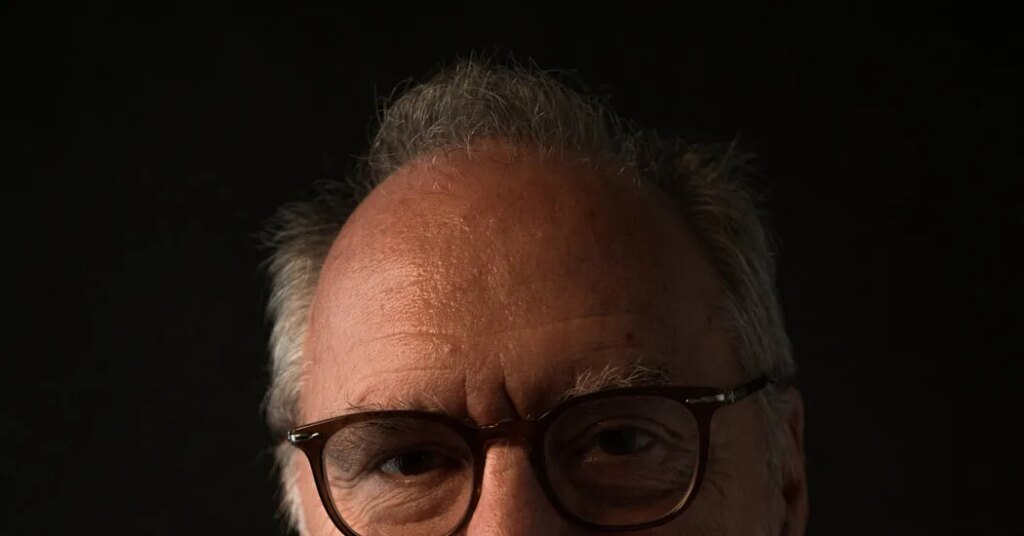
The task of identifying whether the woman had indeed died of yellow fever fell to the youngest member of the institute’s team, a 27-year-old Belgian scientist, Dr. Peter Piot.
He was far from the only one involved, though. Dr. Jean-Jacques Muyembe, a Congolese doctor who had trained in Belgium, had collected the samples and sent them to the lab. And several others in Antwerp and Yambuku had helped to isolate the virus from the sample and characterize the outbreak.
Exactly 50 years ago on Sunday, Dr. Piot and two others became the first people to get a look at the culprit: a large, spindly virus that would turn out to be among the most terrifying pathogens nature can produce.
The team named it Ebola, after a river near the center of the outbreak that had already killed the nun and dozens of others. Over the years, scientists would determine that Ebola has several forms, which together have killed tens of thousands of people. A current outbreak of the Bundibugyo species, also in Congo, has sickened nearly 9,000 people and claimed more than 4,200 lives as of Oct. 6.
Less than a decade after his Ebola discovery, Dr. Piot became a notable player in the history of a second deadly virus: H.I.V. In the early 1980s, his work in Africa revealed that H.I.V. was not only a disease of gay men, as many people at the time believed. In 1995, he became the first director of U.N.AIDS, the United Nations program, and is credited with helping the world understand that the disease was ravaging some of the planet’s poorest and most marginalized people.
Now 77, Dr. Piot is a chair of the Accra Reset, a multinational effort to reform global health around sovereignty of nations.
During an interview in New York last month, he spoke volubly about the persistent threat of infectious diseases and the need to transform how the world tackles them.
The following are excerpts from the conversation, which have been edited and condensed for clarity and length.
Walk us through your discovery in 1976, which you have described as an “aha-arlebnis,” or aha moment.
In those days, they could not isolate the virus in what was then called Zaire. There was no lab that could do it. We had no clue that was what was in there. We had the name of the patient and the doctor, and that was all.
Under the microscope, we saw something we’d never seen. Normally, viruses are spheres or square, and here we saw something more like spaghetti or worms. We were baffled, and we knew only one virus up to then had been described in that way, and that was Marburg [a virus that caused severe and often fatal hemorrhagic fever]. But we needed more certainty. So we sent it to [the Centers for Disease Control and Prevention in] Atlanta, and there, in two days, they proved it was not Marburg.
What I find interesting, compared to my later experiences with H.I.V., is we never fought with each other. Afterwards, I discovered in science it’s not always like that.
When you handled the specimen, you wore only simple, thin gloves, not the elaborate protective gear you now know you need when handling Ebola.
This is a very big lesson for my whole life and for everybody. You never know what’s in a specimen from a patient. It can be nothing. It can be Ebola.
The absence of bad luck is the most important thing in life.
I was once infected with Mycobacterium tuberculosis Bovis [which causes tuberculosis in cattle]. With Covid, I ended up in intensive care. But that’s it. I’m not a risk taker. I’m too scared to ski, for example.
I’d like to challenge that notion. You were the first to volunteer to go into the epidemic zone, and you later took your young children deep into Congo’s Virunga forest.
Excitement was bigger than risk, than fear, let’s put it that way. I like to go where the problem is. But is that risk? Yeah, maybe. I’m very careful. I mean, we all were. But retrospectively, if anything had gone wrong, we could have — yeah, it could have been bad.
I put curiosity maybe first, and problem-solving. I usually get scared afterwards.
What about that first trip to Congo — what was that like?
I had never been to Africa and had zero experience in outbreak investigation. But I had chosen this career because I was passionate about it.
We drove to the hospital in Yambuku. It took nearly a day, and I think it’s only 150 kilometers [about 93 miles]. It was rainy season, and there was hardly any road. So that was my first confrontation with that environment, which, from a perspective of epidemic control, is good and bad. It’s good in the sense that people are not very mobile. It’s bad to get there to organize a response.
My biggest fear was mosquitoes, because how do you protect yourself? We didn’t know how the virus spread. Is it water? Is it food? Is it sex? Since I was the most junior, I had to do the boring work, looking closely at the hospital records. Within 48 hours, we had a pretty good indication that it required close contact.
That seems really fast, especially for 1976.
Even without sophisticated epidemiology tools, you can figure out in a very short time how an unknown new pathogen is transmitted by listening to people.
When I arrived, I would just talk to people. They would sometimes come up to me with some local drink, and some local something to smoke. And then you can start talking. I would come back at 10 or 11 at night, and my colleagues would have been long back already. But you know what? This is how you find out things.
You seem to like talking to lots of different kinds of people: Nelson Mandela, Fidel Castro and Rahul Gandhi, the scion of India’s most powerful political dynasty. You have also talked to members of rebel groups.
I try to see who is part of the solution, and it doesn’t have to be people you love or that you would like to drink with.
You founded U.N.AIDS, yet you believe the organization should shut down.
When I founded UNAIDS, I always thought it had a limited life. On the one hand, it’s a bit emotional because I spent 12 years of my life on it, seven days a week, nonstop. But I also think we need to take a cold and hard look at what the world really needs today.
We should not mix up the existence of U.N. AIDS and the AIDS response. I’m as passionate about the AIDS response as I was 20 years ago. But it has to be done differently now. We’re at a time where we need to go for a far more integrated type of approach to health, and not purely each disease with its own organization. We need to think of the people and the cause, and not about institutions.
It’s been 50 years since you spotted Ebola, and 40 since your initial work on H.I.V. But both are still major threats.
In 1973, when I was in my last year in medical school, I went to talk to the professors, for what today you call career counseling. They said there was no future in infectious diseases. We have vaccines, we have antibiotics, we have water and sanitation and so on — that was their verdict.
We’ve made incredible progress, but we can do better. A turning point for me was that H.I.V. became treatable. There are 30 million-plus people whose daily life depends on taking a pill — isn’t that incredible?
But we still don’t have a cure for H.I.V.; we still don’t have a vaccine. And there will always be spillovers; we cannot wish that away. But we have to do everything we can so that it doesn’t degenerate into an epidemic.
The current Ebola outbreak is growing faster than any before it. Do you think it’s possible to bring it under control?
Ebola, in theory, should be one of the easiest outbreaks to control because it requires such direct contact with body fluids. It’s very unlike Covid, because all you need to do is isolate people who are sick, and wear protective gear. In a resilient, well-off society, you have all these systems in place.
It’s the context that makes it so difficult in Congo. This is a region that has been terrorized by armed conflict for decades. You can’t go from one place to another. There’s also sexual violence. The health care system is not functioning; it is not ready to isolate, to treat, to inform people. There’s a lot of misinformation. But then there are also customs and rituals, like funerals, which are very dangerous when someone with Ebola dies.
We also know that more people die from other causes that are treatable than from Ebola itself. It really paralyzes the whole health care system. We have much higher maternal mortality, kids dying from malaria, or accidents. We need to make sure that we can also provide this kind of regular care, not only to save people, but also to restore that confidence and that trust in the system.
That’s why I’m very concerned that this outbreak is going to last for quite a while. But one day, it’ll be contained.
The post He Helped Discover Ebola 50 Years Ago. He’s Still Worried. appeared first on New York Times.