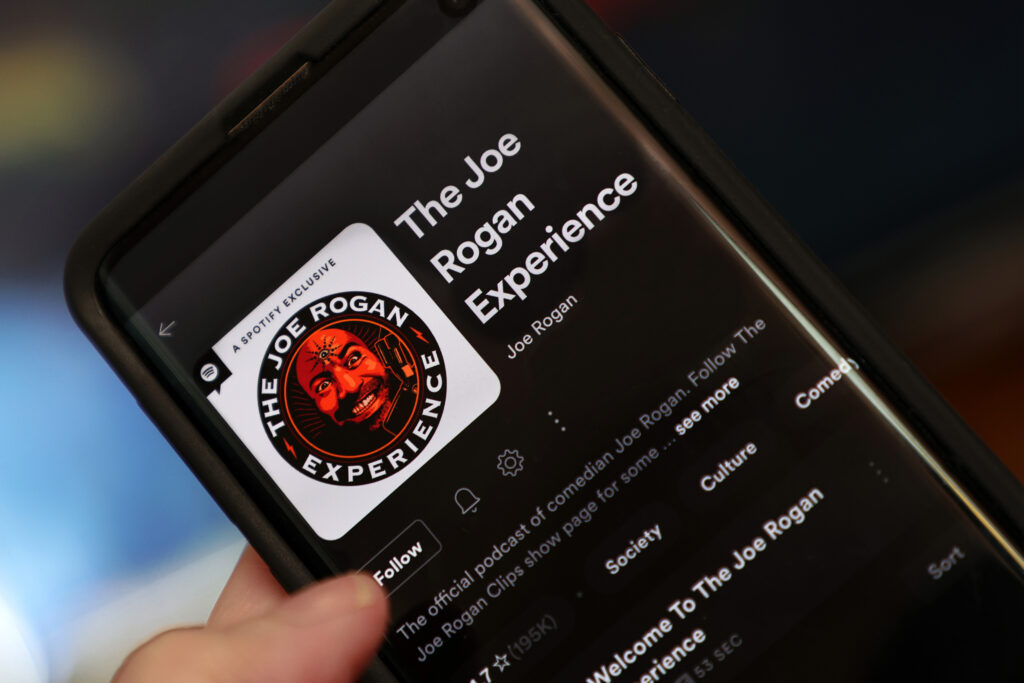
Joe Rogan’s decision to invite a Mormon scholar of the Bible onto his show, which draws more listeners than any other podcast in the country, is prompting an outpouring of pride for many members of the Church of Jesus Christ of Latter-day Saints.
Close watchers of the Mormon Church say Dan McClellan, host of a popular podcast of his own that debunks misinformation about the Bible, was the first practicing Latter-day Saint to be a guest on Rogan’s massive platform, which attracts 11 million listeners per show.
The episode turned into a kind of emotional referendum for the small faith group.
Since the show aired Wednesday, church members have been posting on social media, calling one another and debating the show. Some said Rogan’s decision to invite a Bible expert who is Mormon — a faith many Americans don’t view as Christian — was a historic validation.
“Dan … I’m growing to see the important role you might be playing in a larger picture of truth,” read a post on an X account with the handle @raulofmustachio, whose author describes himself as a conservative Mormon.
Others lambasted McClellan for sticking to scholarly points about the Bible and not talking more about his personal faith while millions were listening.
Still others, from the relatively progressive segment of the Latter-day Saints to which McClellan belongs, said they were disappointed that he went on the show to speak with Rogan, who endorsed Donald Trump for president, spread misinformation about the coronavirus pandemic and has platformed far-right conspiracy theorist Alex Jones multiple times.
“It’s been the talk of the week,” said Ben Park, president of the Mormon History Association and a Sam Houston State University history professor.
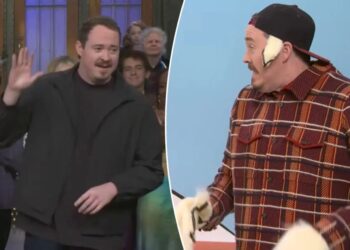
McClellan, who wears comic book T-shirts and has three advanced degrees in biblical studies, uses his “Data Over Dogma” podcast to examine what he calls misinformation about the Bible. On the show, he typically introduces some social media post about religion — often from right-leaning Christians — and takes apart its errors.
Rogan praised him as deeply knowledgeable and impressive. He listened attentively as McClellan offered an analysis of the Bible that was purely historical and scholarly — not about faith or the supernatural.
McClellan said the Bible is heavily edited over centuries by different authors with specific agendas — not an unchanging, single document prepared by God. He also told Rogan that the modern concept of hell as eternal torment didn’t really solidify until postbiblical times. Both concepts would be off-putting to many more conservative or fundamentalist Christians, and some online attacked McClellan for making those points on Rogan’s show.
Park said McClellan’s appearance on Rogan’s show reflects other notable shifts in the Mormon Church, one of the country’s most traditionally religious groups.
The church this year allowed women as well as men to oversee church Sunday school, which adults and children typically attend. Church leader Dallin Oaks last month became the first Mormon president to speak at Washington National Cathedral, the seat of the Episcopal church in Washington, D.C. And for the first time, church leaders in December 2025 encouraged people to refer to biblical translations other than the King James version, which the church officially uses.
“That was an earthquake,” Park said. “It touches on such a bigger issue — how to determine biblical truth, where do we seek models of authority?”
The more “dogmatic, literalist tradition” has dominated much of Mormonism, Park said, “but there have always been challenges, and today we’re seeing a wider variety of biblical interpretation than ever before.”
Rogan has been on a religious journey of his own. After many years as an outspoken agnostic, the conservative-leaning host said in 2025 that he had started attending a nondenominational evangelical church.
That same year, Rogan thrilled many Christian conservatives by hostingMcClellan’s polar opposite: Wesley Huff, a well-known conservative Christian apologist. Apologists aim to defend core Christian teachings and rebut intellectual doubts about the faith.
On Wednesday, Rogan asked McClellan how he balances being a “religious man” with his scholarly approach to the Bible. “You study all this stuff and are trying to get to the root of it all,” he said. “What is your version of this?”
McClellan responded that he doesn’t talk publicly about his faith because he wants to compartmentalize his own personal beliefs and his public platform about misinformation.
“I do believe, as Jesus in the New Testament says: ‘When you pray, go into your closet, and pray secretly and your father will reward you. Don’t pray as the hypocrites do, who are on the street corner to be seen of men,’” McClellan said.
Some listeners made clear online that they were disappointed with that answer.
“I saw your Rogan dodge when he asked about your faith… man, was that not such a missed opportunity to spread the light of the Gospel? Own it! Own your beliefs and proclaim them loudly. Maybe you sell a few less books? Who cares?” Dallas entrepreneur and podcaster Chris Koerner posted Thursday on X.
But Rogan sounded impressed.
“That’s a very admirable position in my perspective,” he said, adding that his “real problem” is with proselytizing and hypocrisy from people who project “in a very performative way, whatever their version of whatever religion it is. They wear it like a shield of virtue.”
The post Joe Rogan hosted a Mormon who debunks biblical literalism. Here’s how it went. appeared first on Washington Post.