When I came across old high school notebooks of mine while helping my mom declutter my childhood home, I knew I should throw them away. Even if I’d wanted to brush up on Latin American history, they would be a poor resource. And yet I didn’t want to let go.
Many of us face clutter when we do our spring cleaning or, far harder, when we deal with a deceased loved one’s things. Americans spend billions of dollars each year on storage, and many live with jam-packed basements and attics. As a neuroscientist studying how people make decisions, I have also seen that when given the tools, people can choose to work with, rather than against, the brain systems that regulate decision making to help themselves let go of old ideas and behaviors. Knowing how our minds work is the first step to aligning our decision making with our goals and values.
It isn’t irrational to have trouble letting objects go. The parts of our brain that help us decide what is valuable overlap with the parts that keep track of what feels like us. As a result, we feel that what is ours is good, and we increase the value we attach to objects, ideas and behaviors from our past.
People given an object typically place more value on it than they assign to a similar object they don’t own. In one study, participants were asked to sort objects into a basket that would be theirs and one that would be someone else’s. Placing objects in their own basket immediately produced more brain activity in the self-relevance system, and those objects were later remembered and preferred over other objects. Such research helps make sense of why when I held my old notebooks, they felt like pieces of me — objects of real value that I didn’t want to throw away.
In these moments, loss aversion is powerful. In studies in which people made choices about what to buy and sell, the sellers who had the most difficulty parting with items showed the most brain activity in regions that process pain, risk and attention. So we hold on to family heirlooms — as well as pants that no longer fit and piles of travel mugs cluttering the pantry.
Objects can also become cues that activate memories, momentarily bringing them back into focus. One brain-imaging study indicated that past versions of ourselves compress in our minds, similarly to how faraway objects blur in the distance. Holding a hat you used to love activates memories from that past self, creating a portal between who you are now and the person you once were. For me, it’s hard to let go of things that offer that sense of connection, however tenuous.
Still, my research told me that holding on to objects like my old notebooks was the wrong approach. My lab studies what happens in people’s brains when they are making choices and how we can use that understanding to make change easier. One way to make change easier is to switch from the standpoint of possessor to buyer. Instead of asking, “Do I want to keep this?” ask, “Would I buy this today?” Modifying the decision-making framework allows a neural calculation in reward and self-relevance systems to shift, too. A teakettle becomes something you can choose — or not — rather than something you stand to lose.
Another way to think about things from a different perspective is to borrow someone else’s eyes. In my team’s research, when we asked people to imagine another person’s perspective, it altered their behavior to be more similar to that imagined person’s. Brain scans show that taking another person’s perspective also changes our brains’ reactions to unpleasant situations and can even affect how we think of ourselves. When I showed my partner my old notebooks, he reminded me that he isn’t enthusiastic about storing musty old papers in our basement. He’s less sentimental because his brain doesn’t treat the old notebooks as part of me, as mine does.
Researchers have found that people going through old things feel more willing to part with an item if they are coached to take a photograph to remember it by. In one study, two sets of dorm rooms were equipped with posters encouraging students to donate unwanted items. One set of posters also encouraged the students to take a picture of the items before donating them. The dorms with posters suggesting a photo had 15 percent more donations.
For me, the goal isn’t to get rid of every single thing, but to see clearly why I choose to keep things and become more purposeful in those choices. Research documents the brain’s tendency to prioritize immediate rewards, so figuring out how to make the process of change feel better is crucial.
Taking a moment to connect with others is one way to activate the brain’s reward systems. I make sure to respond enthusiastically to a photo of nine boxes ready for donation on a friend’s porch, knowing that positive social responses can be fuel to keep her going. Connecting with others also helps manage stress. When I found an old doll from a friend’s mother who collected dolls when she was alive, I texted him. “She loved you so much, and dolls meant the world to her,” he told me, adding, “I have a creepy doll in my house, too.” Giving advice to someone in the same situation can also help us do the right thing ourselves. When I hold up objects for my mom to photograph and ask whether she’d buy the items today or how a neutral observer might react to them, the questions remind me of the tools I need, too.
We must also recognize how the environment we’re in got us here. Ubiquitous targeted advertising, frictionless buying and cheaper manufacturing have tricked us into accumulating so much more than we need. If we want to avoid the pain of decluttering later, we can also actively remove the technologies that push us to accumulate in the first place.
Letting go isn’t hard because the objects themselves are objectively so precious. It’s hard because the brain sees it as changing who we are — and resists that. The same is true for our old ideas and behaviors. But if we take a step back and use our imagination and connection to others to see the problem in a new way, we can more purposefully let go of the things that aren’t serving us without losing the core of who we are.
Emily Falk is a professor at the University of Pennsylvania and the author of “What We Value: The Neuroscience of Choice and Change.”
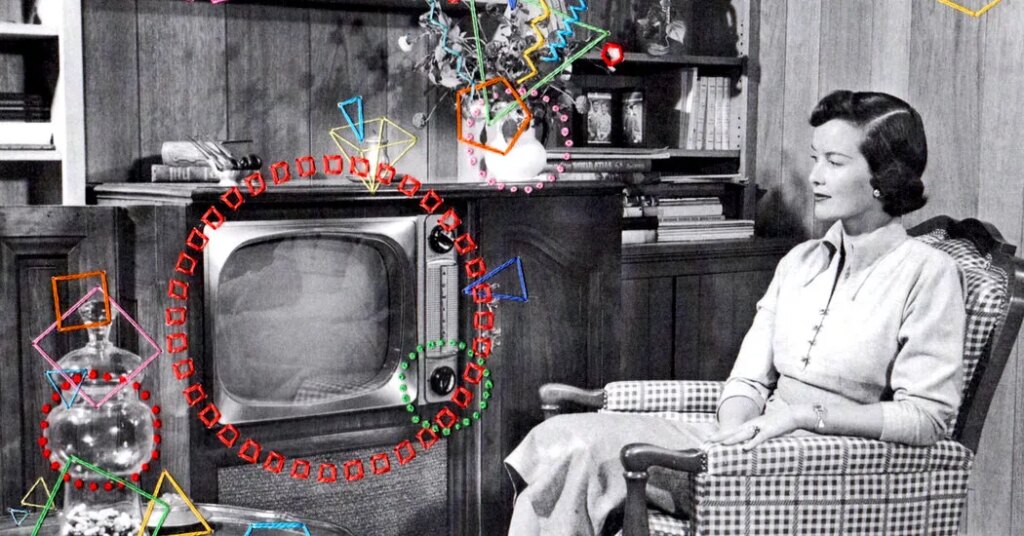
Source photograph by George Marks, via Getty Images.
The Times is committed to publishing a diversity of letters to the editor. We’d like to hear what you think about this or any of our articles. Here are some tips. And here’s our email: [email protected].
Follow the New York Times Opinion section on Facebook, Instagram, TikTok, Bluesky, WhatsApp and Threads.
The post Decluttering? There’s a Science to It. appeared first on New York Times.