As pop culture pilgrimages go, you could do worse than a jaunt to rural Maine to visit Stephen King.
The author, as synonymous with the state as lobster or whoopie pies, lives with his wife, Tabitha, in Lovell, a pretty town near the New Hampshire border. A building nearby, on a hill overlooking rolling foothills and a glacial lake, holds both his writing office and a kind of King museum.
Drive down dipping, pine-lined lanes, make a left past the sign warning you to “Watch for Molly” — a tribute to King’s corgi, a social media star known as the Thing of Evil — and soon you’re standing in a bright, cavernous space full of movie posters and memorabilia from the more than 100 screen adaptations of King’s stories. You have to crane your neck and spin around to take it all in, the singular scale of his impact on American entertainment.
Arranged chronologically, they stretch from “Carrie” — there’s poor Sissy Spacek, wide-eyed beneath her blanket of blood — to “Carrie.” The first poster is from Brian De Palma’s 1976 adaptation of King’s debut novel, about a timid outcast who telekinetically destroys her high school tormentors. (The film celebrates its 50th anniversary in November.) The second is the reason for today’s visit: A new TV adaptation of “Carrie,” now streaming on Amazon Prime Video.
Created by Mike Flanagan, the eight-episode series is a modern, topical take in which Carrie’s bullying comes largely via social media, and the horrors include school shooter drills. The girl herself, played with bright-eyed enthusiasm by Summer H. Howell, is less a reject than a curiosity who has been hidden from the world by her conspiracy theorist parents. There is eventually pig blood at the prom, sure, but also a broader plot about a telekinetic subculture that points toward possible future seasons.
Flanagan, who has idolized King since reading “It” in the fifth grade, has adapted several of the author’s books into films (“Gerald’s Game,” “Doctor Sleep”). But they are mostly faithful translations, whereas “Carrie” is closer in spirit to Flanagan’s inventive TV updates of literary horror classics like “The Haunting of Hill House” and “The Fall of the House of Usher.”
“I never had to look at Edgar Allan Poe in the eye and say, ‘What’d you think?’” Flanagan said. But if he was anxious about the answer in this case, he needn’t have worried.
“I have right of disapproval over everything,” King said. “And basically I don’t use it, because I trust Mike completely. He is the King whisperer.”
Now 79, King still writes most days. “Other Worlds Than These,” the final book in his “Talisman” trilogy with Peter Straub, was just released. He is currently finishing his last novel about the private investigator Holly Gibney, first introduced in “Mr. Mercedes” (2014). Departing his invented worlds for good is “very sad,” King said, and he acknowledged that this revival of “Carrie,” his first hit, provides a kind of full-circle moment.
“I could call it a career,” he said, and then quickly backtracked. “No, no, no. I got in trouble with that once before, saying that I thought I might retire.”
“The one thing that I would not like to do is die at my desk,” he added. “That’s all.”
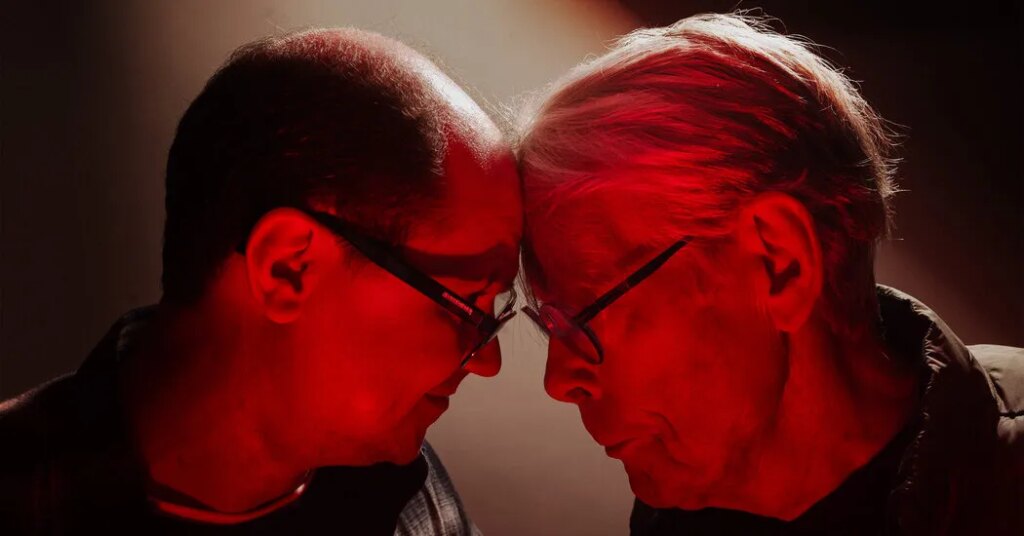
Said desk sits in an upstairs office overstuffed with honors and more tchotchkes — a National Medal of Arts certificate hangs a few feet from a Pennywise Chia Pet. King and Flanagan sat between them last week to talk about “Carrie,” its political parallels and their favorite adaptations of the author’s work. Molly lies sweetly at your feet. (The evil comes out during vet visits, apparently.)
These are edited excerpts from the conversation.
Why “Carrie”? Why now?
MIKE FLANAGAN That is the question. And it was the first question Steve had when we first discussed it. It was about, How do we take the idea at the heart of this incredible novel and put it into 2026? The novel is talking about bullying, kindness, cruelty and the consequences when we choose cruelty. That question has only become more relevant, especially to the younger generation. We’ve put this technology into the hands of our kids that encourages cruelty, that celebrates it.
STEPHEN KING “Carrie” is about bullying, and the TV series is about cyberbullying.
There is also more of a political dimension. Carrie’s father espouses right-wing propaganda, and her mother, while a religious fundamentalist, as in the book, is also a kind of parents’ rights zealot.
FLANAGAN In this day and age, religious fanaticism felt more like a symptom for Margaret White. We all exist in different bubbles of curated truths. Those tribes, those distortions are a major thing that teenagers, especially, have to navigate. What is real? What is this world that they’re inheriting? It depends on what website they go to for the answers. Carrie growing up in this cult of three, her parents would have developed their own bubble. He was listening to fringe right-wing talk radio, but Margaret had extreme views that could be considered ultraprogressive, in some cases. It wasn’t really about their politics.
So you were trying to be nonpartisan about it?
FLANAGAN Yeah, because the people who are going to benefit from a show encouraging us to reconsider cruelty, I want them to see themselves in multiple characters. And if I say one is clearly good and one is clearly bad, I won’t give them anything to see. With the partisan stuff, I’ve got things to say. But I don’t want to kick people out of the conversation at a time when we’re so polarized.
What are the things you want to say? You can tell me.
FLANAGAN I can tell The New York Times! That sounds like a great idea. I’ll pass on that one.
There have been several “Carrie” adaptations over the years. Steve, did you have any reservations about reviving this story again?
KING No. I don’t think about “Carrie” that much anymore, because it was a starter book.
But it’s also the thing that launched your career.
KING I was very fortunate. I was able to stop teaching and start writing full time, and that was what I wanted.
It started as a short story. It was going to be one of these stories I sold to Cavalier or Swank or one of those magazines — I had not stepped up to Penthouse at that point. I started it and saw it was going to be longer than a short story, and I threw it away. My wife picked it out of the trash, smoothed out the pages that I’d written, and she said: “This is good. You should go on with this.” I said, “I don’t know anything about girls’ locker rooms.” She said, “I will tell you everything that you need to know.”
I sent it to Bill Thompson, the editor, and he said, “I think you got a winner here.” I rewrote the story according to the things he wanted, and I sold the book. The advance was $2,500 — Doubleday was prodigiously cheap at that time. But then Bill called one Sunday and said, “We sold the paperback rights for $400,000.” I told Tabby and she started to cry, because we were living in this cheap [expletive] apartment at that time. People were fighting upstairs — I put that in “The Shining.”
Did you like the De Palma movie?
KING I loved it. The first time I saw it, they had a screening in Boston, in Roxbury. Playing in the main theater, which “Carrie” piggybacked on, was “Norman, Is That You?” with Redd Foxx. The audience was totally Black — we were like two little grains of salt in the pepper shaker. There were two guys who were like fullbacks right behind us. At the end of the movie, Sue Snell is having this dream, and the hand comes out of the ground and grabs her. And these guys scream like little girls. And I thought, This is going to work.
And now so many of your books have been turned into movies and TV shows. How does it feel when people make your stories into their own?
KING It’s like sending a kid to college. You hope they do well and that they don’t get involved with drugs or anything that’s going to break them.
What are some of your favorites?
KING I think “Misery” is a good one. I like “The Stand,” the one that Mick Garris did. There’s a lot that I like, and I don’t talk about the ones I don’t like. I’ve been asked again and again about “The Shining.” I never liked it. That’s the one people ask about because somehow it’s gotten this critical reputation that elevated it. Tabby says [expletive] floats.
What about you, Mike?
FLANAGAN I can’t decide between “The Shawshank Redemption” and “Stand by Me.” They’re both perfect films. I love horror. I love to be scared. The thing I respond to most with Steve, though, is the heart. Those are stories about hope, and they both ache with it.
When you’re updating a well-known story like “Carrie,” how do you do that while preserving its essence?
FLANAGAN I was nervous about the changes we were making. Along the way you have to say, “What are the things that, if they’re not on the screen, we aren’t doing ‘Carrie’?” For some of those, it’s the set pieces. Of course you’re going to the prom. Of course Carrie’s going to be covered with pig’s blood. Of course you’re going to see this horrifying scene in the locker room.
KING At the beginning of the show, you see her feet walking through the town. Because it isn’t any big surprise.
FLANAGAN It’s about the surprises you can weave into how you get there. Carrie White in every version that we’ve ever seen is this trembling, terrified, traumatized girl from the jump. She’s had a hard time in the world, and ours is kind of the opposite. She’s curious and eager, unspoiled and unhurt by the world, which is why it targets her immediately. But as a lifelong Stephen King fanatic and as a student of cinema, I knew on the day we started shooting the prom sequence that I needed to take a moment, exhale, and look around and say, “I’m at the prom with Carrie White.”
And did you feel the weight of that?
FLANAGAN I feel it acutely on projects like this. I also feel an enormous amount of responsibility whenever Steve trusts me with his toys. When he says I can play in his sandbox, I’m very careful not to [expletive] in it. And if I’ve made Steve proud with what we’ve done with his story, that’s what matters.
KING Well, I’m very pleased with what you did. But you had some fun, too.
FLANAGAN I have so much fun. I have the best job in the world.
KING We both have the best job in the world.
The post Stephen King and His ‘King Whisperer’ Resurrect ‘Carrie’ appeared first on New York Times.