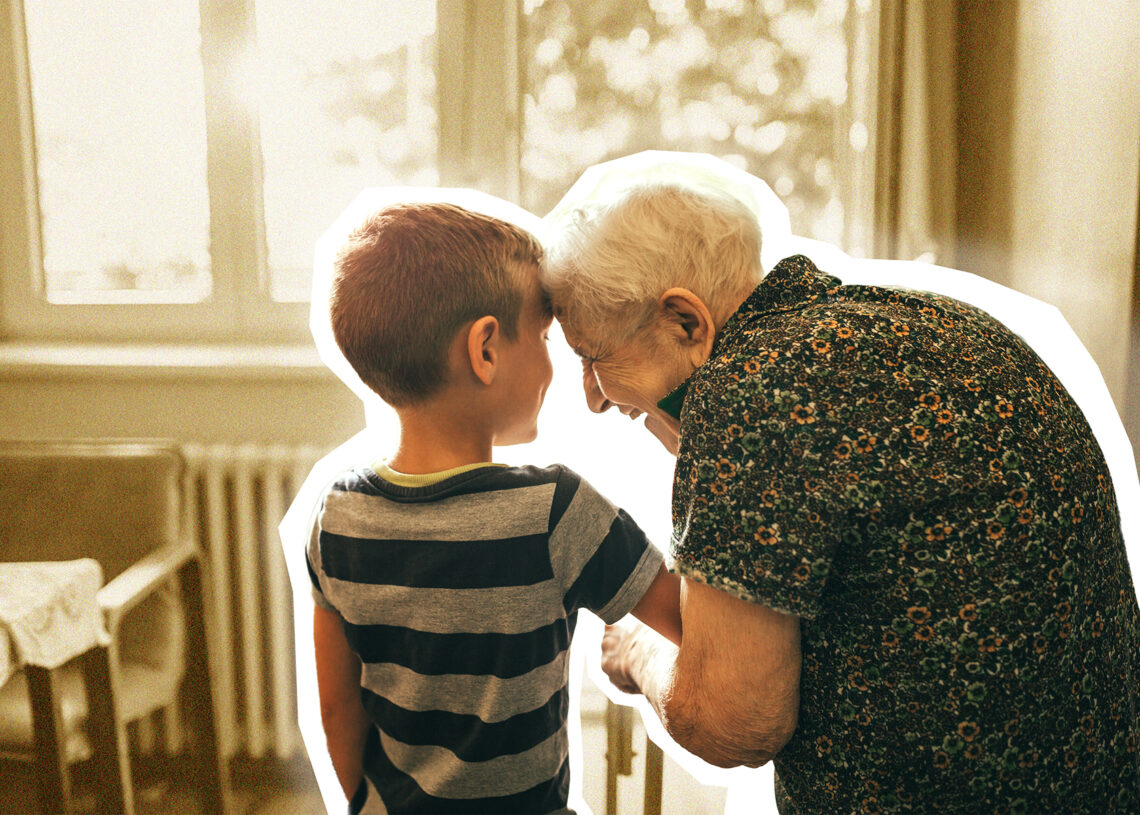
Though the Oct. 3 Style article “What’s in a name? Plenty for Gigi (or Nana)” included many names for grandmothers, many of the growing number of great-grandmothers I know share one: “GGMa.” It fits all of us, and it often gets passed from one generation to another. My grandson had a GGMa, and now I am happy that his two young sons know me by that name. As average ages increase, perhaps someday “GGGMa” will be common!
Marilyn Silvey, Ashburn
I’m 6. I saw the article about names for grandmothers, but I didn’t see “Muwa,” which is what I call one of my grandmothers. I call my other grandmother “Granny.”
Aeshani Hekel, Burke
I was amused by the Oct. 3 Style article about names for grandmothers. When my granddaughter was born, her other grandmother chose the moniker “Gigi.” As the article noted, Gigi is a popular name grandmothers choose to be called. Our Gigi remains Gigi.
I, on the other hand, wanted something different. I proposed that I be called Lolli and my husband would be called Pop. Frankly, I thought our “Lollipop” combo was pretty clever.
Well, it turned out that my granddaughter couldn’t say “Lolli” and it came out “Lala.” (Somewhat unfairly, she could say “Pop” just fine.) When she was a little older, my son and his wife asked whether I wanted to revert to Lolli since my granddaughter could now say it. I kept Lala. I love that my granddaughter named me. (Also, she thinks that the Christmas carol “Deck the Halls” is about me, and I have yet to disabuse her of that notion. “Fa la la la la …”.)
Diane B. Norton, Fairfax
Dementia couldn’t take my grandmother’s spirit
I am studying psychology at Manor College, and I loved Richard Sima’s Sept. 22 online Brain Matters column, “Taking care of grandchildren may help slow cognitive decline.” I am fascinated by cognitive function, but the reason I was drawn to this article goes beyond my academic background.
My late grandmother had Alzheimer’s disease. She was a kind lady, but she was also stubborn. She insisted I take something to eat from the fridge, and if I didn’t, all hell would break loose. She was the textbook definition of a Jewish grandmother.
Every holiday and birthday, she tried to give me cash, and I would always decline. She didn’t have a lot of money, so it never felt right to accept it. Now, I find myself struggling with the idea that I should have accepted her money and eaten the food she offered because perhaps that was her way of caregiving.
Sima wrote, “The act of caregiving as a grandparent may also be linked to a younger brain.” Even though my grandmother had dementia, she was as quick as a whip. She would often ask me about my love life, and one day I asked her, “What about you, Grammy? Why don’t you have a boyfriend?” She said, “Eh, too much work.”
As her dementia progressed, my brother and I would play favorite songs by Frank Sinatra and Elvis Presley. Her body frequently hurt, but she never stopped dancing. My brother and I helped keep her young, but she was always young at heart.
Zoë Nomer, Jenkintown, Pennsylvania
A lesson missing from my gerontology education
Raya Elfadel Kheirbek’s Oct. 4 op-ed, “As a doctor in palliative care, I’ve learned to know who’s not in the room,” was a powerful examination of loved ones’ absences during a parent’s final moments of life. When my father died at 93 in a nursing home, he was joined only by his therapy dog, Penny, and her owner.
My brother had been estranged from my father for years, so much so that Dad once told me, “I wouldn’t even know Allan if he walked in this room.” I frequently visited Dad, but each time it would cost me $1,000 to make the trip. He and I kept in touch mostly through weekly phone calls. I wrongly thought this time was another false alarm of Dad’s impending demise, and not being there has truly been one of my life’s greatest regrets. It hurts that a golden retriever had to convey the love I wish I had conveyed myself.
Kheirbek truly spoke to me when she concluded, “I have come to believe that one of the quiet duties of medicine at the end of life is simply to notice the people who are not in the room — and to let the dying person know that their absence has been seen.” How I wish someone like Kheirbek had let my father know my “absence had been seen.”
Both Dad and Penny knew who wasn’t in that room, but I pray they both saw, as Kheirbek wrote, “my absence.” Thank you, professor, for teaching me a lesson that my master’s degree in gerontology never covered: the importance of who’s not in the room at the time of one’s death.
Kathy A. Megyeri, Washington
Letter submissions
Send letters to [email protected].
Submissions must be exclusive to The Post and should include the writer’s address and day and evening telephone numbers. Letters are subject to editing and abridgment. Please do not send letters as attachments. Because of the volume of material we receive, we are unable to acknowledge submissions; writers whose letters are under consideration for publication will be contacted.
The post Gigi, Muwa or Lala? What readers are using instead of ‘grandma.’ appeared first on Washington Post.