National Republicans, facing stiff headwinds in some of the most conservative parts of the country, see a ray of hope in an unlikely state: Oregon.
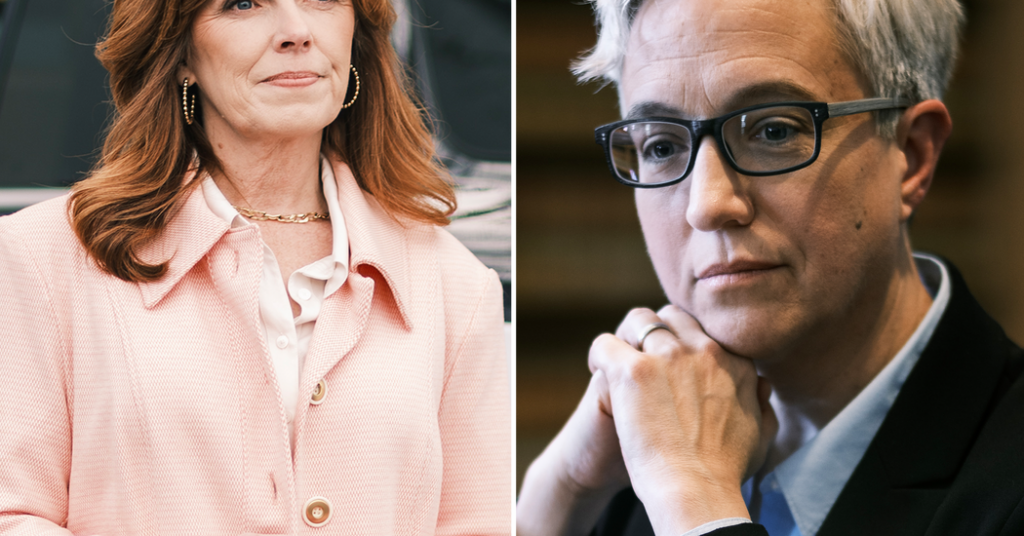
With Oregon’s ballots set to hit the mail next week, Gov. Tina Kotek’s quest for re-election in one of the country’s most consistently liberal states is at risk of being derailed by a conservative, anti-abortion Republican, State Senator Christine Drazan.
Conservatives are not exactly surging statewide in the land of protest frogs and craft beer. But Ms. Kotek, a first-term Democratic governor, has managed to become almost as unpopular among her constituents as President Trump, whom they denounce routinely on the streets.
“If this were just a straight-up question, ‘Do you want Tina Kotek to have another four years or not?’ she would get destroyed,” said John Horvick, senior vice president at DHM Research, a polling firm in Portland, Ore.
Oregonians haven’t elected a Republican governor since 1982, and Ms. Kotek would seem well positioned to continue that streak. She went toe-to-toe with Mr. Trump last fall over his efforts to deploy National Guard troops to Portland amid immigration demonstrations and she has already defeated Ms. Drazan once.
Yet polls show this race between Ms. Kotek and Ms. Drazan essentially tied. A recent statewide poll conducted by Mr. Horvick’s firm for Oregon Public Broadcasting found that 60 percent of potential voters viewed Ms. Kotek unfavorably, versus 63 percent for the president.
The situation in Oregon has echoes in another blue state: Minnesota. There, the Democratic lieutenant governor, Peggy Flanagan, is struggling for a clear lead in her Senate race against a Republican newcomer, Michele Tafoya, and the progressive attorney general, Keith Ellison, is in danger of losing his re-election.
In both states, the pivotal issues are local, not national — a lingering social welfare fraud scandal in Minnesota and a sense in Oregon that the state’s post-pandemic malaise is not lifting, even as the cost of living goes up.
There’s also a political truth that Democrats risk forgetting even in a potential blue-wave year: Performance matters.
Ms. Kotek ran four years ago pledging to reduce homelessness, supercharge housing production and improve public schools, but the progress has been far slower than promised.
Ms. Kotek pushed through changes to ease construction of affordable homes, and housing starts have begun rising after falling early in her term. Still, they are nowhere near her goal of 36,000 houses a year, and the homeless population is substantially higher than when she took office.
In 2024, the most recent data available, Oregon’s fourth graders posted the fourth worst performance in reading in the country. This year, just 42 percent of third graders scored as proficient at reading and writing.
“Tina Kotek told Oregonians that she would solve the problems and challenges facing our state,” Ms. Drazan said at their first debate earlier this month. “She hasn’t.”
Priscilla Southwell, a political science professor emeritus at the University of Oregon, said she thinks Ms. Kotek “has actually done a good job with what she’s been handed.” But, she added, Oregon “is more purple than people may realize, and these are hard economic times.”
Some progressives have joined the criticism chorus, frustrated by the business-friendly recommendations from a bipartisan “prosperity council” she convened to tackle economic issues and her 2025 calls to reduce a tax on high earners that funds one county’s universal preschool program.
In a second term, Ms. Kotek has promised to bring Oregon schools up to the national average for instructional time, expand child care and affordable housing, create a new state commerce department to spur economic growth, and halt new data centers until the state passes its own standards. Her campaign pitch unwittingly echoes Vice President JD Vance’s: Just give her “more time.”
“I’m not satisfied, either,” Ms. Kotek said at the recent debate.
When it comes to Ms. Drazan, Ms. Kotek has been mostly focused on the president. One ad deemed the Republican his “right hand.” At the debate, the governor mentioned him so many times Ms. Drazan accused her of helping at-home viewers play a drinking game.
In the State Legislature, Ms. Drazan sponsored bills to bar transgender girls from playing on girls’ sports teams and to end Oregon’s pioneering universal vote-by-mail system. She opposes abortion, though she has said she would not challenge Oregon’s statutory abortion protections, which are among the strongest in the country.
Last fall, as Mr. Trump’s attempt to deploy federalized National Guard troops to Portland prompted demonstrations and a court challenge, Ms. Drazan accused state and local leaders of allowing “violent mobs and domestic terrorists” threaten federal agents. She’s banking on Oregonians, particularly suburban and rural voters, being tired of the homeless camps and empty storefronts in Portland lingering six years after the pandemic.
The candidates agree that Oregonians are hurting financially. Ms. Kotek has emphasized decisions made in Washington. Ms. Drazan points to the State Capitol.
The two candidates have a rivalry that stretches back before the 2022 campaign, when Ms. Kotek won 47 percent to 44 percent of votes. That lent a personal edge to the frowns, head shakes and mutual accusations of dishonesty that peppered their first debate.
As the State House Republican leader, Ms. Drazan used walkouts and other procedural tactics to block or slow Ms. Kotek’s legislative agenda. In 2021, Ms. Drazan accused Ms. Kotek of reneging on a deal to give Republicans equal representation on a redistricting committee in exchange for ending their delaying tactics.
History suggests Democrats and independents will “come home” to Ms. Kotek. Polls around this time four years ago also suggested a closer race than the final result., and a new poll from The Oregonian shows movement toward the governor and a slight Kotek lead. The nonpartisan Cook Political Report still says the race leans Democratic in a state where Republicans make up just 24 percent of the electorate.
Ms. Kotek also has a substantial financial advantage — her campaign has $3.4 million to spend, compared with nearly $2 million for Ms. Drazan’s. And Ms. Drazan has yet to receive any contributions from the one person in Oregon who could close that gap: Phil Knight, the Nike co-founder and frequent Republican donor.
The post Could the Oregon Governor’s Race Be a Republican Hope? appeared first on New York Times.