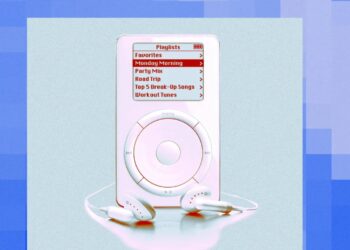
No one much likes the pain of a needle stick at a doctor’s office or hospital. But according to a new study in Frontiers in Pain Research, there’s one thing that can ease the sting: music. Listening to just the right soundtrack may be its own kind of anesthetic—one that could be useful for needle insertions and other painful medical procedures.
“Although a needle puncture is a minor procedure, the level of pain can vary significantly from person to person,” said radiologist and lead author Dr. Andrei-Cristinel Dragnea of University Hospital Zürich, in a statement that accompanied the release of the study. “In modern medicine, the goal of treating physicians is not only to provide a successful diagnosis and therapy, but also to ensure that the procedure causes as little discomfort as possible.”
To conduct their research, Dragnea and his colleagues studied 204 people who were undergoing an MRI of the brain, spine, head, or neck, and divided them into four groups. One group listened to soft relaxation music similar to what’s played during a massage; one listened to a Mozart composition; one listened to their personal favorite songs; and the fourth, a control group, did not listen to music. For the first three groups, the music was played before, during, and after the insertion of a cannula, which is a port-like tube slid into a vein for the purpose of administering medication, general anesthetic, or contrast dye before an MRI.
The Mozart music was not just any selection, but Sonata K488, written for two pianos, in D major. This song made headlines in 1993 when a studypublished in the journal Nature found that listening to classical music—and that composition in particular—was linked to improved memory, problem-solving, and spatial-temporal reasoning. Though the mechanism involved wasn’t firmly established, the finding gave rise to what became known in science as the “Mozart effect.” The songs chosen by the group that listened to their favorite tunes included, among others, AC/DC’s Safe in New York City, Lionel Richie’s Hello, and the Crash Test Dummies’ Mmm Mmm Mmm Mmm.
People were asked to rate their pain before and after the cannula insertion. Those who listened to the soft relaxation music or no music had no significant pain reduction before, during, or after the procedure. There are possible reasons the lilting, generic music was ineffective. “Relaxation music is usually characterized by a slow speed and low volume, and does not show noticeable dynamics,” said Dr. Meritxell Garcia Alzamora, a neuroradiologist at the University Hospital Zürich and senior author of the study, in a statement. “These characteristics may have contributed to the patients disregarding relaxation music, which would explain the lack of pain relief.”
The other two groups did show some pain relief after listening to music. Those who heard the Mozart composition and those who listened to their favorite songs experienced significant pain reduction two minutes after the procedure. The “favorite music” group even had a bonus pain-relief perk that no other group experienced: just 30 seconds after the procedure, they rated their pain lower than the other groups, compared to their baseline.
Why does some music appear to have an analgesic effect? The researchers did not try to answer the question definitively, but their findings did raise some possibilities. Listening to music, they write in the study, may trigger the release of endorphins, chemical messengers that bind to opioid receptors to reduce or eliminate pain. Music may also calm the body down, with a resulting reduction of blood pressure, heart rate, anxiety, and stress—all of which may reduce pain. Being distracted by music may also engage the brain’s limbic system and prefrontal networks, activating pain mediation networks. Those neural regions are known to have a somewhat delayed effect, which could explain why people experienced relief two minutes after the needle. It’s possible, too, the researchers concede, that the music wasn’t what was responsible for reduced pain, but rather the presence of a friendly, distracting experimenter in the room.
Going forward, the investigators plan to explore other types of classical music beyond Mozart that may have similar—or even superior—pain-relieving benefits. They also hope to determine if music can serve as an analgesic for more severe pain than needle sticks.
There are a lot of pharmacological approaches in an anesthesiologist’s toolkit. Music—no-cost, easy, and absent risk—could be a valuable drug-free addition.
The post Your Favorite Song Might Make Pain Hurt Less appeared first on TIME.