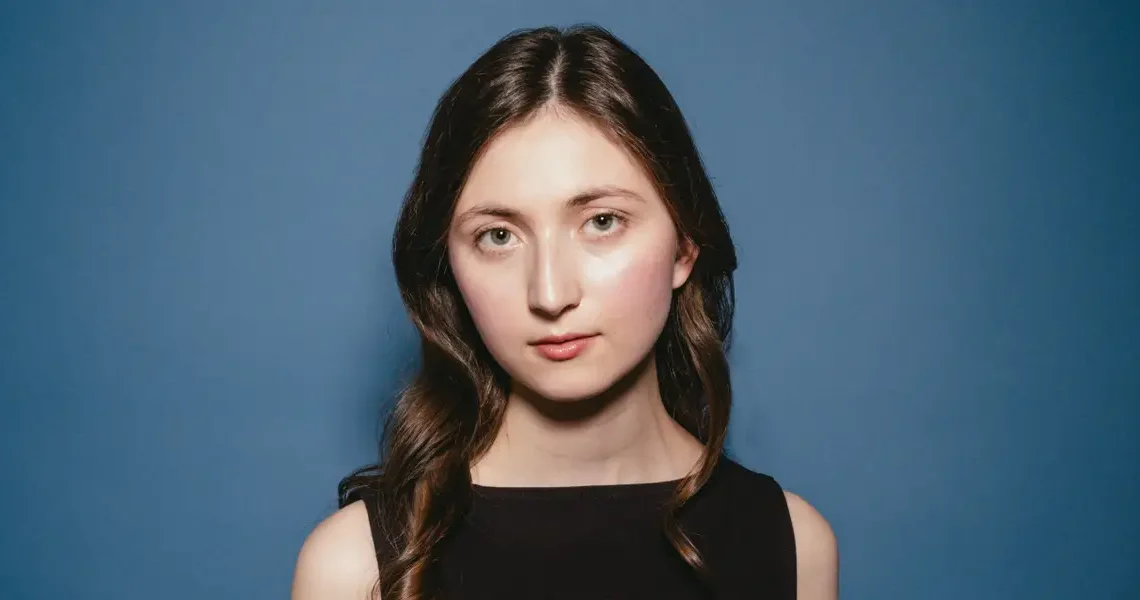
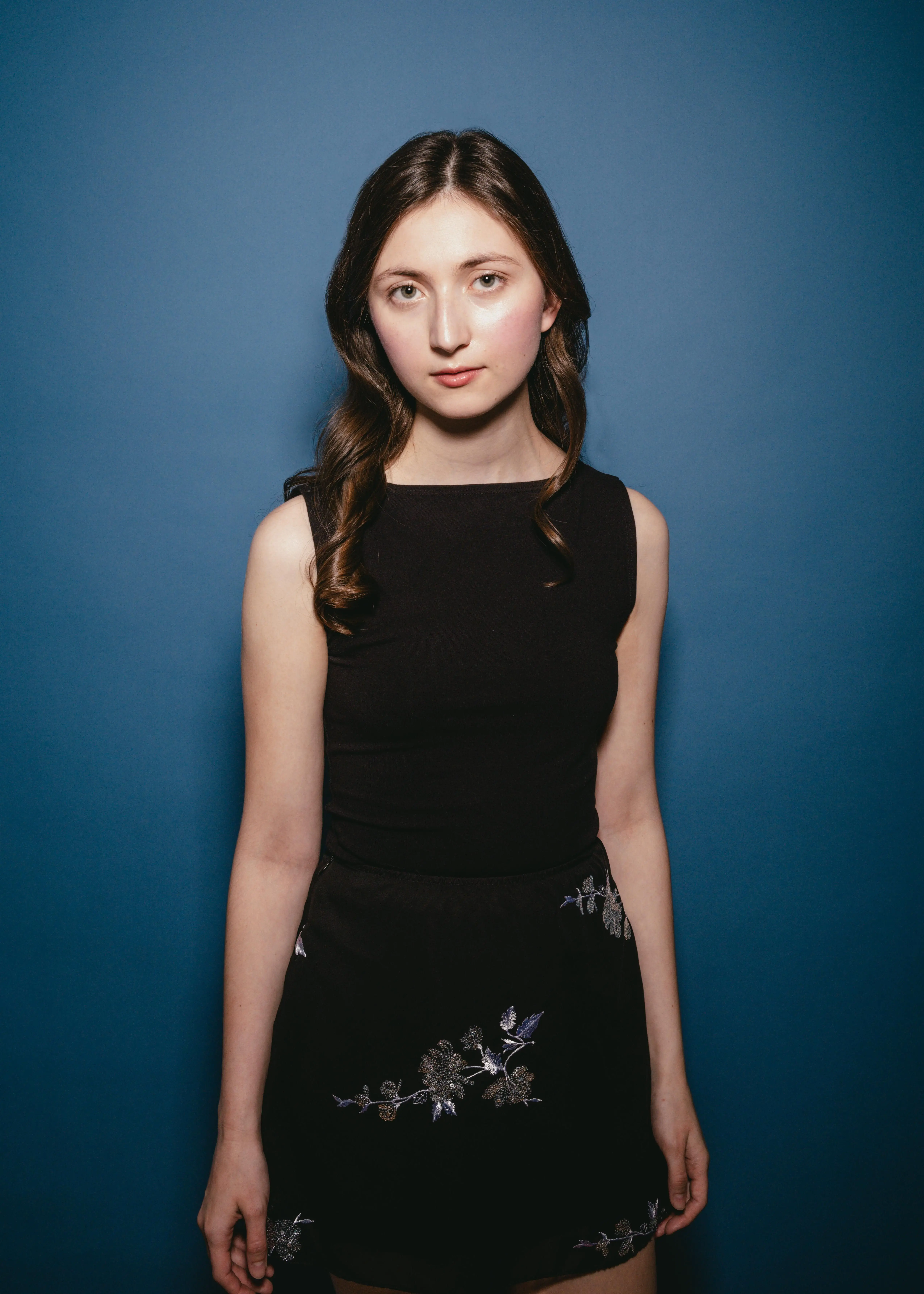
Emma Camp, a writer for The Wall Street Journal’s famously conservative editorial page, began a recent video on housing costs with a simple question — and an appealingly simple answer.
“Can rent control fix the housing crisis? No!” she says.
It actually makes the problem worse, Camp argues, by discouraging developers from building new units if they don’t think they can charge enough to recoup their investment. The 75-second video has gotten 4.8 million views on X.
Camp, 27, has gained traction with pro-free market ideas by riding the short-form vertical video boom.
She’s shot from 25,000 to 125,000 followers on X in recent weeks after a string of video posts tackling Gen Z’s woes, consumerism, and grocery prices that have drawn millions of views.
I met up with Camp in Brooklyn’s Carroll Gardens, one of the neighborhoods that voted overwhelmingly for Zohran Mamdani for mayor of New York. (Camp didn’t yet live in New York during the election last year, but is a staunch Mamdani opponent). “I like being a debunker,” she tells me. “I love a story where I can come at it, like, a commonly held belief about what’s going on here is wrong. And let me explain why.”
While much of the early reaction to her videos has been positive, Camp also sees upside in garnering critics, who argue she’s a shill for capitalism’s power brokers, that she oversimplies complex issues like rent control, and that she’s overly dismissive of the plight of her fellow Gen Zers.
“When you have some pushback, that’s a sign that you’re mounting ideas that people, who disagree with them, think are worth pushing back against,” she says.
Camp’s videos and essays often share a few elements. She picks a commonly held belief, usually about why capitalism is bad, and argues why it’s actually wrong. In a viral video about people blaming free markets for the disappearance of old-timey fridges, she smizes at the camera and says, “This could not be more wrong.”
Gen Z tropes, like a pervasive feeling of helplessness and therapy culture, are another common target. “I’m sick of watching people wallow in their own powerlessness because they’re too afraid of the responsibilities of agency,” she said on social media.
She invariably delivers the message in a perky, approachable, just-telling-it-like-it-is package. A video extolling grocery stores ends with Camp taking a twirl around Whole Foods, sniffing an orange with a look of bliss.
Camp’s rise comes as many of her peers have entered adulthood thwarted by the pandemic’s shadow, a weak job market, and high housing costs. Camp is there to tell them that everything they thought was to blame (capitalism) may be wrong and the supports (the Democratic Socialists of America, therapy) they’re leaning on may be flawed.
On Instagram, her followers are largely male and concentrated in their late 20s and early 40s, according to CreatorIQ, an influencer marketing platform.
“Wow. A young woman, employed by the WSJ, who is not only smart and articulate but also a realist and willing to speak the truth? Maybe there is hope in the next generation of journalists,” X user who goes by @GriffMadhatter wrote.
Camp argued in her grocery store video, which got 6.5 million views, that supermarkets show how capitalism is good for people (despite the recent inflationary spike in food prices) because it encourages food producers to be more innovative and productive. A number of commenters said the video ignored the existence of government food subsidies and the concentration of food manufacturing in the hands of a few companies. Camp concedes that she’s not a big fan of subsidies, but said that a handful of food companies is still “quite a good amount of competition.”
“What a consumer sees in a grocery store is 15 different kinds of rice,” she tells me. “And, of course, the rice is also competing against other kinds of food, right?”
Camp acknowledges the world is far from perfect. And yes, she tells me, groceries have gotten more expensive, and people are understandably upset about it. She argues that the DSA isn’t the answer; the free market is a better way to improve living standards. “I am very much concerned about how do we have the most economic prosperity for the most people,” she says. “I’m much more against unnecessary regulation and against protectionism than I am against a welfare state.” In her view, people who disagree with her are casting her as either an ultra-conservative or a woke leftist, and she is neither. If you have to categorize her, she says, she will accept the label “small-l liberal.”
“I’m concerned about individual freedom and giving people the maximum amount of freedom that is compatible with other people’s maximum amount of freedom,” she tells me.
Camp says she learned to shrug off criticism after her first experience going viral, when she published a New York Times op-ed while at the University of Virginia in 2022 about censorship on college campuses. In it, she wrote that despite her liberal bona fides, she sometimes felt afraid to express herself. “Even as a liberal who has attended abortion rights demonstrations and written about standing up to racism, I sometimes feel afraid to fully speak my mind,” she wrote. The reaction was swift and massive, some of it shrill. Camp called it a “baptism by fire.”
Camp’s star may not have risen so rapidly without the propulsion of a few social media trends. She’s leveraged the vertical video format that’s taken over the internet, beginning with Snapchat and its short, disappearing videos and propelled by TikTok, Instagram, and YouTube.
She’s also benefited from the rise of clipping, in which short-form videos are snippets of longer ones that they’re promoting. Amplified by social media algorithms, some clips are seen far more than the original source material. One 75-second clip of Camp being interviewed by The Washington Post’s Megan McArdle in July was viewed 1.2 million times on X; the full 42-minute video on YouTube was viewed just over 1,000 times.
Social video and the creator economy has buoyed the visibility of many journalists. With the decline of traditional media and the rise of platforms like Substack, journalists like Megyn Kelly and Don Lemon are going the solo route. Traditional media outlets like The New York Times and The Wall Street Journal have scrambled to capitalize on the rise of short form by putting their own journalists, like Camp, in front of the camera.
Camp found a receptive audience on X, which has shifted right since Elon Musk took over the platform in 2022. Pew Research found in 2025 that Republican users are far more likely than Democratic users to have a positive experience on the platform and that since 2021, there’s been a sharp increase in Republicans saying X is good for democracy, while Democrats have moved in the opposite direction.
“The reason she’s appealing is her presentation rather than the fundamental truth of her arguments,” says Mike Pesca, a veteran podcaster who recently joined CBS News as its podcast editorial director. He says Camp picks topics where people have deeply held beliefs, and zeros in on a few points. It doesn’t hurt that she’s young and has a delivery that’s more bemused than strident. “She’s speaking in the argot of the forum, and she’s doing it well,” Pesca says.
Camp grew up in a suburb of Birmingham, Alabama, in what she called an “NPR household” where her favorite thing to do was stay up late to watch Rachel Maddow on MSNBC.
After a writing program at a magnet high school, she landed at UVA, where she felt stifled by what she called an environment of “strict ideological conformity.” In a feminist theory class, she defended the idea of non-Indian women criticizing suttee, a cultural practice of suicide by Indian widows. “This idea seems acceptable for academic discussion, but to many of my classmates, it was objectionable,” she wrote in her New York Times op-ed. Camp wrote that after that episode, she felt “a little less likely to speak up again and a little less trusting of my own thoughts.”
The year was 2022, and in the wake of global protests touched off by George Floyd’s murder two years earlier, there was growing concern on campuses about unpopular views being suppressed. “Post 2020, everyone I knew started calling themselves a leftist, and people started using liberal as an insult. And I had people start calling me liberal in a bad way,” Camp tells me.
The piece drew a divided reaction. Many agreed that free speech on campus has eroded. Others argued that someone getting published in the paper of record could hardly complain about being silenced and that persuading others is part of the college experience.
From UVA, Camp went to Reason, a publication about libertarian ideas, then answered the Journal’s call in January.
Getting her fellow Gen Zers to face their risk aversion and grow up — the subject of her forthcoming book — is Camp’s other hobby horse. Camp knows the territory. She says she came off as “weird” and “anxious” in high school, turned to therapy, and was diagnosed with autism.
By her third year in college, things started getting better for Camp. She says she found a friend group, realized she didn’t need therapy anymore, and concluded that she wasn’t autistic after all. Today, she’s financially independent, married to a former UVA classmate, is close to her parents, and throws parties, cramming 50 people into her one-bedroom apartment in Brooklyn where she mixes up elaborate cocktails. “I’m very social, very gregarious, and very socially adept,” she says.
Camp argued in a recent column, “Loneliness Is for Cowards,” that her peers are lonely by choice and that they should throw more parties, too. Many people found the piece inspiring. Others commented that it ignored the time and money that entertaining takes and is hard advice for introverts to follow. One called it “one of the most tone deaf, bubble-dwelling takes I’ve ever seen.”
Camp says she’s sympathetic to the social anxiety that plagues many in her generation. “I’ve been there. But I also think that at a certain point, you have to realize that you’re the captain of your own ship, and that nobody is coming to save you.”
Read the original article on Business Insider
The post Emma Camp wants Gen Z to grow up appeared first on Business Insider.