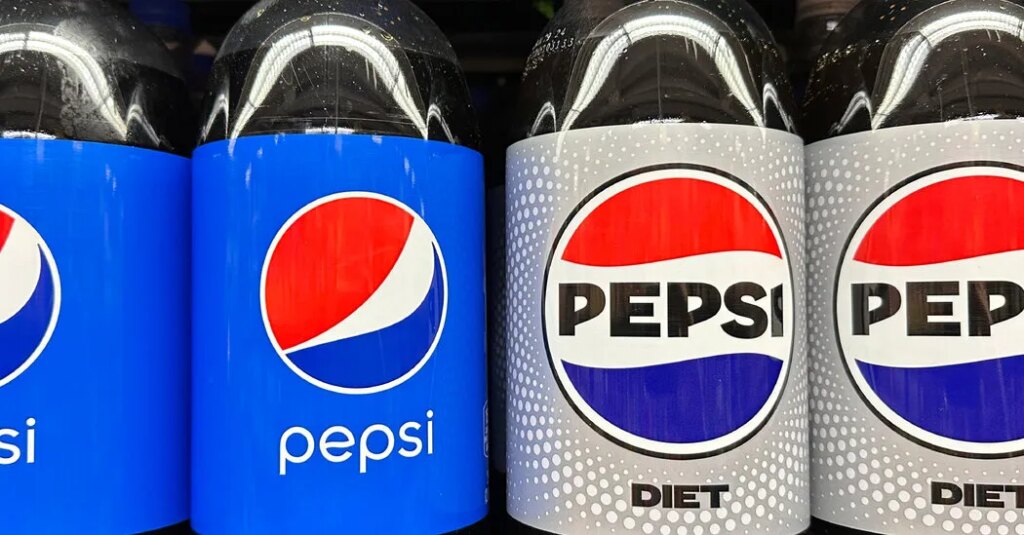
Americans aren’t buying enough bottles of Pepsi and bags of Doritos to please the executives behind those brands, despite them lowering prices.
“We’re not satisfied with the performance in the U.S.,” Ramon Laguarta, the chief executive of PepsiCo told Wall Street analysts and investors on an earnings call Thursday.
Even though sales rose in the most recent quarter, executives at PepsiCo are under increasing pressure to improve the snack and beverage business in the United States, which has struggled as some consumers pull back on spending while others change their snacking habits altogether.
With the company’s stock down 12 percent in the past year and shares trading at six-year lows, PepsiCo is facing a growing drumbeat from some investors who want a bigger change in the company’s structure.
Among the options: splitting PepsiCo’s business by geography, between North America and international, or by business lines, between foods and beverages.
Some analysts and investors are prodding the company to re-franchise some or all of its bottling operations, which PepsiCo brought under its control several years ago. Its competitor Coca-Cola largely uses a franchise model for its bottling operations, which eliminates expenses like aluminum cans and plastic bottles.
Mr. Laguarta, who faced similar questions a year ago from the activist investor Elliott Investment Management, has largely been reluctant to change the structure of the business.
“Obviously we’re not satisfied with the performance and that means we have to look at options that improve our performance long-term,” Mr. Laguarta said in response to an analyst asking whether the company is evaluating possible changes in the company’s structure. “We’re open to revisiting every option.”
On the surface, PepsiCo’s financial performance appeared in line with analyst expectations. Revenues for the quarter ending Sept. 5 rose 5.6 percent from the prior year, to $25.2 billion. And its core operating profit, which excludes any acquisitions or sales of businesses, grew 3 percent from the same period in 2025, to $4.3 billion.
PepsiCo’s stock was up 1.4 percent to $125.44 in midday trading.
But much of the revenue growth came from international markets, which now make up 41 percent of the company’s revenues. And some of the increase in operating profits in the quarter came from a tariff refund of $178 million.
Executives at the company warned profits are likely to remain under pressure as prices on commodities, such as diesel fuel, remain high this year and into next year.
“The team has done a good job with hedging,” Steve Schmitt, the company’s chief financial officer, said. “We’re starting to see hedges roll off and input costs starting to ramp up.”
Executives at PepsiCo said they hoped efforts to lower expenses while cutting prices and launching new products would be enough to keep investors at bay.
In the United States, consumers have been buying fewer bags of Cheetos and cases of Pepsi. A segment of consumers, struggling with higher prices in grocery stores as well as at the gas pump because of the war with Iran, have reduced their spending on nonessential items. Cuts to the federal food stamp program as well as some states’ adopting new rules that no longer allow the benefits to be used to buy soda are more headwinds for PepsiCo.
And there have been rapid changes in what some shoppers want when it comes to snacks and beverages. With around 11 percent of the country, or 30 million Americans, on GLP-1 weight loss medications, PepsiCo and other food manufacturers are racing to create snacks and drinks that contain higher levels of protein and fiber that individuals on those medications are seeking.
In addition to the different choices individuals are making, the Make America Healthy Again movement continues to have a ripple effect as a number of states enact their own, strict rules around what ingredients, such as artificial dyes, should be allowed in school lunch programs or even grocery store shelves in the coming years.
To combat those trends, PepsiCo began to lower prices on some snacks. The company said it would also add to its Simply NKD line, which are Cheetos and Doritos made without artificial colors, as well as its Doritos Protein chips and 100-calorie multi-packs of its snacks.
The post Shifting Eating Habits Push PepsiCo to Weigh Options, Including a Split appeared first on New York Times.