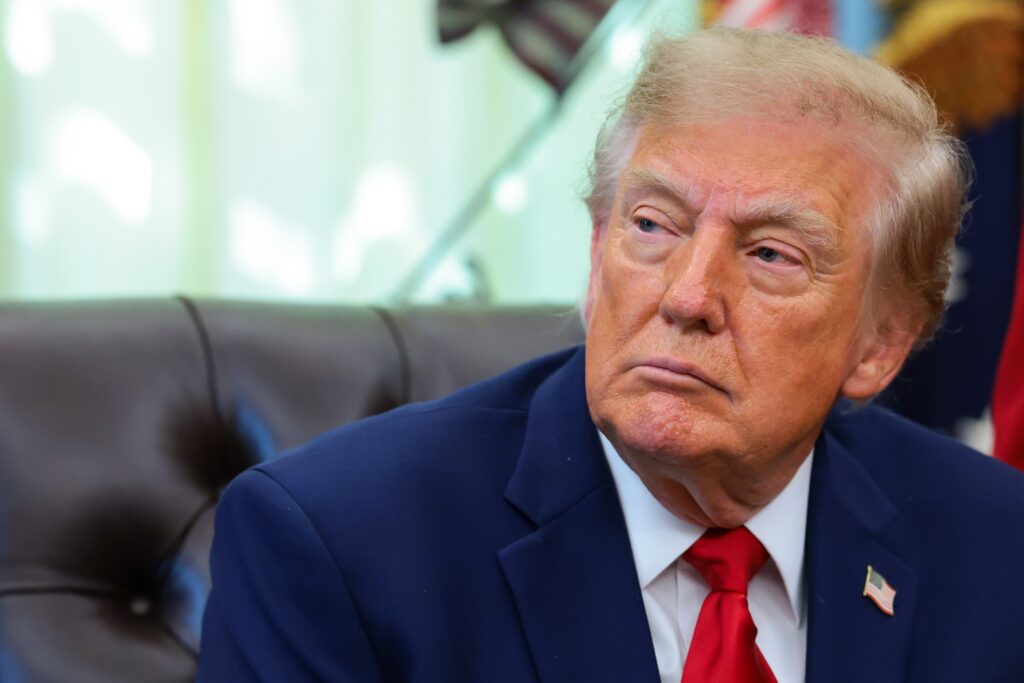
President Donald Trump on Wednesday said that U.S. officials did not believe that a Russian lab worker’s reported death, which has attracted global scrutiny, was linked to a bioweapon.
“We’re going to find out soon enough, but we don’t think so,” Trump told reporters in the Oval Office.
The 28-year-old worker’s death last week has drawn international attention because she worked at an institute in Siberia that studies plague. Russia’s elevated response — including imposing quarantines — and the lack of public information about the case have also raised questions, given that the country’s measures significantly outpace the normal response to a plague-linked death.
Trump said that Russian officials had reassured their U.S. counterparts that the situation was being contained. The president acknowledged some similarities to how Chinese officials in early 2020 initially claimed they had contained the covid-19 virus before it caused a global pandemic.
“China didn’t say much, and Russia is not saying much either,” Trump said. “But they do say they have it very much under control.”
Trump also said that he expected Russian authorities to share more information about the case, after frustrations that the country had not been forthcoming.
“I just met with our people. We have brilliant experts,” Trump said. “They know everything about what’s going on. And, all of that information is going through them.”
Officials from the World Health Organization on Wednesday said Russian authorities informed them that the lab worker had a community-acquired case of pneumonia. The agency is seeking information about unconfirmed reports that a second employee of the Siberian laboratory developed pneumonia of unknown cause, WHO Director General Tedros Adhanom Ghebreyesus said in Geneva.
WHO officials said they still do not know what pathogen caused the first worker’s fatal illness, which pathogens Russian laboratories tested for or why authorities placed roughly 200 contacts under quarantine or medical observation. Without those answers, officials said, they cannot fully assess the public health risk.
Russia’s public health agency said earlier this week that a laboratory worker employed at an institute dedicated to studying plague in the Irkutsk region died after being diagnosed with pneumonia of “unknown” origin.
The agency on Wednesday issued an update that the situation was “stable” and said that plague had not been detected in follow-up tests of thousands of people in the region.
“Preventive and anti-epidemic measures have been carried out comprehensively; there are no epidemic risks to the population of Irkutsk and the Irkutsk Region,” the agency said in a statement.
Pneumonic plague is almost always fatal when untreated, but many patients recover with a prompt course of antibiotics. The incubation period for this type of plague is up to six or seven days.
One Russian news report said that the technician “allegedly broke a test tube containing the pneumonic plague pathogen” on Sept. 25, that she soon fell ill and was taken to a hospital, where she died last Friday.
The Trump administration this week sent a formal diplomatic message to Russia requesting more information about the worker’s death.
Adam Taylor and John Hudson contributed to this report.
The post Trump says ‘we don’t think’ Russian plague case is a bioweapon appeared first on Washington Post.