In August, when Jenny Silbert was ordered by the city to cut down a pergola she and friends had cobbled together out of scrap wood on her backyard farm — and along with it a thriving passion fruit vine, laden with the wrinkled, wine-colored orbs of the ripe fruit — she was devastated.
Left with baskets full of ready backyard fruit, Silbert, who owns Little City Farm in historic Oxford Square, in the Mid-City area of Los Angeles, discovered that what she thought was a setback, a death of sorts, ended up being the genesis of new life.
The experience of losing that vine would plant the seedlings for even greater things to come. And by greater things, I mean curd — silky, luscious passion fruit curd bursting with flavor and color.
“Passion fruit is so joyful!” says Silbert. “The texture of the fruit and the skin. Cutting through that hard shell. The color of the pulp. Oh, and the smell! And then you get to eat it!” Just when you think she’s said everything there is to say about a fruit, she adds, “The flavor is like a sunburst in your brain.”
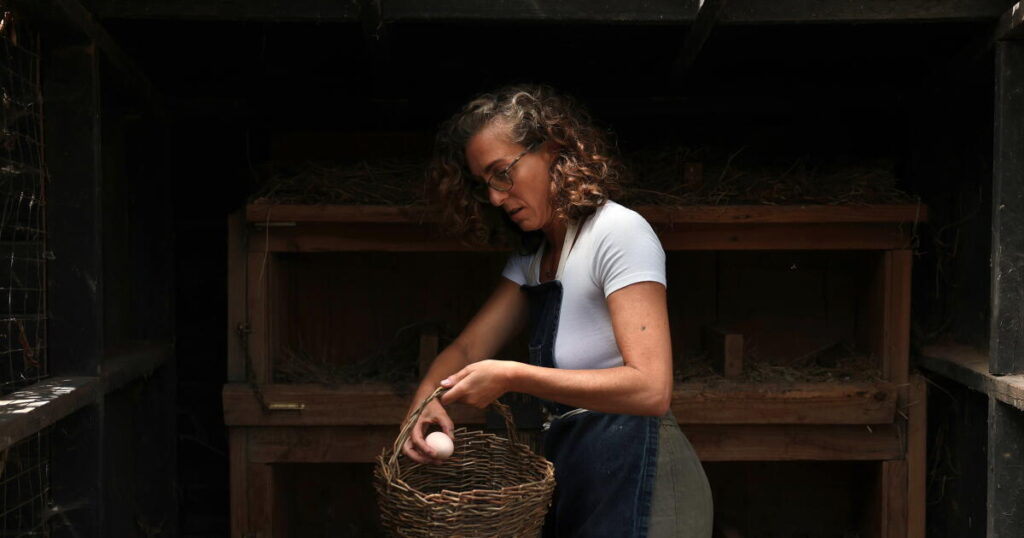
Silbert, an architect specializing in “trash design,” or building with what others consider waste, founded the farm as a way to apply the same ethos of sustainability to feeding her family. At Little City Farm, cultivated on land that was once a tennis court, she grows what she wants to eat or give away: herbs, artichokes, squash, tomatoes, cucumbers and many fruit trees including pomegranate, avocado, persimmons, pomelo and blood oranges. And then, of course, there’s the passion fruit. She has one more vine that she hopes she can save.
Passion fruit is a tropical fruit from South America with large dark-green leaves and tendrils that allow them to climb and cling and grow on anything within reach and not moving. They can grow 10 to 20 feet in a year, which is part of the appeal for gardeners and edible-landscape enthusiasts and explains why those vines are planted in yards all over the Southland. The season here begins in August and extends through October. We’re at peak season right now.
Ripe and ready passion fruit looks more like gone passion fruit: It turns from green to a wine color and shrivels. Cut through the hard shell to reveal what looks like mostly seeds bound by bright pulp the color of mango flesh. If you’re not feeling any more inspired than that, freeze it until you are.
Silbert founded the farm in 2020 with the idea of selling the produce to a friend’s restaurant, but when the pandemic shutdown upended those plans, the farm project shifted into an event space. The pergola and passion fruit vine became a centerpiece. “Sitting under that vine was a visceral experience of the farm,” Silbert says. The vine-covered pergola “created this portal into another world.”
But in order to obtain permits for events, Silbert was required to come into compliance with city regulations. The passion fruit vine was a victim of that compliance.
“I was really heartbroken,” Silbert says. “And then this passion fruit curd project came along. I’m over the moon about this curd.”
Curd is a traditional British confection, most commonly made with lemon, consisting of the fruit juice cooked with sugar, eggs and butter to form a sweet-tart, thick, velvety spread or filling. It’s typically eaten spread on scones or toast, injected into pastries or used as a layer in frosted layer cakes.
Passion fruit seeds are soft and edible, but there are just too many to be enjoyable. To remove them, pulse the pulp in a food processor or blender long enough to release the seed from the pulp but not so much that you break up the seeds. Then pass it through a strainer and throw them away; if you want, return just enough seeds to give whatever you’re making the indication of passion fruit.
Passion fruitis a great mixer for cocktails such as margaritas, Bellinis or spritzes. Use it in smoothies. Add sugar and water to make popsicles. Make a coulis, a dessert sauce to pour over cheesecake, panna cotta or pavlova. Fold it in with whipped cream to make a mousse. Or use it in place of lemon to make a chiffon pie.
Silbert’s curd project came about after she posted on social media asking what she should do with all that pulp, and a member of her online community suggested she come over and help Silbert make curd. Naturally, I invited myself to join.
I arrived for curd making on a sweltering day, walked through the frontyard, a cutting garden overgrown with dahlias, amaranth, zinnias and other blooming plants, and into her 1920s Spanish home.
Silbert, along with farm intern Solaris Amini, a student at UC Santa Cruz, had already scooped out the pulp from the fruit of the sacrificed vine, filling three 4-quart containers. The curd-making chef canceled, so Silbert, Amini and I decided to do it ourselves. We got out mixing bowls and measuring cups and spoons, and a food processor, and set out to perfect passion fruit curd: sweet and tart, redolent with passion fruit flavor but not overwhelmed by it. (Passion fruit is one of the few foods on Earth whose main “drawback” is that it has too much flavor.)
The trick when making curd is to cook it low and slow so the eggs thicken the curd, but not so fast that they scramble. To be on the safe side, we opted for a double boiler, which we made by setting a large stainless steel saucer over a large soup pot. You’re gently cooking with the steam created by the simmering water in the covered pot. We cooked and stirred and tasted and tweaked the flavors, adding more lemon juice, sugar, salt and passion fruit pulp until, at the end of a long and glorious joy-filled day, we landed on what we all agree is perfection in curd form: a silky, shiny curd bursting with the sweet, tart, floral essence of passion fruit.
In the weeks that followed, Silbert continued to turn her harvest of passion fruit into beautiful golden pints of curd. She delivered them around town to friends and sent care packages of them to family.
She has taken to buying the fruit from neighbors who advertise their overabundance on Facebook Marketplace.
“One lesson that I’ve learned again and again and again is that these plants exist to make seeds and make more food. Each of those seeds can grow an entire vine. And there are hundreds of seeds in it. Plant math just astounds me.”
Meanwhile, Silbert is still making curd with whatever passion fruit she gets her hands on. If you bring her your passion fruit, she may just give you a jar of curd. Just don’t tell the city.
The post How a heartbroken L.A. farmer turned a destroyed passion fruit vine into luscious curd appeared first on Los Angeles Times.