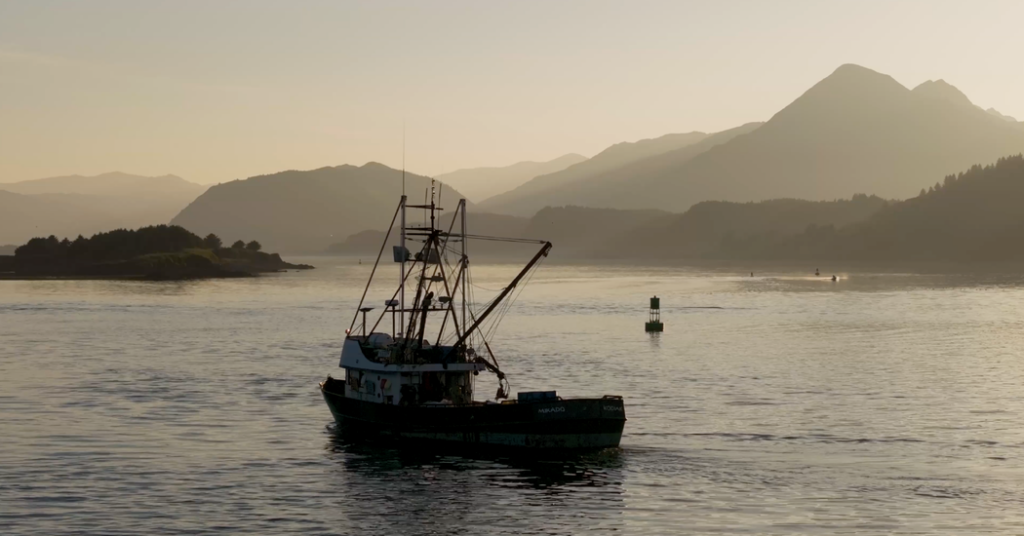
Like corn in Iowa and cattle in Oklahoma, fish are always a hot topic in Alaska. This year, they could help determine which party controls the Senate.
Former Representative Mary Peltola ended a nearly half-century Republican hold on Alaska’s lone House seat four years ago campaigning on “fish, family and freedom,” a phrase that was treated as something of a cute joke in Washington but was deadly serious back home. As politicians of all parties know, Alaska’s fisheries are central to the state’s fragile economy and facing an extraordinary convergence of threats.
In Alaska’s Senate race, Ms. Peltola has accused Senator Dan Sullivan, the Republican incumbent, of putting “Seattle-based factory trawlers ahead of Alaskan families and our rivers.” She has doubled down on her fishing-first platform with a proposal to ban out-of-state trawlers, massive vessels that sweep the Bering Sea with funnel-shaped nets and process their catch onboard.
Mr. Sullivan has promoted his work to reduce the accidental catch of juvenile salmon and halibut, and has targeted Russian and Chinese fishing fleets that he says undercut Alaska fishermen.
“We are both talking about our fisheries in this campaign, but the difference is, I’ve actually done things to help protect them,” Mr. Sullivan said at a September Kodiak Chamber of Commerce debate focused entirely on fisheries.
A chorus of candidates for other offices, including governor and the House, has joined the fight — though few in oil-dependent Alaska are as eager with ideas for combating what scientists say is the broader threat, climate change and warming waters.
To those in the Lower 48, the fish fight might seem provincial, but it has real meaning. Alaska accounts for roughly 60 percent of wild seafood harvested in the United States, from high-end wild-caught Chinook salmon to frozen fish sticks and McDonald’s Filet-o-Fish. The industry includes 370-foot factory trawlers that scoop up Bering Sea fish by the billions of pounds and Indigenous subsistence fishermen who feed their communities on a few hundred salmon a year.
Increasingly, it feels to many Alaskans as if only the biggest operators are doing well.
And fishermen in Alaska share other concerns with their brethren across the country. Those include the rising cost of diesel fuel and the Trump administration’s cuts to the National Ocean and Atmospheric Administration, which regulates and provides important data on fishing stocks and weather patterns key to planning every boat’s season.
All the talk persuaded Jake Everich last month to do something once unthinkable in the middle of the two-month fall pollock season, when he must maximize his catch to service the debt on his 73-foot boat, pay his four-person crew and keep Kodiak’s processing plants busy; he stayed in port to listen to candidates talk.
“I don’t have time for politics,” said Mr. Everich, who attended the Kodiak debate for governor. But in this case, he added, “I have to pay attention.”
The politicians’ preferred targets make sense in an election year. A recent poll by the progressive firm Data for Progress showed that almost three-quarters of Alaskans support a trawling ban, echoing a suspicion that predates statehood: that outside interests want to profit from Alaska’s natural resources at the expense of the people who live there.
Alaskans, angry over out-of-state salmon traps and federal fisheries management, joined the Union 67 years ago “because people were tired of being a colony,” said David Kubiak, a retired salmon fisherman and high school English teacher in Kodiak. “Now it feels like there are all these outside interests trying to take what belongs to Alaskans again.”
Trawlers targeting pollock net other species, including juvenile salmon bound for western Alaska rivers. That accidental haul, known as bycatch, has become particularly contentious. Salmon runs have collapsed so precipitously that fishing along the Yukon and Kuskokwim Rivers has been severely limited or banned, devastating communities that rely on salmon for food, income and traditions stretching back generations. On the Kuskokwim, residents historically harvested between 67,000 and 110,000 Chinook salmon a year for subsistence. In 2024, they caught 32,500.
Ms. Peltola, who is Yup’ik, grew up fishing on the Kuskokwim River and has made trawling controls a campaign centerpiece. Her website even features an arcade-style game in which salmon dodge predators and nets while players learn about the damage trawling can do.
But trawling, like fishing more broadly, comes in a variety of flavors. The largest commercial boats are based in Washington or Oregon, and some can process and flash freeze fish onboard, meaning their crews may never dock — or spend money — in Alaska.
Owners of smaller trawl boats, like those based in Kodiak, say politicians are casting too broad a net. “The impact of trawling is getting blown way out of proportion and being used as political ammunition,” said Jason Chandler, a second-generation trawler. “It stings a bit to have your livelihood treated that way.”
Unlike factory fleets in the Bering Sea, Mr. Chandler’s 77-foot boat, the F/V Topaz, delivers pollock and rockfish from the Gulf of Alaska to processing plants along Kodiak’s harbor.
Banning or severely restricting trawling, he warned, would kill seafood-dependent communities like Kodiak “when we should be working together to improve all fisheries.”
Science does complicate the politics. Studies have shown that eliminating trawling bycatch would return a single-digit share of salmon to western Alaska rivers. Curry Cunningham, a quantitative ecologist at the University of Alaska Fairbanks, said trawling was “just one piece of the puzzle.”
Mr. Sullivan has focused his criticism on illegal, unreported and unregulated foreign fishing, particularly by Russian and Chinese fleets. He has backed legislation to blacklist offending vessels and strengthen Coast Guard enforcement, while pushing to keep Russian seafood — including fish routed through China — out of U.S. markets.
Mr. Sullivan also wrote a bill, approved by the Senate Commerce Committee last month, to require pollock trawlers to use nets designed to let salmon escape, expand monitoring of bycatch and fund research on gear designed to reduce unintended catches.
Neither Senate candidate has focused nearly as much on the role of climate change, a fraught subject in a state that relies on oil revenue to help pay for public services, even as the melting permafrost turns rivers red and swamps its villages.
“Let’s control what we can,” Ms. Peltola said at the fish debate.
The trawling fight comes as Alaska’s fishing industry suffers through fluctuating wholesale prices, rising fuel costs and competition from farm-raised salmon. The federal government, Mr. Sullivan and Ms. Peltola both say, has moved too slowly to provide financial support in years when fish runs have collapsed.
Processing plants have closed or struggled to find employees as federal visas for seasonal foreign workers dry up, while increasingly sophisticated equipment and regulatory requirements have made fishing more expensive.
“None of the political debates capture the nuance, what it’s really like to try to make a living catching a wild animal in the 21st century,” said Toby Sullivan, a fisherman and executive director of the Kodiak Maritime Museum.
The worry in places like Kodiak, which has already seen shrimp and king crab stocks disappear, is that the financial challenges of fishing will drive younger Alaskans out of the business, ceding the seas to those out-of-state corporations cast as the bad guys.
Mr. Everich, 36, moved to Alaska from Rhode Island out of high school because he believed there were fewer barriers to being an independent boat owner here. He bought his vessel, the F/V Alaskan, in 2019 and diversified so that he can fish 10 months out of the year.
On a recent fall afternoon, as his crew prepared nets for evening departure and his dog, Pickles, kept watch over a pair of circling sea lions, he said the politicians didn’t seem to understand the businesses they were criticizing.
“I didn’t spend millions of dollars on a boat and improvements just to go out there and destroy the ocean,” he said. “I want to do this for the rest of my life, but when every election cycle treats us like villains, you start to wonder what kind of future is actually left.”
The post How Alaska’s Fish Became a Defining Issue for the Midterms appeared first on New York Times.