Despite much speculation that Justice Clarence Thomas or Justice Samuel A. Alito Jr. might retire over the summer to allow President Trump to name their successor with a Republican-controlled Senate, when the Supreme Court reconvenes to hear the first oral arguments of the new term on Monday, it will be with the same nine justices who have sat on the bench the past five years.
Back in March 2014, I wrote an op-ed urging Justice Ruth Bader Ginsburg to retire at the conclusion of the Supreme Court’s term that June. In it, I explained that if she wanted someone with her values and her views to take her place, she should step down while there was a Democratic president and a Democratic majority in the Senate.
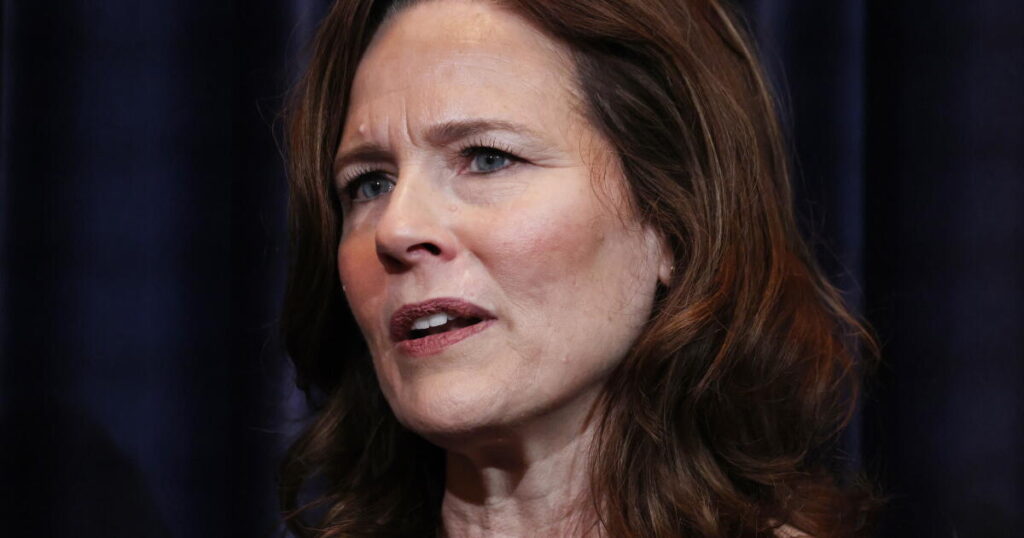
It never occurred to me that a Supreme Court justice would pay any attention to what a law professor in Southern California had to say. But the day the piece was published, I received a call from a mutual friend who said, “Ruth is not happy with you.” Ginsburg gambled that she could remain on the court until there was another Democratic president to pick her successor and a Democratic Senate to confirm the nomination. She came close, but her gamble failed. On Sept. 18, 2020, Ginsburg succumbed to cancer. Trump quickly nominated conservative Judge Amy Coney Barrett and the Senate rushed to confirm her just days before the election.
Thomas and Alito, ages 78 and 76, respectively, lived through that experience and know that if the Democrats take control of the Senate after the November midterms, no one Trump nominates has a chance of confirmation. But for now, they remain on the bench.
Before going on summer recess, the justices granted review in 26 cases to be heard during the October 2026 term, adding one more case over the summer. In the previous two terms, the court decided 58 cases with signed opinions following briefing and oral argument. This means that slightly fewer than half the docket for the term is now set. The court will continue to take cases through mid-January to be decided by the end of June 2027.
What are some of the most important potential cases?
First up is Suncor Energy (U.S.A.) Inc. vs. County Commissioners of Boulder County, which will be argued on Oct. 5, and will debate whether energy companies can be sued for their role in contributing to climate change. The plaintiffs, the county commissioners of Boulder County and the city of Boulder, initially sued Exxon Mobil and three Suncor Energy entities in Colorado state court, seeking damages for the role the companies played in exacerbating climate change. The city of Boulder alleged that it has incurred and will incur millions of dollars in costs to protect against climate impacts such as wildfires, flooding and drought.
The specific question focuses on whether federal law preempts the ability of state governments to impose liability. The energy companies are making a radical argument to the court: that the Constitution denies states the ability to regulate pollution because of its interstate and international effects. If the Supreme Court accepts this argument, it will have a dramatic effect in lessening the ability of states to regulate all types of pollution.
Another major case on the docket involves the 2nd Amendment. The issue presented in Viramontes vs. Cook County, to be argued on Dec. 2, is about “[w]hether the Second and 14th Amendments guarantee the right to possess AR-15 platform and similar semiautomatic rifles.”
In District of Columbia vs. Heller, in 2008 — the first case ever to declare a law unconstitutional for violating the 2nd Amendment — the Court was explicit that the 2nd Amendment is limited to a right to possess “the sorts of weapons . . . [that] were ‘in common use at the time.’” The court said that this “limitation is fairly supported by the historical tradition of prohibiting the carrying of ‘dangerous and unusual weapons.’”
No one could rationally argue that AR-15 weapons existed in 1791, let alone that they were in common use. Nor can it be plausibly denied that they are very dangerous weapons given their use in many of the most tragic mass shootings in the United States, including the 2012 Sandy Hook Elementary School shooting, the 2015 San Bernardino attack, the 2017 Las Vegas shooting, the 2017 Sutherland Springs church shooting, the 2018 Marjory Stoneman Douglas High School shooting and many other horrible events. But this is a court that has been protective of gun rights in recent years.
The Supreme Court will also return to the question of free exercise of religion under the 1st Amendment in St. Mary Catholic Parish vs. Roy, to be heard Nov. 3. Colorado’s Universal Preschool Program funds preschools — public, private and religious alike — that sign an agreement to give children an “equal opportunity to enroll” regardless of, among other things, religious affiliation, sexual orientation or gender identity. Two Catholic parish preschools and the Archdiocese of Denver say that they have a religious belief that they must consider a family’s sexual orientation and gender identity in admissions, and they sued for an injunction against the requirement.
In 1990, ruling on Employment Division, Department of Human Resources of Oregon vs. Smith, the Supreme Court held that courts should not grant an exception to general laws on the basis of religion. In St. Mary Catholic Parish vs. Roy, the federal court of appeals applied this precedent and upheld the Colorado law. But the conservative justices have signaled that they want to overrule this precedent and provide more protection for those who want to violate the law based on their religious beliefs.
These, of course, are just a few of the nearly 60 cases to be decided this year. There also are many cases now on the emergency docket that will challenge the Trump administration’s actions, including its deportation of immigrants to countries where they had no prior contacts.
Since Barrett’s confirmation following the death of Ginsburg in 2020, this has been a court with six conservative and three liberal justices. And that again will likely make all the difference in the cases to be heard this year.
Erwin Chemerinsky is the dean of the UC Berkeley Law School.
The post The Supreme Court’s most consequential cases of the new term appeared first on Los Angeles Times.